Don’t Ignore This: Socializing Your Puppy To Wheelchairs And Crutches
Welcome to the wonderful, chaotic world of puppy parenthood! You’re likely ticking all the boxes: socializing with new people, friendly dogs, and maybe even the vacuum cleaner. But have you thought about wheelchairs, walkers, or crutches? For many, the answer is no. It’s easy to overlook socializing our pups to things we don’t see every day. However, failing to introduce these common mobility aids can lead to fear, anxiety, and reactivity down the road.
A dog that panics at the sight of a wheelchair isn’t just a challenge for its owner; it can be deeply distressing for the person using the aid. The good news is that with a little patience and a whole lot of treats, you can teach your puppy that these objects are nothing to be scared of. This guide will walk you through a positive, fear-free process to ensure your puppy grows into a confident and accepting adult dog, ready to greet the world—and everyone in it—with a happy tail wag.
Why This Specific Socialization Is So Important
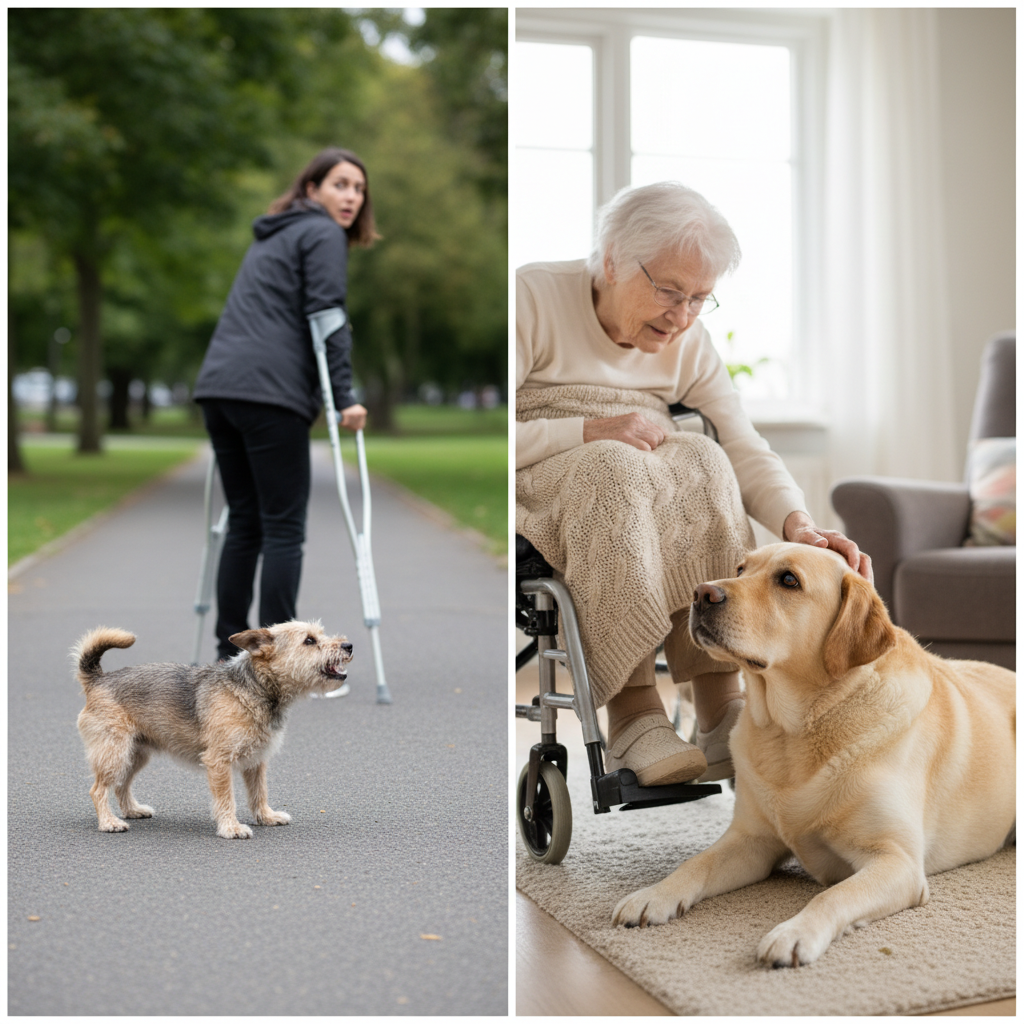
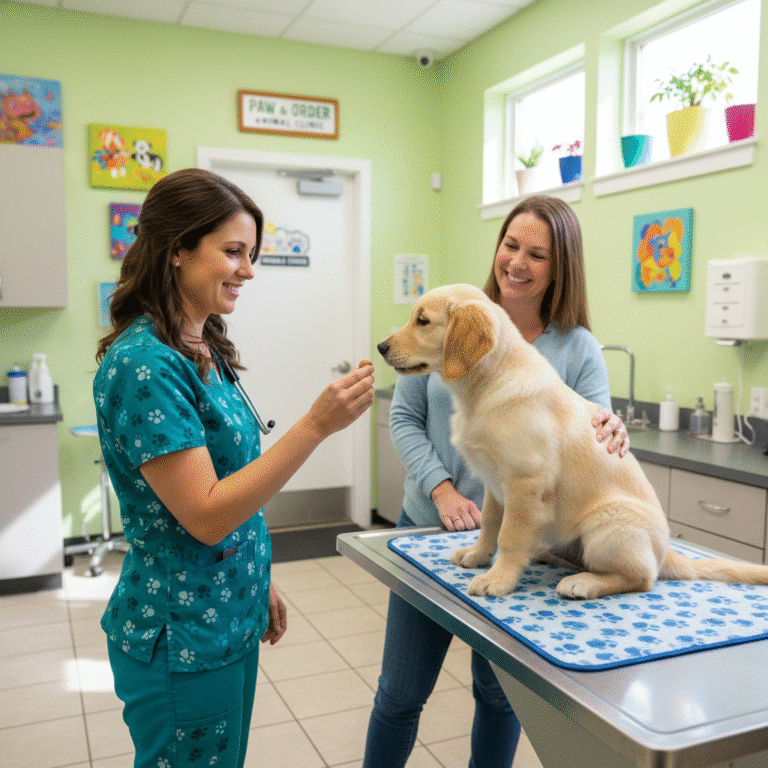
You might be thinking, ‘I don’t know anyone who uses a wheelchair or crutches, so why bother?’ But the world is unpredictable. You’ll encounter people with mobility aids at the park, the pet store, the vet’s office, or even among friends and family in the future. For a puppy, these items can be terrifying. They change the human silhouette, move in strange ways, and make unfamiliar noises—all things that can trigger a dog’s natural fear response.
An unsocialized dog might react by:
- Barking and lunging: This is a common fear response, where the dog tries to make the ‘scary thing’ go away.
- Cowering or fleeing: The puppy may try to hide or run away, potentially putting itself in danger.
- Nipping or biting: In extreme cases of fear, a dog may bite to defend itself from what it perceives as a threat.
Proper socialization isn’t about just preventing ‘bad’ behavior. It’s an act of kindness. It equips your puppy with the emotional tools to navigate the human world calmly and confidently. By teaching them now that wheels and crutches are just normal, non-threatening objects, you’re setting them up for a lifetime of positive interactions and reducing their overall stress.
Key Takeaway: Socialization is proactive, not reactive. You’re teaching your puppy how to handle future situations with confidence, not just correcting a problem after it starts.
Gather Your Tools for Success
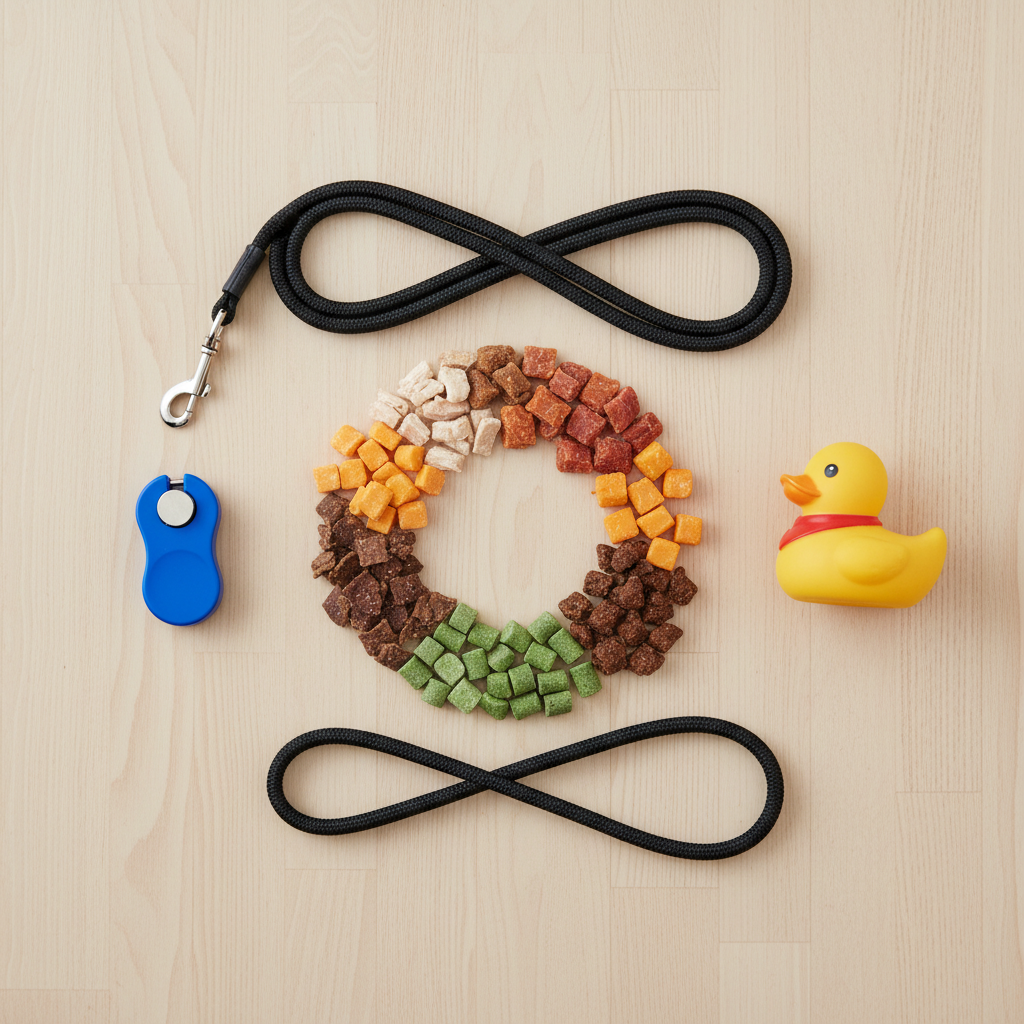
Before you bring out the wheelchair, let’s get prepared. The goal is to create a positive, controlled, and fun experience for your puppy. Rushing this process or being unprepared can do more harm than good. Think of yourself as the party planner, and the mobility aid is the guest of honor!
What You’ll Need:
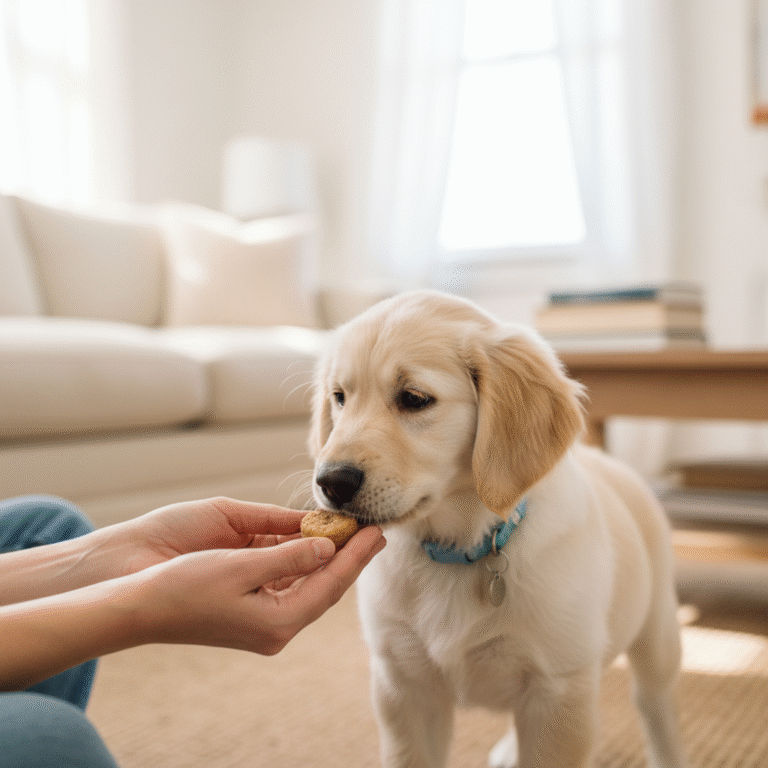
- High-Value Treats: We’re not talking about their regular kibble. You need the good stuff! Think tiny pieces of boiled chicken, cheese, hot dogs, or super tasty commercial training treats. The reward needs to be more exciting than any potential fear.
- A Mobility Aid: If possible, borrow a wheelchair, walker, or crutches from a friend, family member, or a local community center. Make sure it’s clean and safe.
- A Calm, Controlled Environment: Start indoors in a familiar room where your puppy feels safe. A living room or a quiet backyard is perfect. Avoid busy parks or sidewalks for your initial sessions.
- Patience and a Positive Attitude: Your puppy will feed off your energy. If you’re anxious, they will be too. Stay calm, be patient, and keep sessions short and sweet—just 5-10 minutes at a time is plenty for a young pup.
Remember the golden rule: We are creating a positive association. Every single interaction with the object should be paired with something wonderful, like a delicious treat or a fun game.
Step-by-Step Guide: Introducing a Wheelchair
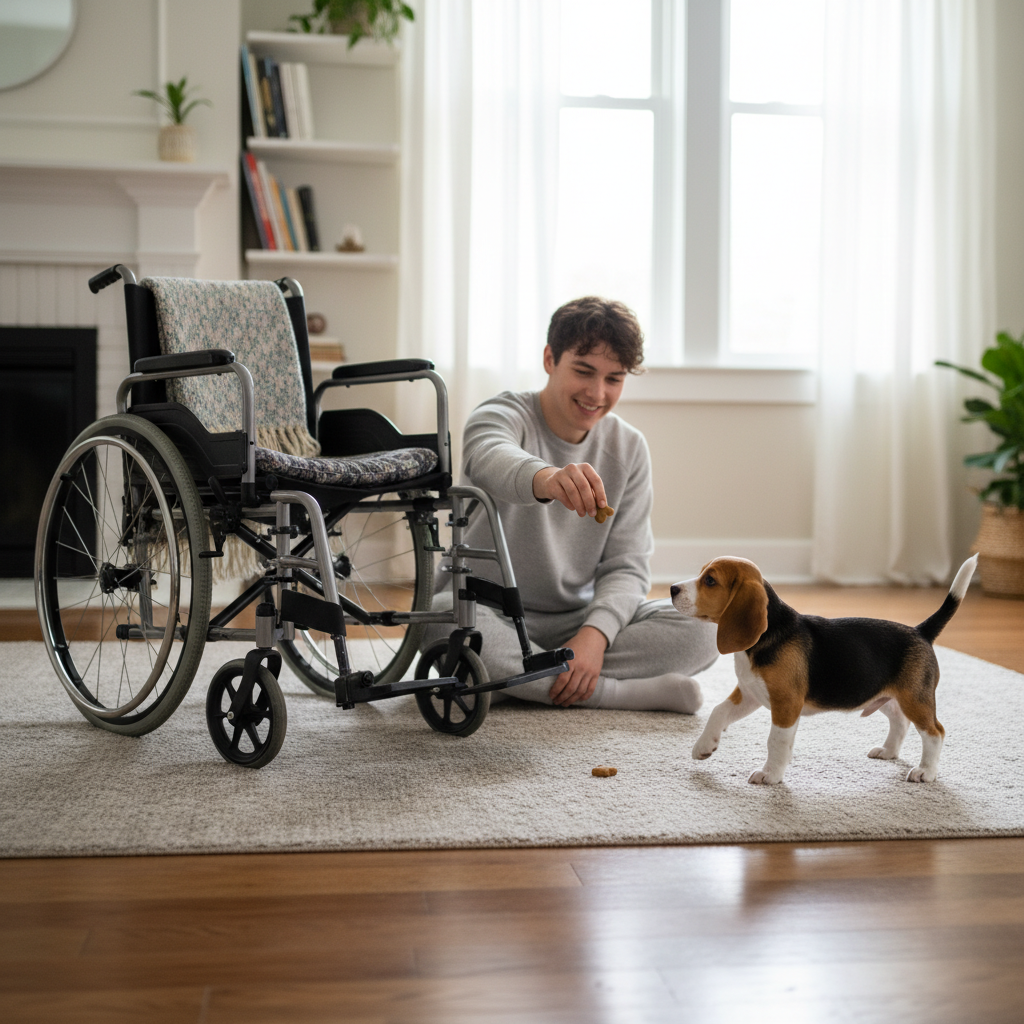
This process is all about baby steps. Never force your puppy to approach the object. Let them choose to investigate on their own terms. We’ll use the concept of ‘treat and retreat,’ where the puppy can approach, get a reward, and then move away to a comfortable distance.
Step 1: The Stationary Object
Place the wheelchair in the middle of the room and let your puppy enter. Ignore the wheelchair completely yourself. Act casual. Let your puppy notice it on their own. The second they look at it, mark the moment with a ‘Yes!’ or a click, and toss them a treat. Toss the treat away from the wheelchair so they don’t feel pressured to get closer.
Step 2: Building Positive Association
Once your pup is comfortable being in the same room, start creating a trail of treats leading toward the wheelchair. Make the trail easy at first, maybe only going a few feet in its direction. As your puppy gets braver, make the trail lead right up to the base of the chair. Place a jackpot of treats on or right next to the wheel.
Step 3: Introducing Movement
This is a big step! While your puppy is at a comfortable distance, very slowly push the wheelchair an inch or two. The moment you move it, toss a high-value treat. Move it, treat. Move it, treat. The movement should predict that a fantastic snack is coming their way. Keep the movements small and slow at first.
Step 4: Adding a Person
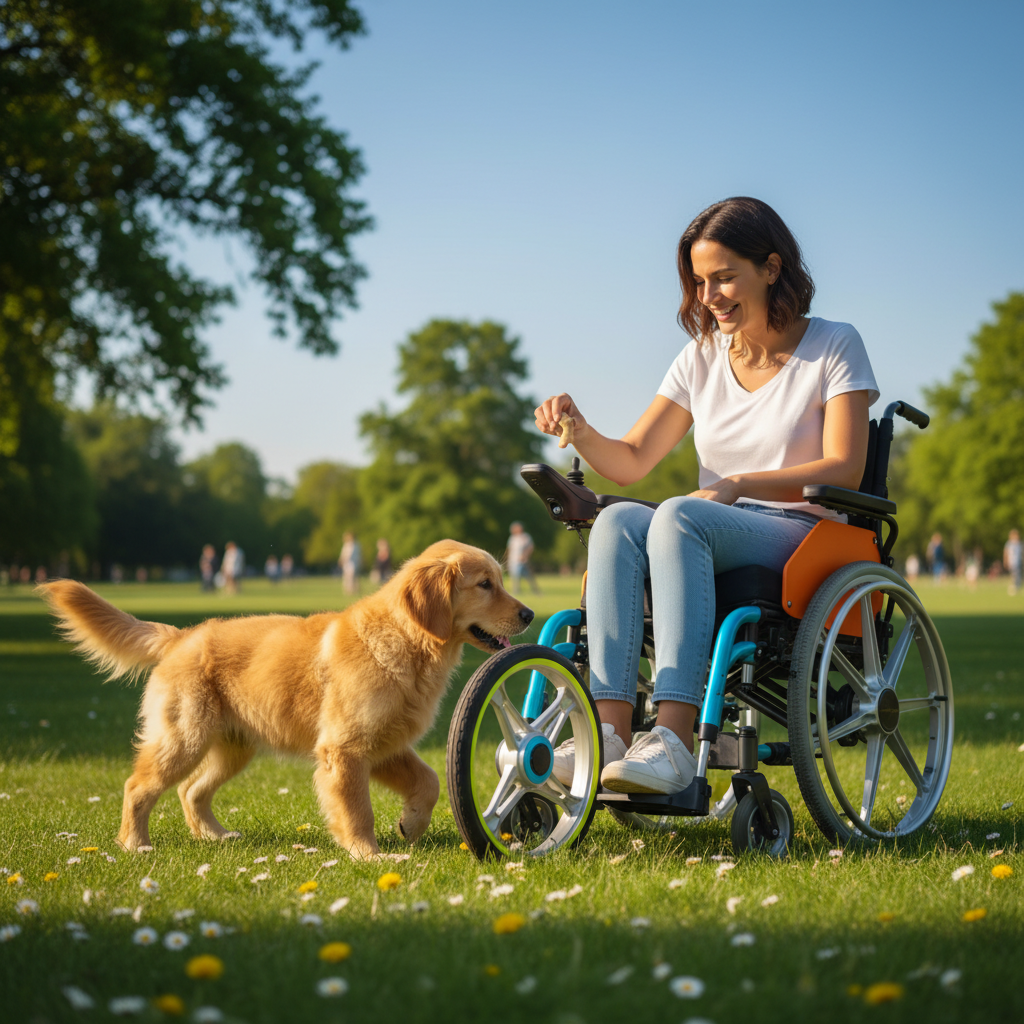
Have a helper sit in the stationary wheelchair. Have them toss treats to the puppy without trying to engage them otherwise. The puppy needs to learn that a person in the chair is a source of great things. Once comfortable, the person can try the tiny movements from Step 3, always pairing movement with treats.
Step 5: Generalizing the Experience
Once your puppy is confident indoors, it’s time to take the show on the road. Practice in your yard, then on a quiet sidewalk. Ask a friend who uses a wheelchair to help you practice a real-life greeting. Keep it positive, reward calm behavior, and always give your puppy the choice to disengage.
Step-by-Step Guide: Introducing Crutches or a Walker
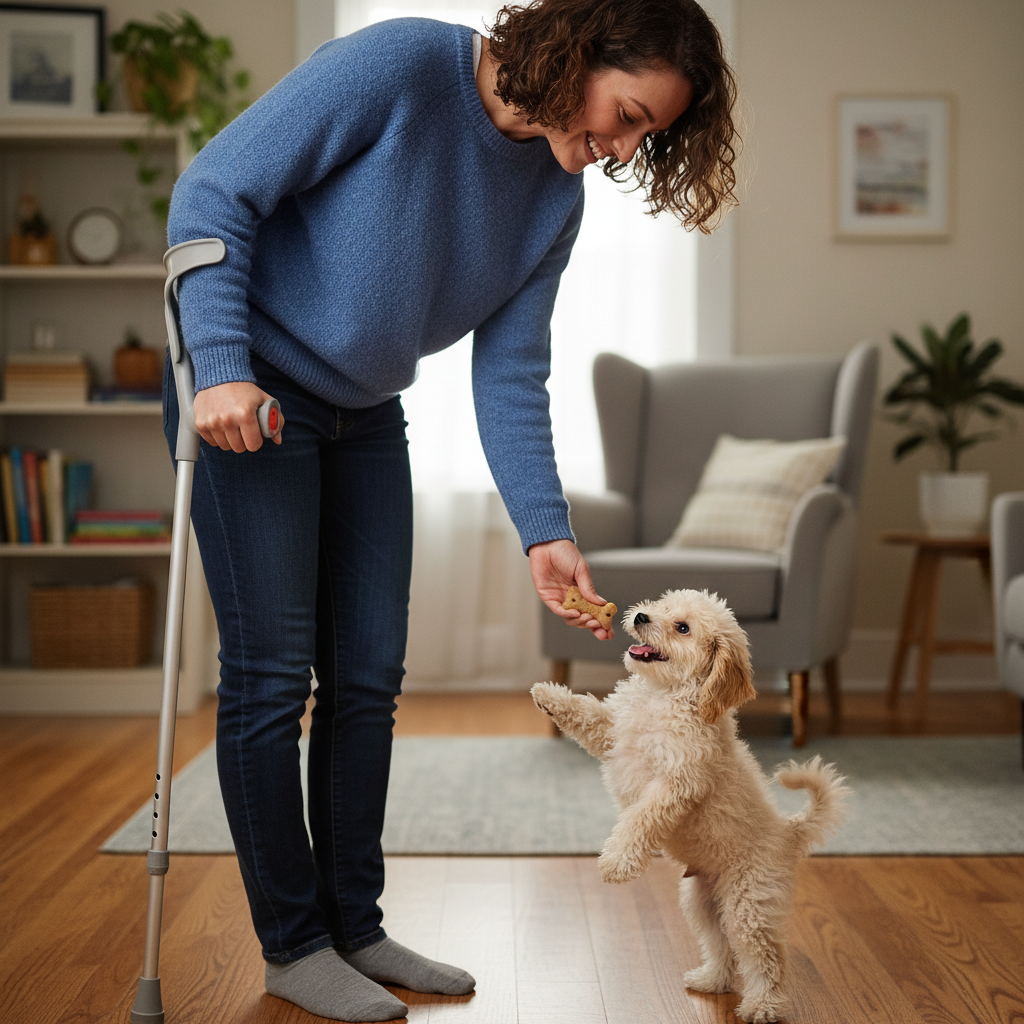
Crutches and walkers present a different challenge. They make distinct sounds (tapping on the floor) and are more directly attached to a person’s movement. The process is similar, focusing on positive association.
Step 1: The Object is Furniture
Lean the crutches or walker against a wall and ignore them. Just as with the wheelchair, reward your puppy for any calm curiosity. Toss treats near the base of the crutches. Let them sniff and explore at their own pace without any pressure.
Step 2: Introduce Sound and Touch
While your puppy is watching from a distance, gently tap one of the crutches on the floor. Immediately toss a treat. Tap, treat. Tap, treat. The sound should become a predictor of food. You can also hold a crutch and have your puppy target your hand (which is holding the crutch) for a treat, so they learn to be comfortable with the object being near you.
Step 3: Introduce Human Movement
This is the trickiest part. Hold the crutches and take one, slow, deliberate ‘step’ with them, barely moving forward. As you do, shower your puppy with praise and treats. Keep the session very short. The goal is for your puppy to see the person-plus-crutches combo as a walking treat dispenser. Gradually increase the number of steps over many sessions.
Step 4: Vary the Person and Place
Ask different friends or family members to help you practice. Have them walk slowly with the crutches while you reward your puppy for calm behavior. Practice in different locations to help your puppy understand that crutches are normal everywhere, not just in your living room.
Reading Your Puppy’s Body Language: Are They Stressed?
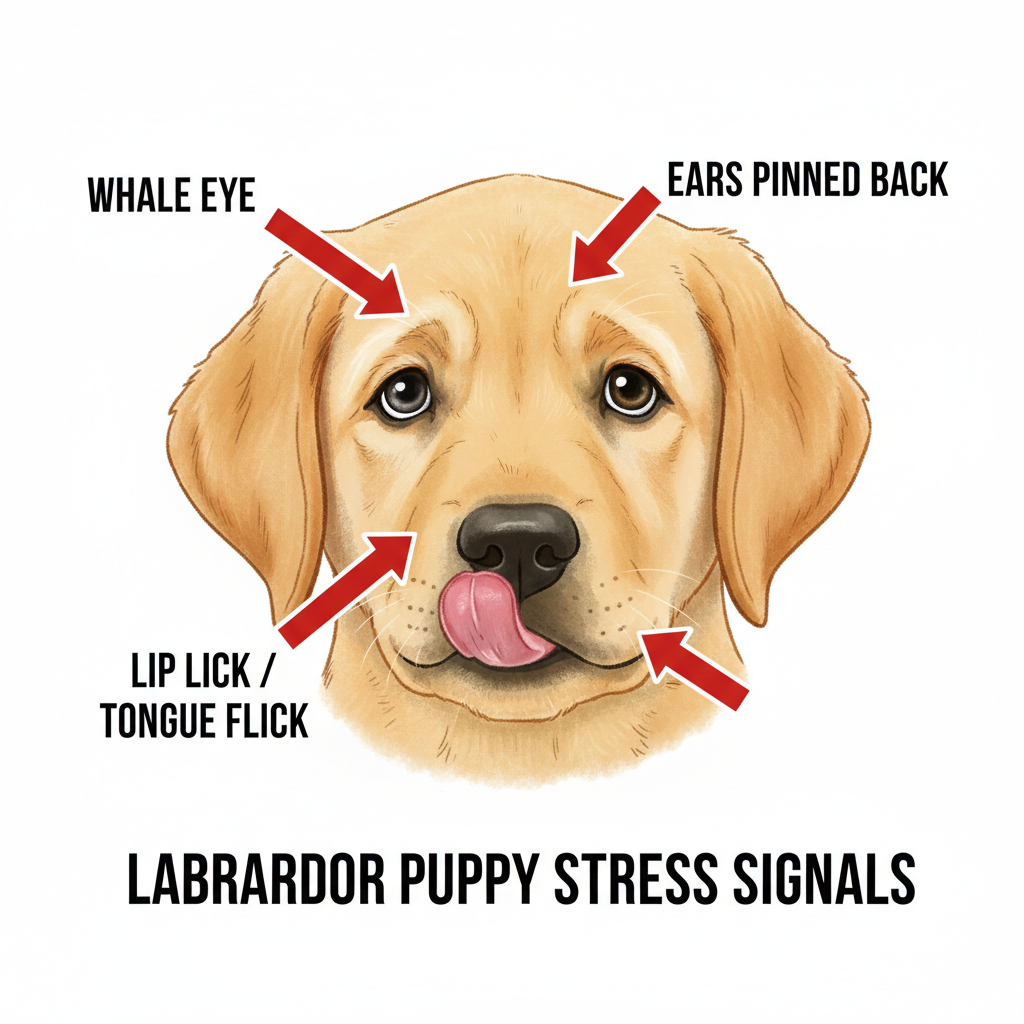
Your puppy can’t tell you they’re scared with words, but their body will give you plenty of signals. It’s your job to listen to them. Pushing a puppy past their comfort zone can create a negative association that is much harder to undo. Stop the session immediately if you see these signs of stress:
- Yawning when they aren’t tired.
- Lip or nose licking repeatedly.
- ‘Whale eye,’ where you can see the whites of their eyes.
- A tucked tail or low, stiff body posture.
- Freezing or becoming suddenly still.
- Panting when it’s not hot.
- Refusing to take treats they would normally love. This is a major red flag that they are too stressed to eat.
If you see any of these signs, simply end the session on a positive note if you can (e.g., ask for a simple ‘sit’ far away from the object and reward it), and try again another day, starting from a much easier step where they were last successful.
Conclusion
Congratulations! By taking the time to socialize your puppy to mobility aids, you’re doing more than just training; you’re shaping a resilient, confident, and kind canine citizen. This process is a marathon, not a sprint. It requires patience, empathy, and an endless supply of tasty treats. Remember to always keep it positive, watch your puppy’s body language, and celebrate the small victories along the way.
The effort you put in now will pay off for years to come, ensuring your dog can navigate any situation with grace and a happy heart. You’re not just building a well-behaved dog; you’re building an unbreakable bond based on trust and understanding. Now go have some fun with your furry best friend!