
Dog Surfing 101: How to Teach Your Water-Loving Pup to Ride the Waves
Surfing with your canine companion is rapidly becoming one of the most popular water sports for pet owners living near the coast. It is not merely a novelty act; for high-energy, water-loving breeds, surfing provides exceptional physical conditioning, mental stimulation, and a profound bonding experience between handler and dog. However, the transition from doggy paddle to hanging ten requires patience, specific equipment, and a rigorous adherence to safety protocols.
As a canine specialist, I must emphasize that not every dog is a candidate for surfing. Brachycephalic breeds (flat-faced dogs like Bulldogs) often struggle with swimming and buoyancy, while anxious dogs may find the sensory overload of the ocean overwhelming. However, for the confident swimmer with a zest for adventure, surfing can be a rewarding discipline. This guide serves as a comprehensive, professional framework to take your dog from land-based desensitization to riding their first wave safely.
Prerequisites: Assessing Swimming Ability and Temperament
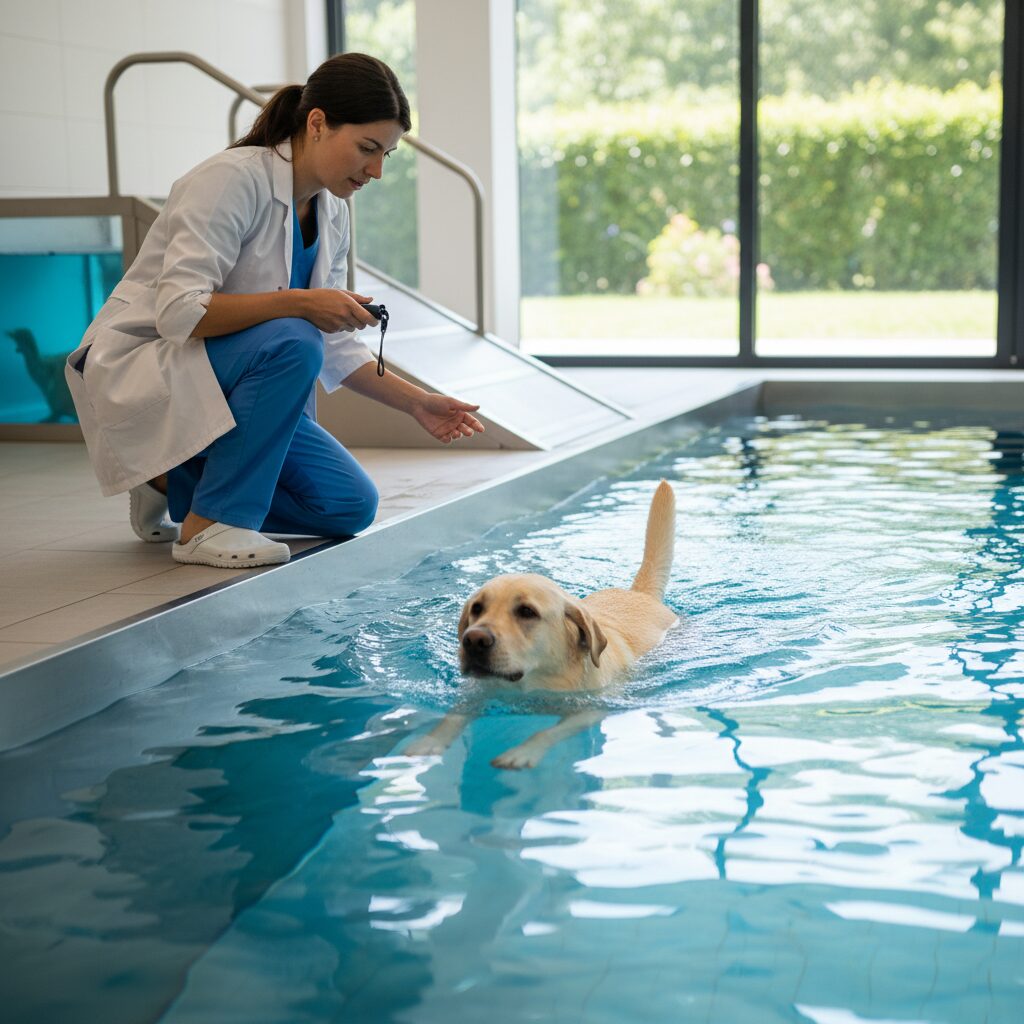
Before purchasing a board, you must objectively assess your dog’s aquatic capabilities. Surfing takes place in an unpredictable environment, and a dog must be a strong, confident swimmer before they ever attempt to balance on a floating object. If your dog is hesitant to enter the water or panics when their feet cannot touch the ground, they are not yet ready for surfing.
The Swimming Test
Ensure your dog can swim for extended periods without fatigue. They should be able to turn, return to shore on command, and keep their head well above water. If your dog enjoys the water but lacks stamina, focus on conditioning in a pool or calm lake first.
Temperament Check
Surfing requires a dog to remain calm amidst crashing waves, shifting balance, and other beachgoers. A dog that is easily startled or reactive may find the surf environment too stressful. The ideal surf dog is confident, food or toy-motivated, and possesses a strong ‘stay’ command.
Essential Gear: Safety Equipment and Board Selection
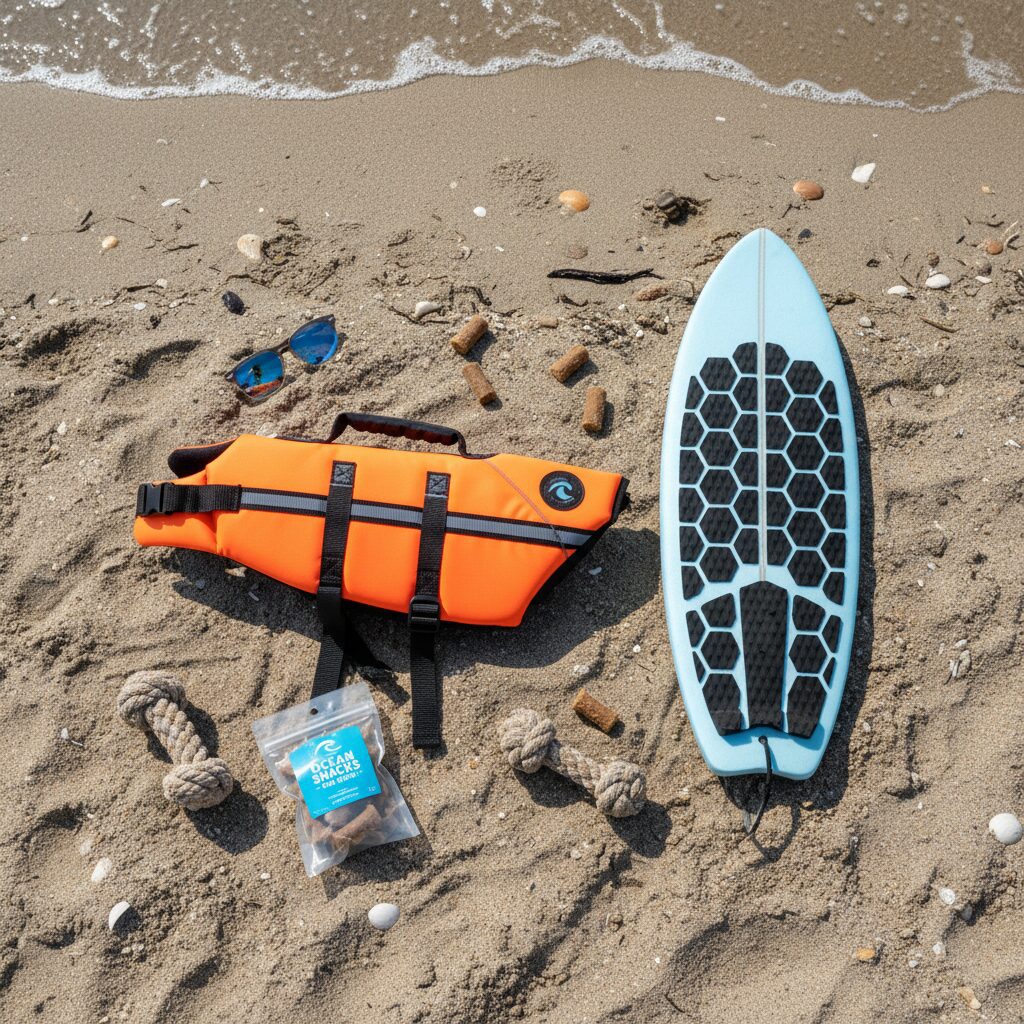
Safety is paramount in canine water sports. The ocean is powerful, and even the strongest canine swimmers require flotation support. The following equipment is non-negotiable for a safe training session:
- Canine Life Jacket (PFD): Regardless of swimming ability, a life jacket provides buoyancy and, critically, a handle on the back. This handle allows you to lift your dog onto the board or retrieve them from the water quickly if they fall off. Ensure a snug fit that does not restrict shoulder movement.
- The Surfboard: Do not use a standard fiberglass board, which is slippery and can injure the dog if it hits them. Opt for a soft-top foam board (foamie) or a specific dog-friendly stand-up paddleboard (SUP). These provide superior grip and stability.
- Traction Pads: Dogs cannot grip wax like humans can. Apply extra traction pads or a yoga mat to the deck of the board to prevent slipping and joint injury.
Phase 1: Dry Land Desensitization
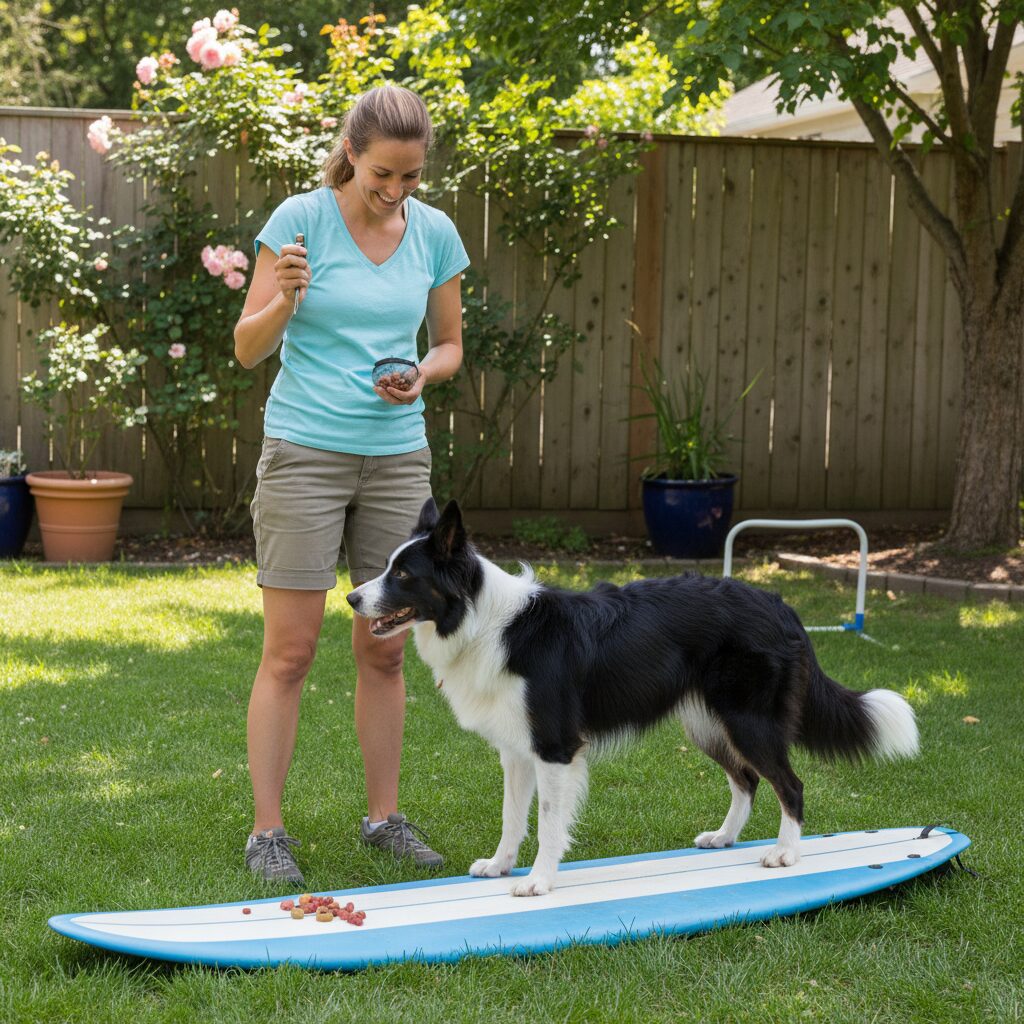
Successful surfing starts on the grass or sand, not in the water. The goal of this phase is to create a positive association with the board and teach the dog to balance on an unstable surface.
Step-by-Step Land Training
Place the board on a stable surface. Lure your dog onto the board using high-value treats. Once all four paws are on the board, mark the behavior (with a clicker or verbal ‘yes’) and reward. Repeat this until the dog eagerly steps onto the board.
Next, introduce the ‘Place’ or ‘Stay’ command. The dog needs to understand that the board is their station. Once they are comfortable, gently rock the board side-to-side to simulate wave movement. Reward them heavily for remaining standing or sitting without jumping off. This builds the core strength and proprioception required for the ocean.
Phase 2: Shallow Water Acclimatization
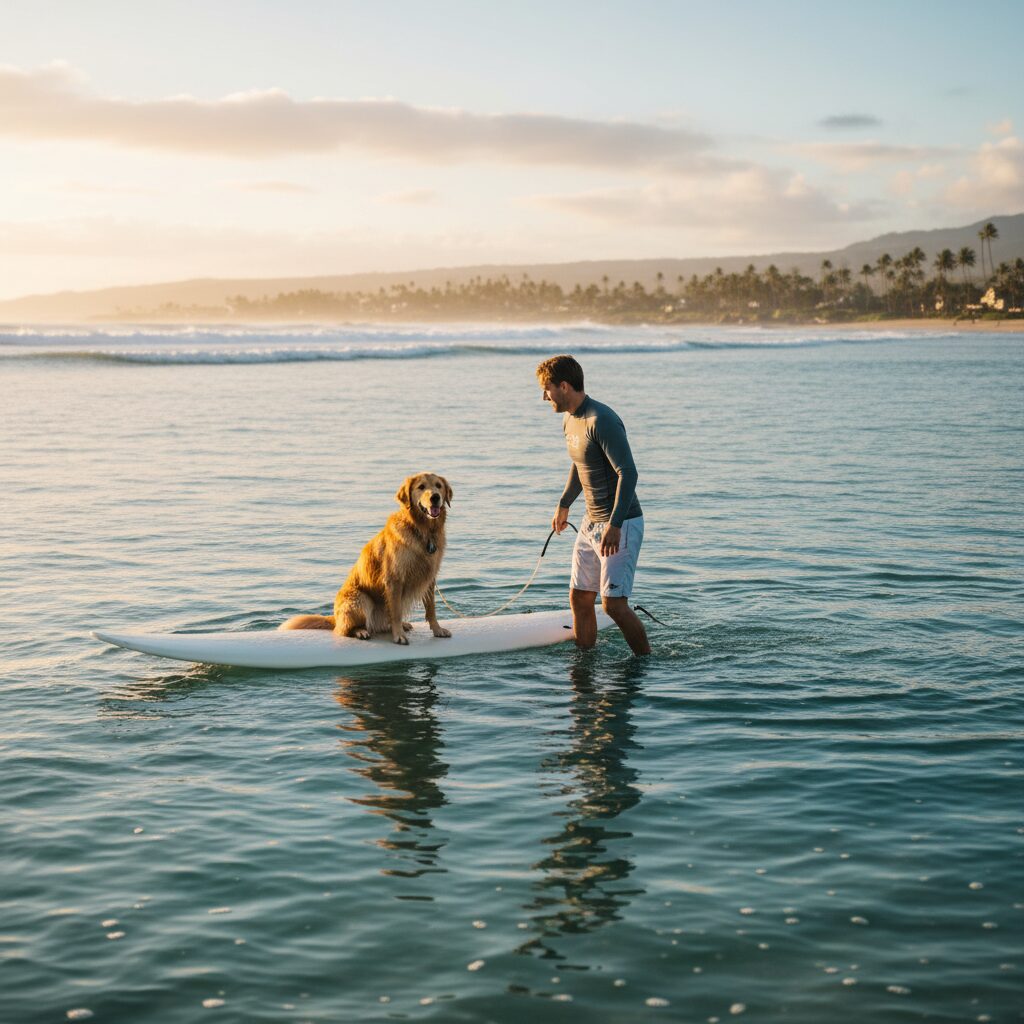
Once the dog is confident on land, move to the shallows. Choose a day with flat conditions or a protected bay; avoid large swells for this introduction. The objective here is to let the dog feel the sensation of the board floating without the threat of waves.
Walk the board out to knee-deep water. Encourage your dog to get on the board (you may need to lift them using the life jacket handle initially). Keep a firm grip on the board to stabilize it. Walk alongside the board, praising the dog constantly. If they jump off, simply guide them back on without frustration. Keep these sessions short—10 to 15 minutes—to prevent exhaustion or cold.
Phase 3: Catching the First Wave
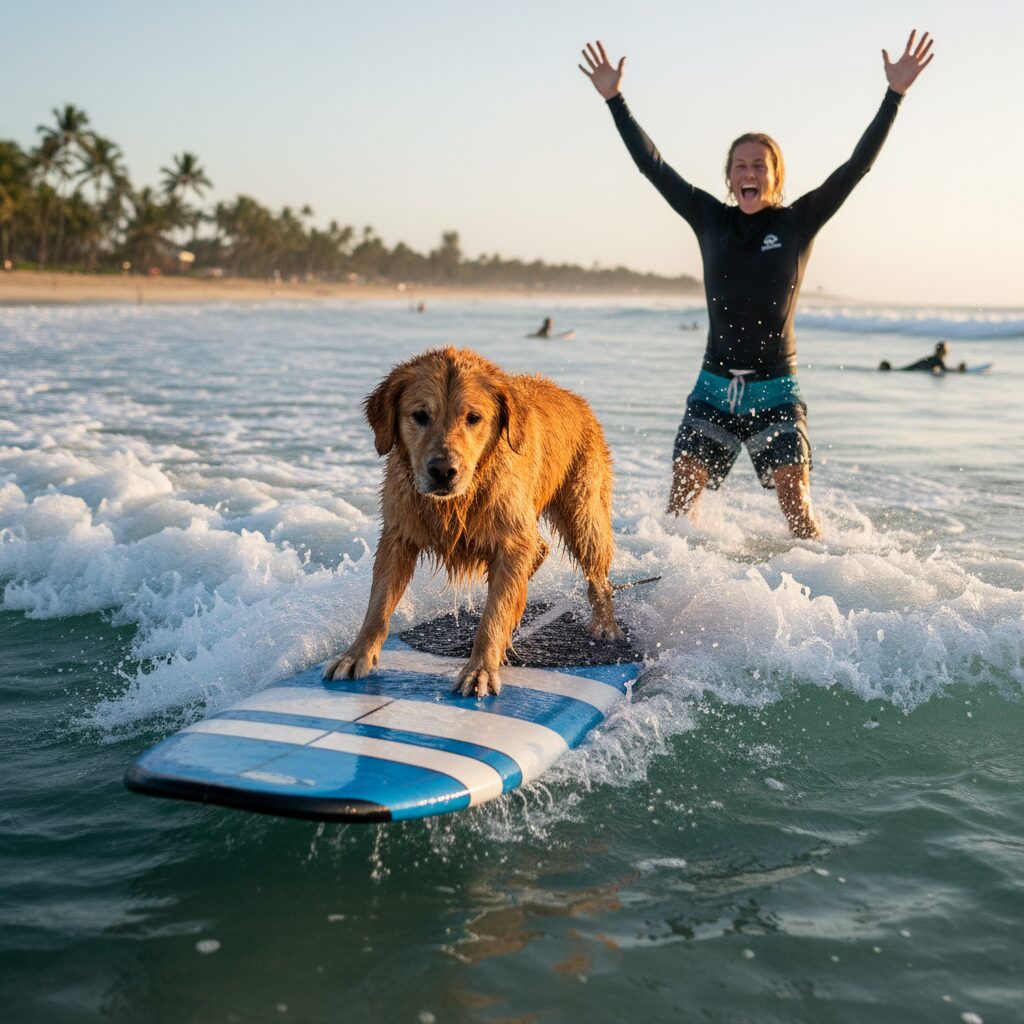
When your dog is comfortable floating, you are ready to attempt a small wave. Look for ‘whitewash’—the gentle, broken waves that roll toward the shore after the wave has broken. Do not attempt to catch unbroken green waves initially.
The Launch
Position the board facing the shore. Hold the back of the board and wait for a gentle wall of whitewash. As the water approaches, give the board a smooth push to match the speed of the wave. Release the board and issue your ‘stay’ command.
Ideally, the board will glide toward the shore. Meet your dog in the shallows with enthusiastic praise and a high-value reward (like a piece of cheese or hot dog). If the board tips (pearls) or the dog falls off, remain calm. Retrieve the dog immediately, check for stress signals (lip licking, whale eye), and take a break if necessary. Always end the session on a successful note, even if it is just a dry-land repetition.
Safety Etiquette and Final Thoughts
Dog surfing is a marathon, not a sprint. It may take weeks or months for your dog to confidently ride a wave. Always prioritize your dog’s health over the sport. Be mindful of salt water ingestion, which can be fatal; ensure you bring plenty of fresh water and take frequent breaks to prevent dehydration and toxicity. Furthermore, respect local beach laws and other surfers. Keep your dog leashed until you are in the water and ensure they have reliable recall.
When approached with patience and respect for the animal’s limits, surfing can be a magnificent display of the bond between species. Listen to your dog, keep it fun, and stay safe in the surf.