Do As I Do: The Mind-Blowing Way to Teach Your Dog by Mimicry
For decades, traditional dog training has relied heavily on operant conditioning—associating a behavior with a consequence, typically through rewards or corrections. While highly effective, this method often overlooks a profound cognitive ability possessed by our canine companions: social learning. Recent ethological research, spearheaded by experts like Dr. Claudia Fugazza, has demonstrated that dogs are among the few species capable of learning by observing and imitating others, a method known as Do As I Do (DAID).
The ‘Do As I Do’ method is not merely a party trick; it is a scientifically validated training protocol that relies on the dog’s ability to form a mental representation of the owner’s actions and map them onto their own body. This cognitive leap allows dogs to learn complex behaviors much faster than through shaping or luring alone. By teaching your dog the rule of imitation, you open a new channel of communication that bridges the species gap, fostering a deeper bond and a more intellectually stimulated dog.
In this comprehensive guide, we will move beyond basic obedience and explore how to implement the DAID protocol. We will cover the prerequisites required, the stepwise training phases, and how to troubleshoot common challenges, allowing you to unlock your dog’s potential to learn simply by watching you.
The Science Behind Social Learning in Dogs
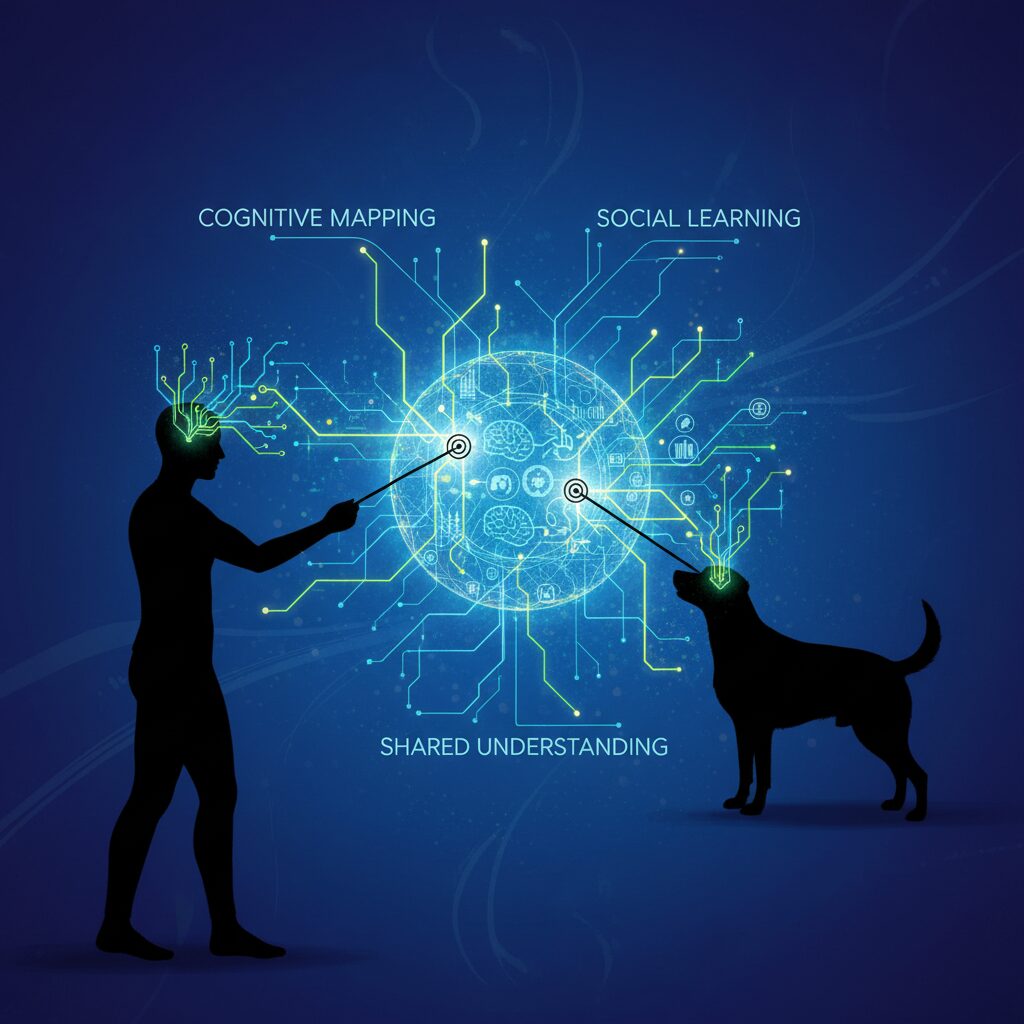
To understand why ‘Do As I Do’ is so revolutionary, one must appreciate the cognitive complexity of imitation. In the animal kingdom, true imitation is rare. It requires the observer to recognize the goal of the demonstrator’s action and the method used to achieve it. For a dog to imitate a human, they must solve the ‘correspondence problem.’ They must understand that a human arm raising is equivalent to a dog’s paw raising, despite the vast anatomical differences.
Research suggests that dogs have evolved a specific socio-cognitive specialization due to domestication, allowing them to read human cues better than even non-human primates. The DAID method taps into this evolutionary trait. Unlike emulation (where an animal learns about the environment, such as seeing a door open and realizing it can be moved), imitation involves copying the body movements. When you train using DAID, you are engaging the dog’s declarative memory—their ability to recall facts and events—rather than just their procedural memory (muscle memory).
This method shifts the dynamic from ‘do this to get a treat’ to ‘watch me and copy what I do.’ It requires the dog to pay close attention to the handler’s entire body language, fostering a level of focus and engagement that is often superior to standard clicker training sessions.
Prerequisites: Is Your Dog Ready for DAID?
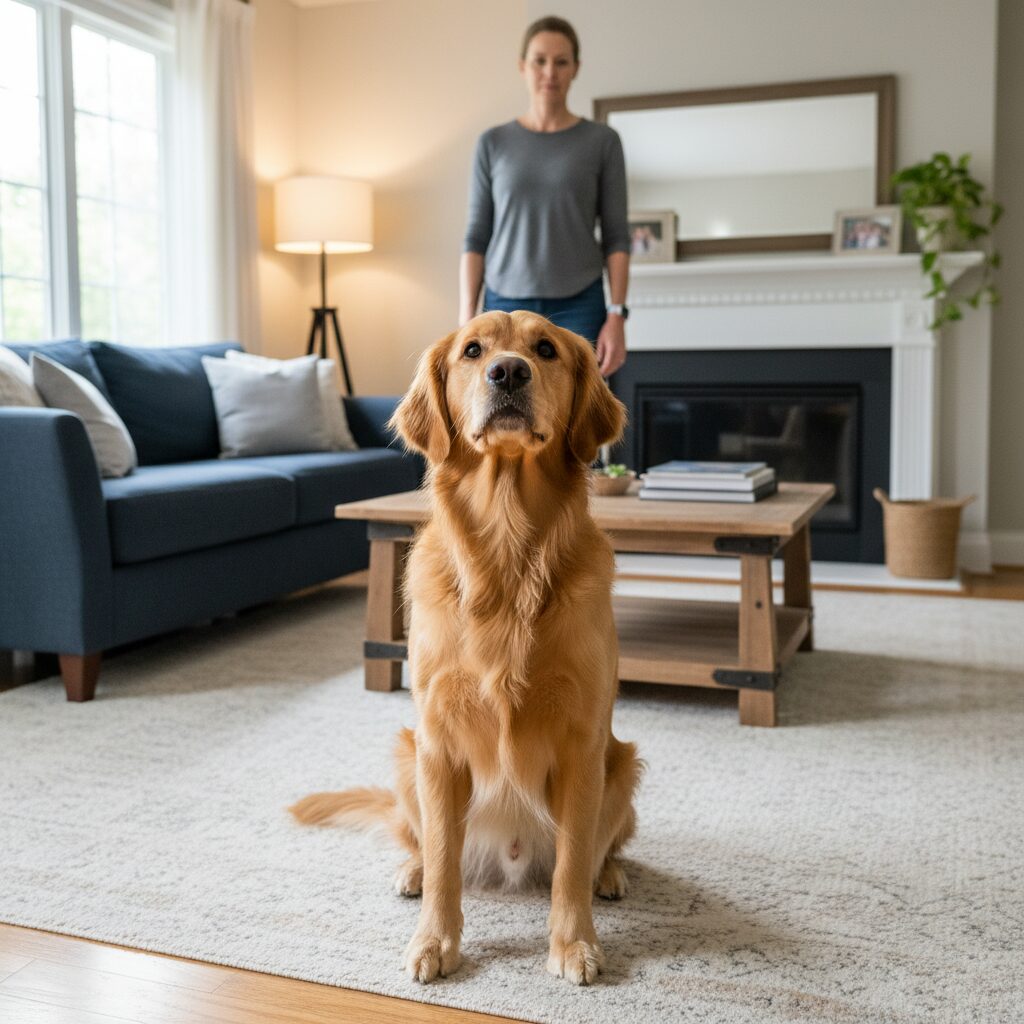
Before attempting the ‘Do As I Do’ protocol, your dog must possess a solid foundation of basic obedience. Attempting this advanced cognitive task without these fundamentals will likely lead to frustration for both the handler and the dog. Ensure your dog has mastered the following:
- The ‘Stay’ Command: The dog must be able to remain stationary while watching you perform an action. If they break their stay to jump on you or investigate, they cannot observe the demonstration effectively.
- Visual Attention: Your dog must be comfortable making eye contact and watching you. If your dog is easily distracted by the environment, work on engagement exercises first.
- Three Known Behaviors on Verbal Cue: Your dog needs to know at least three distinct behaviors (e.g., spin, paw, lie down) that they can perform on a verbal cue alone, without hand signals or luring. This is critical for the initial training phase.
If your dog relies heavily on hand signals (e.g., you have to point down for them to lie down), you must fade these prompts and ensure they understand the verbal command before starting DAID. The goal is to eventually replace the verbal command with the visual demonstration.
Phase One: Teaching the ‘Do It!’ Rule
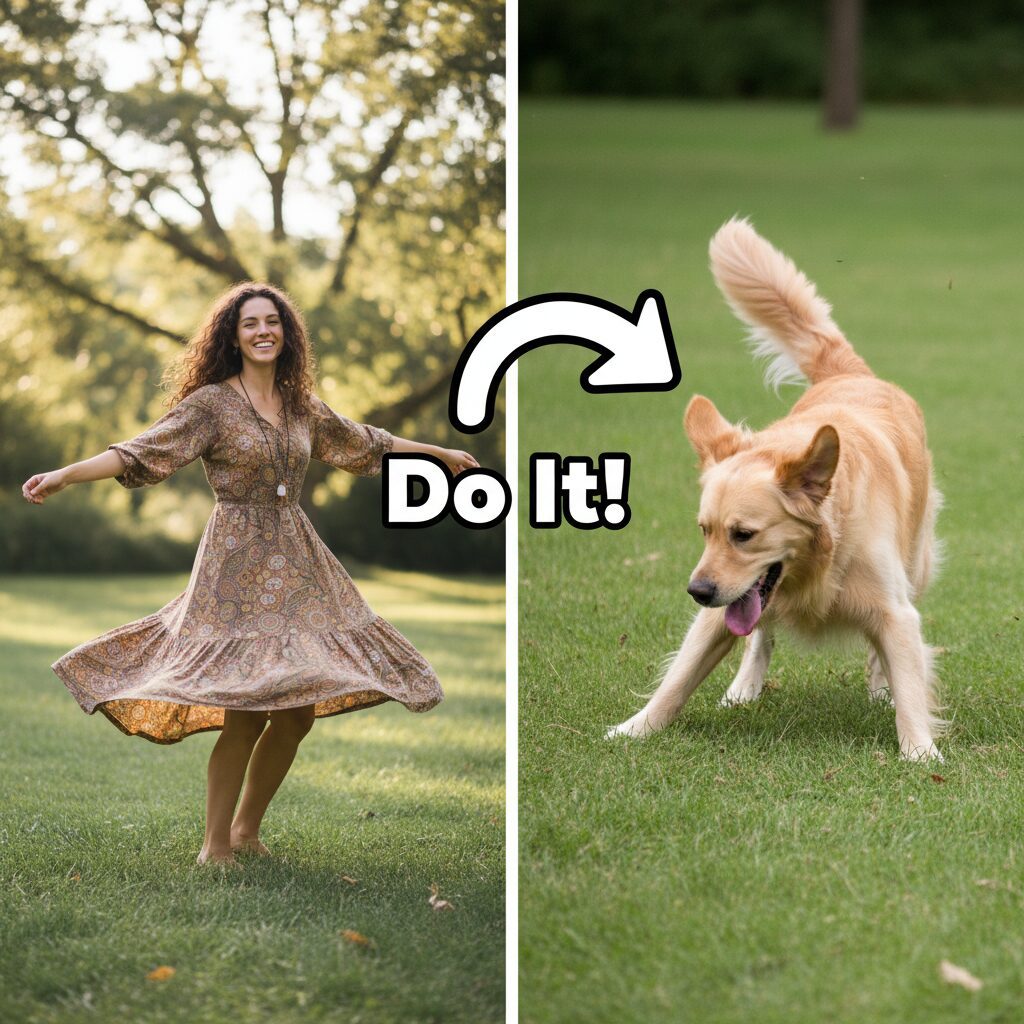
The first phase of training does not involve teaching new tricks; rather, it involves teaching the dog the concept of imitation using behaviors they already know. We call this ‘learning the rule.’ The rule is: Watch what I do, wait for the command ‘Do It!’, and then repeat the action.
The Training Sequence
Follow this strict protocol to establish the rule:
- Step 1: Ask your dog to ‘Stay’ and ensure they are watching you.
- Step 2: Perform a known action yourself. For example, if the dog knows how to spin, you spin in a circle.
- Step 3: Return to a neutral standing position.
- Step 4: Say the command “Do It!” (or “Copy”).
- Step 5: Immediately give the dog’s known verbal cue for that action (e.g., “Spin”).
- Step 6: When the dog performs the action, mark (click or “Yes!”) and reward heavily.
Repeat this sequence with three different known behaviors (e.g., spin, down, jump). Gradually, you will delay the verbal cue in Step 5 until the dog begins to anticipate the action based solely on your demonstration. Once the dog performs the action after you say “Do It!” but before you give the old verbal cue, they are beginning to understand the rule of imitation.
Phase Two: Generalization and New Behaviors
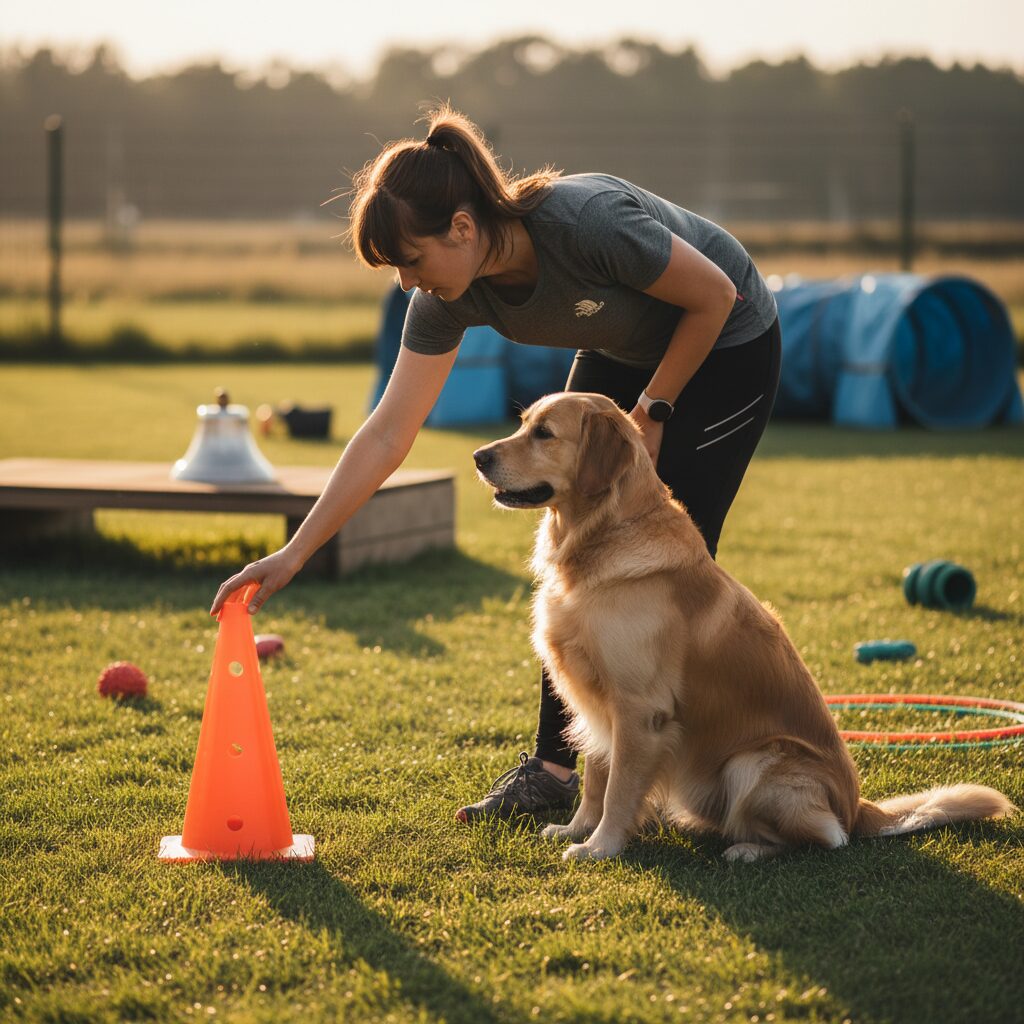
Once your dog can reliably repeat known behaviors by watching you and hearing the “Do It!” command (without the old verbal cues), you are ready to generalize the concept. This confirms that the dog isn’t just memorizing a sequence but actually understanding that “Do It!” means “copy what I just did.”
To test this, introduce a novel action involving an object. For example, place a small plastic bottle on the floor.
- Ask the dog to stay.
- Walk over and knock the bottle over with your hand.
- Return to the dog and say “Do It!”
If the dog walks over and knocks the bottle over (likely with their nose or paw), they have successfully generalized the rule! This is the breakthrough moment. From here, you can use this method to teach complex behaviors such as opening drawers, ringing bells, or walking around obstacles. Always remember that dogs map human anatomy to their own; if you pick up an object with your hand, they will likely use their mouth. Be patient as they figure out the biomechanics of the translation.
Troubleshooting Common Challenges
Even with intelligent dogs, the DAID method can present hurdles. Here are common issues and how to resolve them:
The Dog Breaks the Stay
If the dog moves while you are demonstrating, stop immediately. Do not reward. Reset the dog into a stay and try again. The observation phase is non-negotiable; if they aren’t watching, they cannot learn. You may need to reinforce the value of the ‘Stay’ command separately.
The Dog Waits for the Verbal Cue
If you are stuck in Phase One and the dog refuses to move until you say “Spin” or “Sit,” you may be helping too much. Try waiting a few seconds after saying “Do It!” to see if the dog offers the behavior. If not, use a very subtle prompt (a partial hand signal) rather than the full verbal cue, and fade that prompt as quickly as possible.
Confusion with Object Interaction
Sometimes a dog will run to the object (like the bottle) but not know what to do with it. If they investigate the object but don’t mimic the action, you may need to shape the interaction slightly or ensure your demonstration is very clear. Ensure the object is safe and easy for the dog to manipulate.
Expanding Your Dog’s Cognitive Horizons
The ‘Do As I Do’ method is a testament to the incredible evolutionary journey dogs have taken alongside humans. By teaching your dog to learn through mimicry, you are not just adding tricks to their repertoire; you are engaging in a sophisticated form of two-way communication that acknowledges their cognitive abilities. This method builds confidence, strengthens the human-animal bond, and provides mental enrichment that tires a dog out far more efficiently than physical exercise alone.
Remember that patience is paramount. Social learning is mentally taxing for dogs. Keep sessions short, positive, and fun. As you progress, you will likely find that your dog begins to look to you for guidance more frequently in everyday situations, creating a partnership based on mutual understanding and observation.