Circus Star: The Beginner’s Guide to Teaching the Hoop Jump
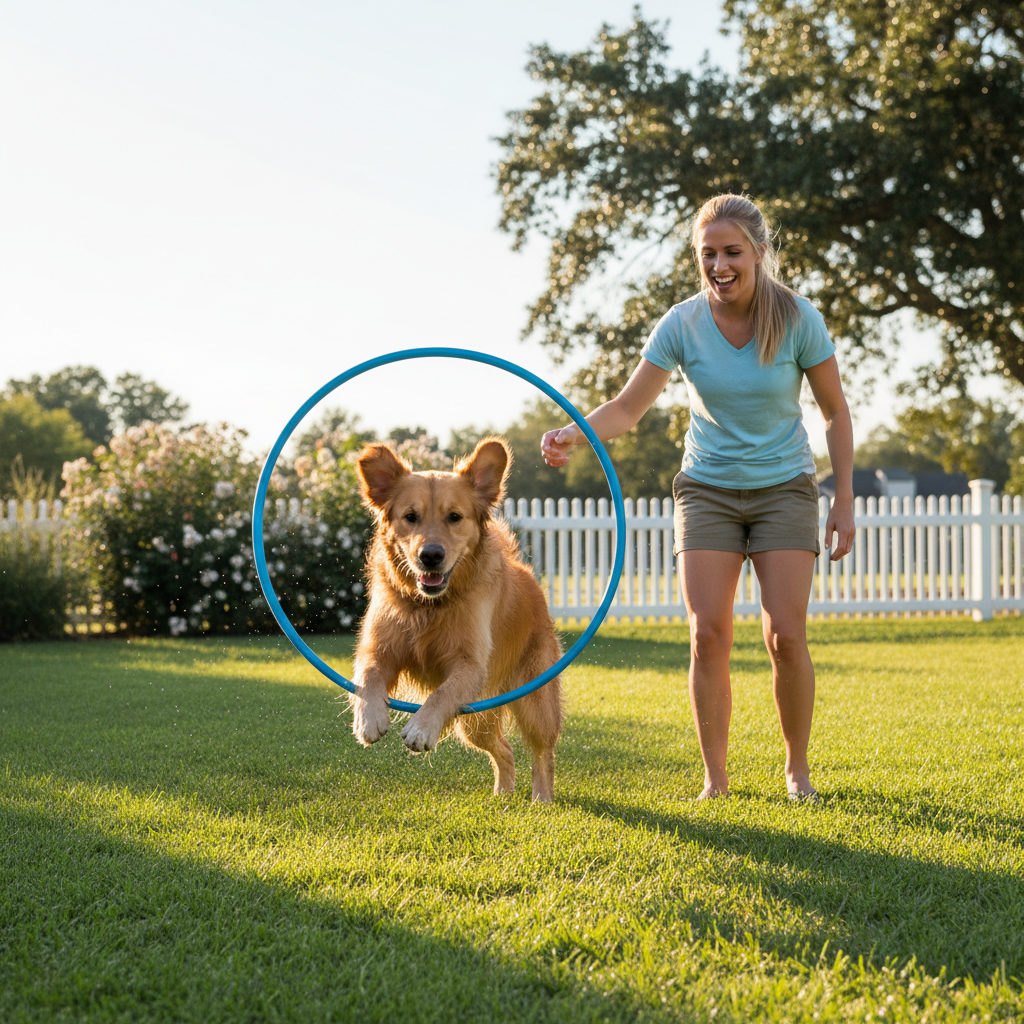
Have you ever watched a dog agility competition and thought, ‘Wow, I wish my dog could do that!’? Well, good news! Some of those impressive-looking tricks are easier to teach than you think. The hoop jump is a classic for a reason: it looks amazing, it’s a fantastic bonding activity, and it provides great mental and physical stimulation for your pup.
Forget about complicated training manuals. We’re here to break down this ‘circus’ trick into simple, fun, and positive steps. With a little patience, a handful of treats, and a whole lot of praise, you and your canine companion will be mastering the hoop jump in no time. Let’s get started!
Gearing Up for Success: What You’ll Need
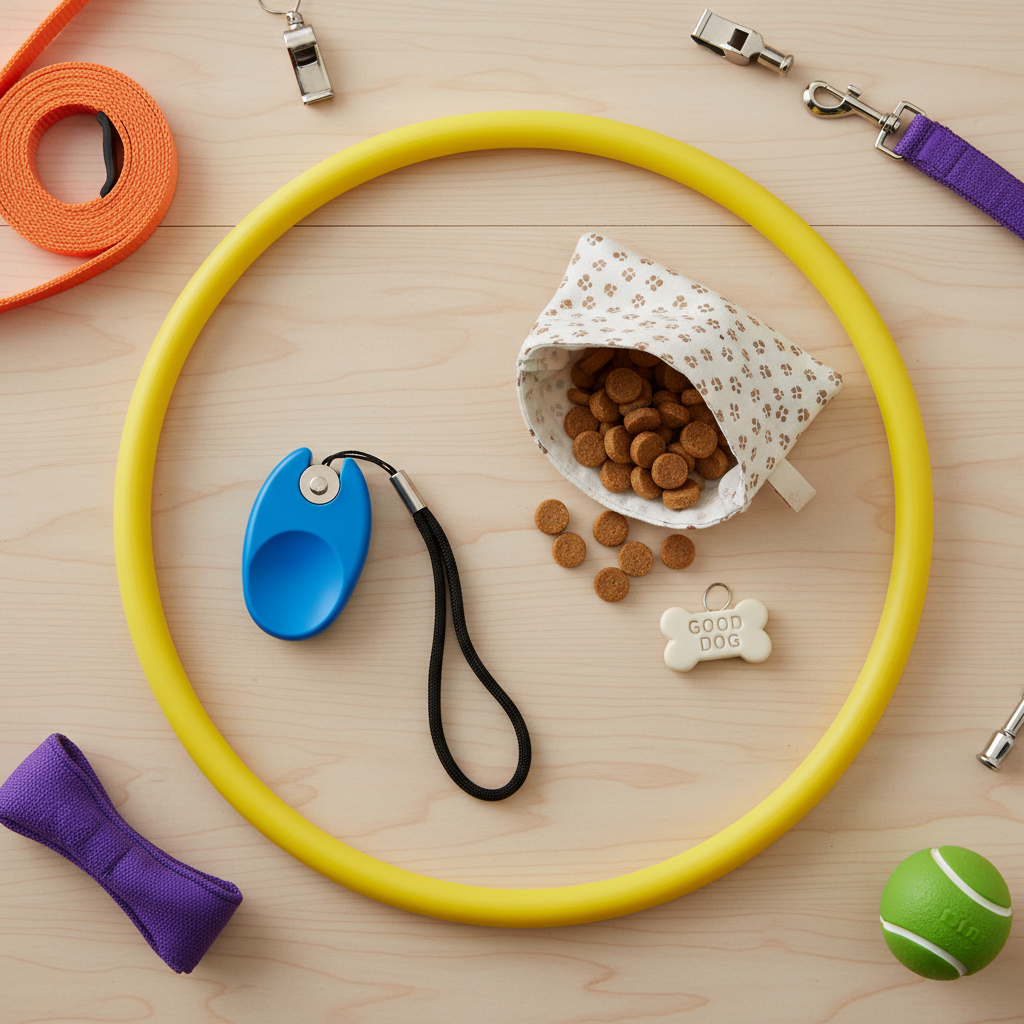
Before you and your future acrobat get started, it’s best to gather a few simple tools. Having everything ready will make your training sessions smooth and effective. You don’t need any fancy or expensive equipment to begin!
The Essentials:
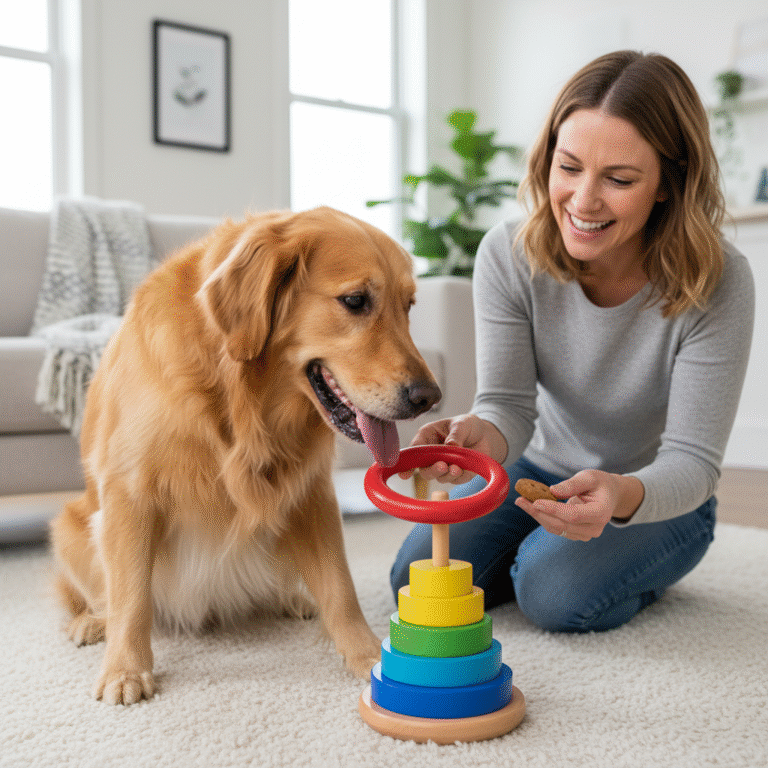
- A Hoop: A standard children’s hula hoop is perfect for this. It’s lightweight, safe, and just the right size for most dogs. You can find one at almost any toy or department store. If you have a very small dog, you might consider an embroidery hoop, or for a giant breed, you could even use a child’s inflatable pool ring (without water, of course!).
- High-Value Treats: This is the secret weapon! We’re talking about the good stuff—treats your dog goes absolutely bonkers for. Small, soft, smelly treats like tiny pieces of chicken, cheese, or commercial training treats work best. The goal is to make the reward so exciting that your dog is super motivated to work for it.
- A Clicker (Optional but Recommended): A clicker is a fantastic tool for marking the exact moment your dog does something right. The ‘click’ acts as a clear signal that says, ‘Yes! That’s what I want!’ followed immediately by a treat. If you’re new to clicker training, this is a great trick to start with. If you prefer not to use one, a consistent marker word like ‘Yes!’ or ‘Good!’ works just as well.
- A Positive Attitude: This is the most important tool of all! Training should always be a fun game for your dog. Keep sessions short (5-10 minutes is great), stay patient, and be ready to celebrate every tiny bit of progress.
Step 1: Making Friends with the Hoop
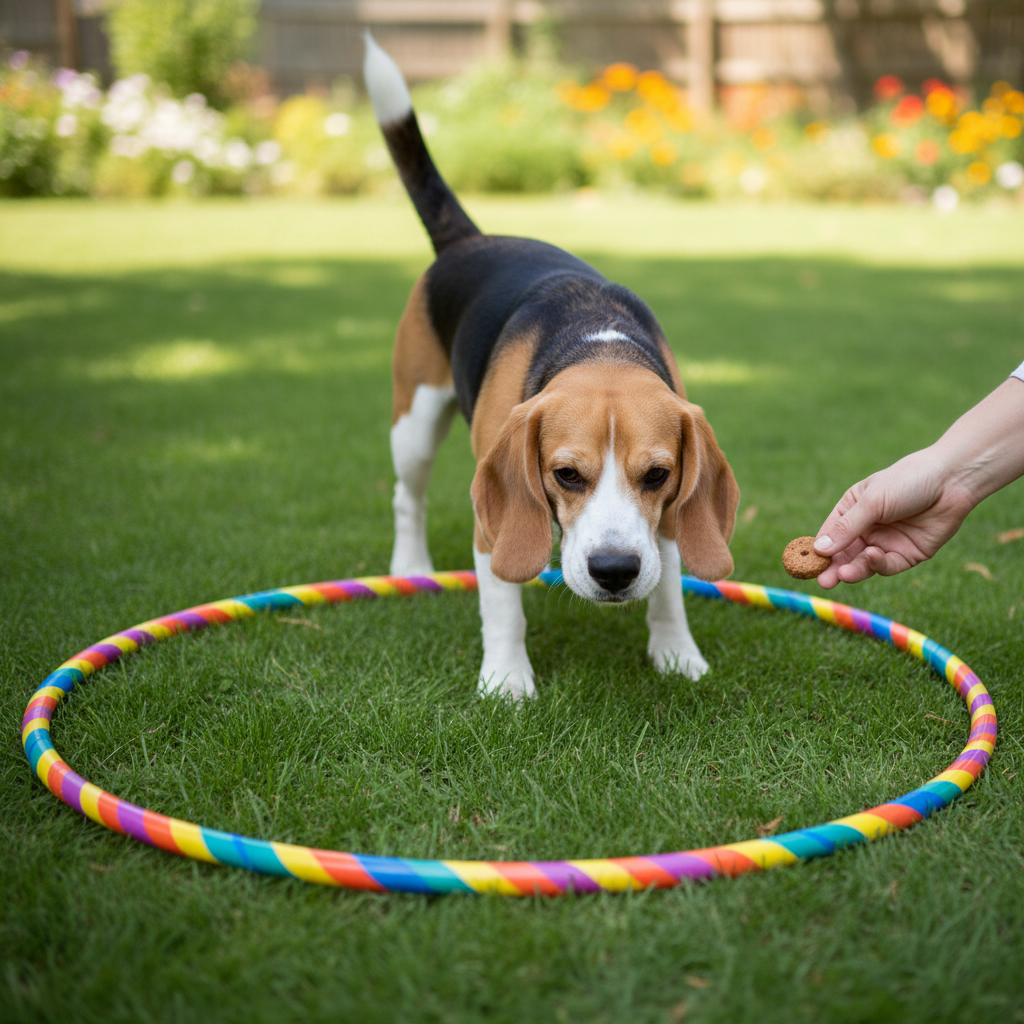
The first step is all about creating a positive association with this strange new plastic circle. We don’t want the dog to be scared of it; we want them to see it as a gateway to fun and treats. The key here is no jumping yet. We’re just getting them comfortable.
- Place the Hoop on the Ground: Start by simply laying the hula hoop flat on the floor or grass in a familiar area where your dog feels comfortable.
- Lure Your Dog Through: Grab a tasty treat. Hold it in your hand and let your dog sniff it. Then, toss the treat just on the other side of the hoop. When your dog walks through the hoop to get the treat, say your marker word (‘Yes!’) or click your clicker the moment they are inside the circle, and let them eat the reward.
- Repeat, Repeat, Repeat: Do this several times. Toss the treat, they walk through, you mark and reward. You can also try luring them through by holding the treat in your hand and guiding them through the hoop on the ground.
- Build Confidence: The goal of this stage is for your dog to happily and confidently walk through the hoop on the ground without any hesitation. If they try to walk around it, that’s okay! Just reset and make the treat on the other side even more enticing. Don’t force them; let them figure it out. This is a brain game for them!
Expert Tip: Keep the energy light and playful. If your dog sniffs the hoop, praise them! If they put a paw in, praise them! We want them to think the hoop is the best new toy they’ve ever seen.
Step 2: The Tiniest of Jumps
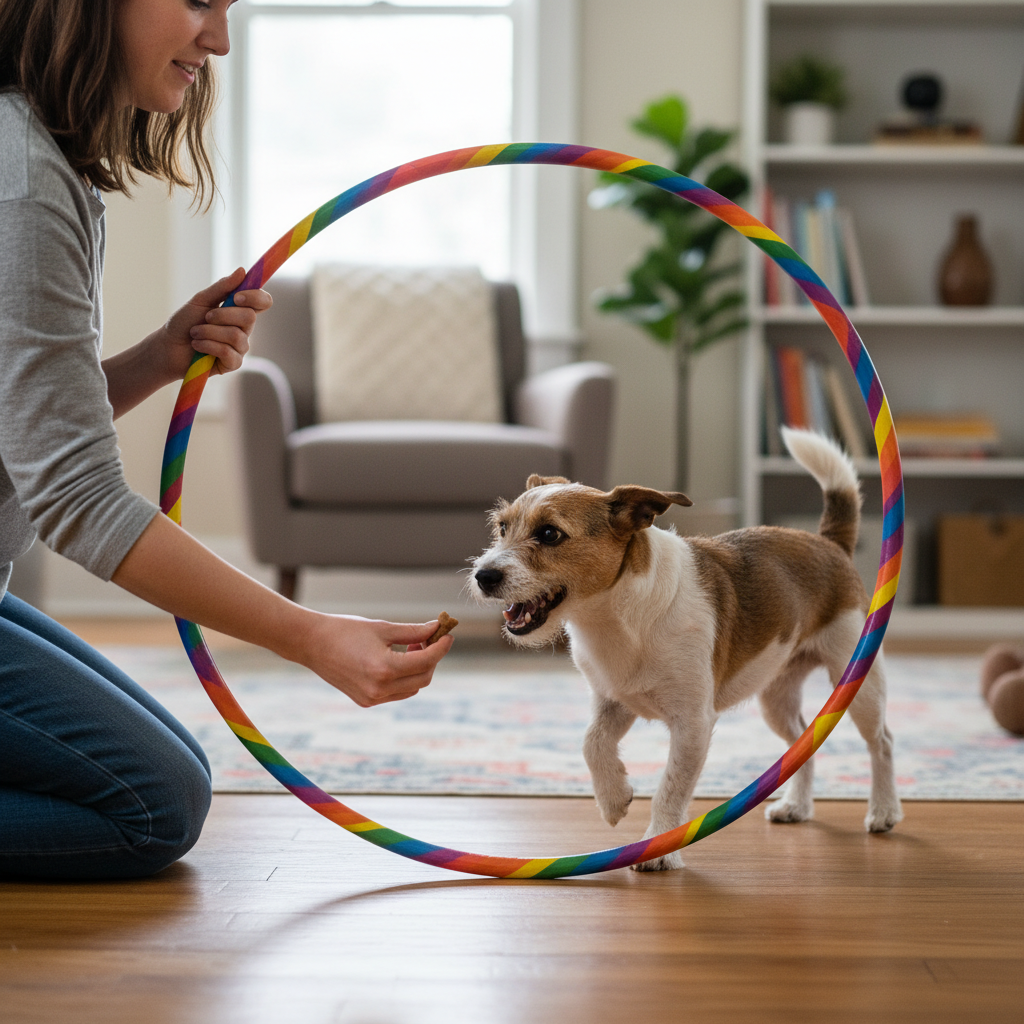
Once your dog is a pro at walking through the hoop on the ground, it’s time to add a tiny bit of height. And when we say tiny, we mean tiny. We’re building the concept of lifting their paws, not actually ‘jumping’ yet.
- Lift the Hoop (Just a Little!): Kneel on the ground and hold the hoop so that the bottom edge is touching the floor. It’s essentially just a vertical circle now.
- Lure Them Through Again: Just like before, use a high-value treat to lure your dog through the hoop. They will have to step over the bottom edge. The second they step through, click or say ‘Yes!’ and give them a big reward.
- Introduce a Cue Word: Now is a great time to add a verbal cue. As you lure your dog towards the hoop, say your chosen word clearly and cheerfully. Good options include ‘Hoop!’, ‘Through!’, or ‘Jump!’. Be consistent with whatever you choose.
- Practice Makes Perfect: Repeat this process. Say your cue, lure them through the hoop resting on the ground, mark the action, and reward enthusiastically. Your dog is now learning to connect the cue word with the action of passing through the hoop’s opening.
If your dog is hesitant, go back to the previous step for a bit. The goal is for this to be a fun, pressure-free experience. This stage is all about building a solid foundation before we ask for any real air time.
Step 3: Gradually Gaining Altitude
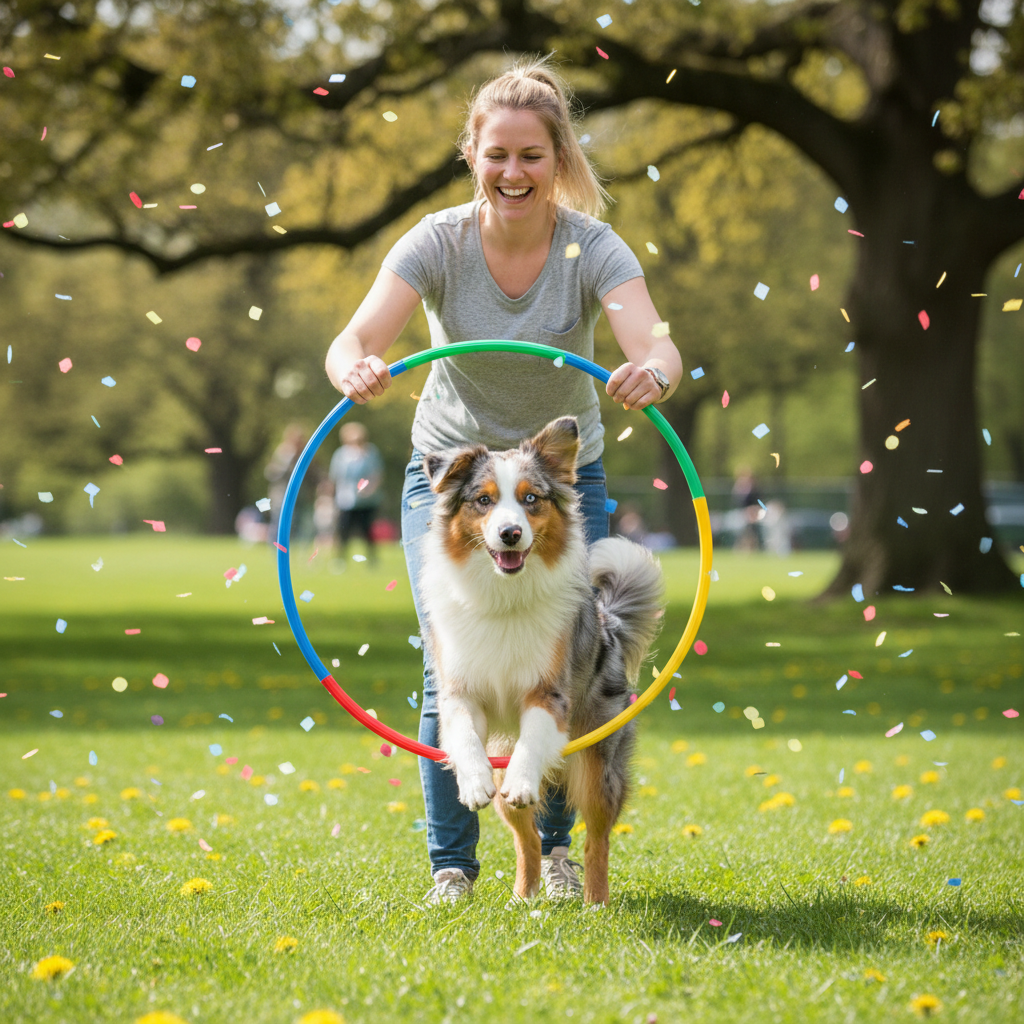
This is where the magic really starts to happen! With your dog confidently moving through the hoop on the ground, it’s time to slowly raise the height. The golden rule here is slow and steady wins the race.
- One Inch at a Time: Lift the hoop just an inch or two off the ground. It should be low enough that your dog can still easily step over it, but high enough that they have to think about it.
- Cue and Lure: Give your cue (‘Hoop!’) and lure your dog through with a treat. The moment they are through, have a mini-party! Lots of praise, pets, and a super-tasty reward.
- Hold Steady: Keep the hoop at this low height until your dog is doing it successfully almost every time. You want them to be confident and enthusiastic before you raise it any higher.
- Slowly Increase the Height: Once they are masters of the one-inch jump, you can raise it another inch or two. Continue this process of gradual increases. Every time you raise the height, your dog might hesitate. Be patient and ready to lure them through to show them it’s safe.
Important Safety Note:
Never raise the hoop higher than is comfortable or safe for your dog. For most dogs, a jump that is level with their elbow or shoulder height is plenty high for a fun trick. Avoid high jumps for puppies whose growth plates haven’t closed, senior dogs, or breeds prone to back problems like Dachshunds. The goal is fun, not an Olympic high jump!
Troubleshooting Common Hurdles
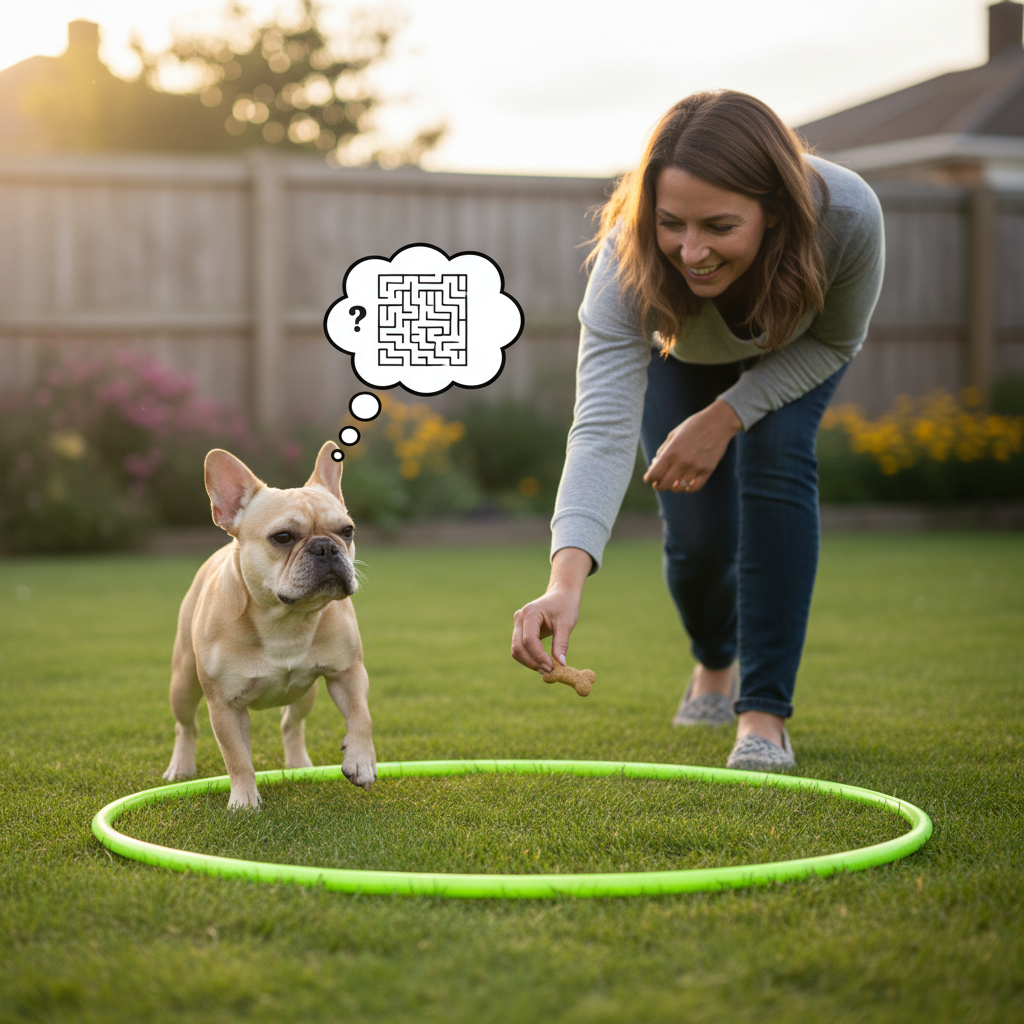
Sometimes, training doesn’t go exactly as planned, and that’s perfectly normal! Every dog learns at a different pace. Here are some common issues you might encounter and how to solve them with a positive approach.
My dog keeps walking around the hoop!
This is very common! It usually means the dog doesn’t see the value in going through it. Make the reward for going through extra special. You can also practice in a hallway or between two pieces of furniture to create a natural channel that guides them through the hoop.
My dog seems scared of the hoop.
If your dog is nervous, take a big step back. Go back to just having the hoop on the ground. Reward your dog for any interaction with it—sniffing it, touching it, looking at it. We need to rebuild that positive association. Don’t ever push the hoop towards them. Let them approach it on their own terms.
My dog knocks the hoop over.
This could mean you’ve raised the height too quickly. Lower it back down to a level where they were previously successful and build their confidence back up. Make sure you’re holding the hoop firmly, but be ready to let go or drop it if your dog gets tangled to prevent injury or fear.
Remember the Golden Rule: If your dog is struggling, make it easier! The goal is to set them up for success so you can reward them. End every training session on a positive note, even if it means just asking for a simple ‘sit’ they know well.
Conclusion
Congratulations, you have all the tools and steps to teach your dog one of the most fun and impressive tricks around! Remember that the journey of teaching the hoop jump is just as important as the final result. It’s a fantastic way to strengthen your communication, build your dog’s confidence, and share some joyful moments together.
Be patient, stay positive, and celebrate every little hop, step, and wiggle along the way. Before you know it, you’ll have your very own circus star, ready to show off their amazing skills. Now go grab that hoop and have some fun!