Cute Or Cruel? How To Train Your Dog To Love Their Halloween Costume
As Halloween approaches, social media feeds fill with images of dogs dressed as pumpkins, superheroes, and ghosts. While these photos garner likes, they often spark a debate among canine professionals and owners alike: is dressing up a dog cute, or is it cruel? The answer lies not in the costume itself, but in the dog’s individual temperament and the method used to introduce the apparel.
For many dogs, wearing clothing is unnatural and can trigger stress responses, ranging from freezing in place to active avoidance. However, with the correct application of animal behavior principles and positive reinforcement, many dogs can learn to tolerate, and even enjoy, wearing a costume. This article serves as a professional guide to assessing your dog’s readiness for a costume and provides a systematic desensitization protocol to ensure their Halloween experience remains safe and stress-free.
Assessing Canine Comfort: Is a Costume Right for Your Dog?
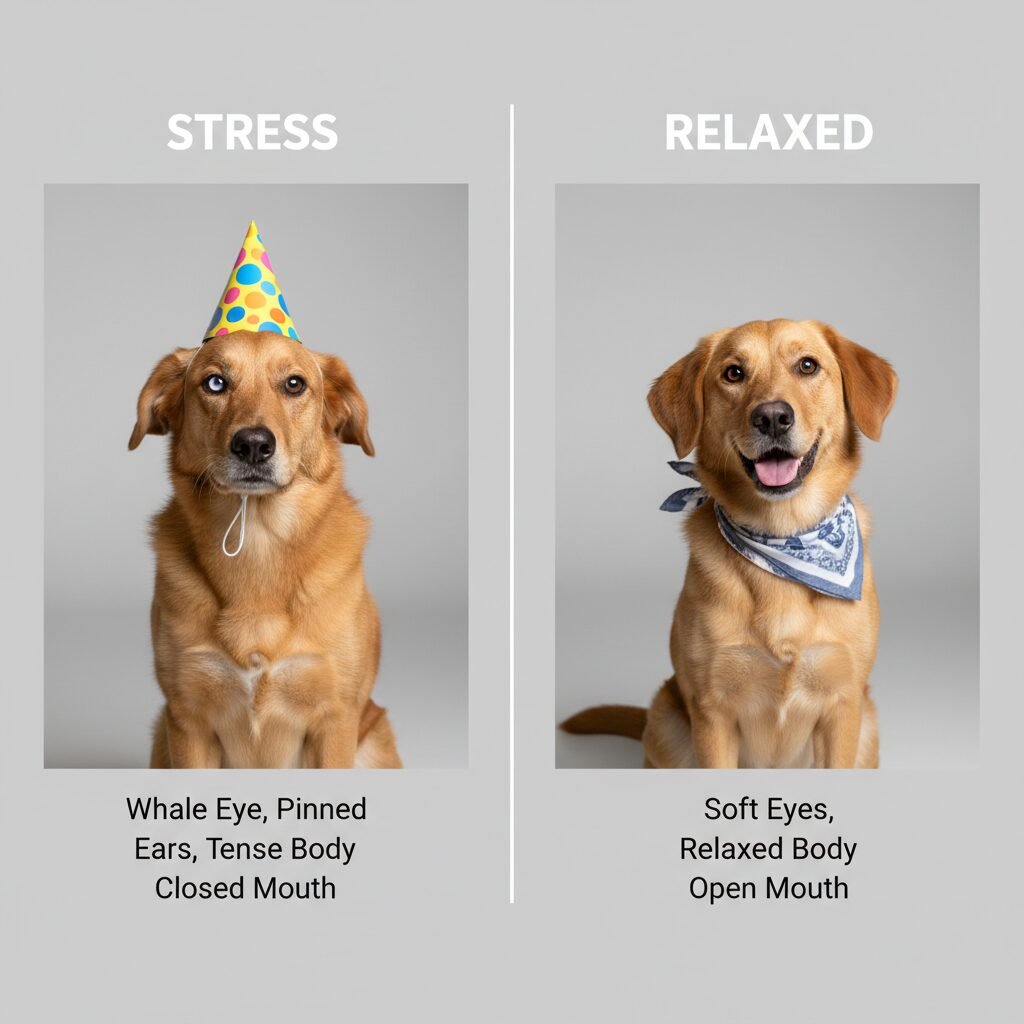
Before purchasing a costume, it is imperative to assess whether your dog is a suitable candidate for dressing up. Not every dog will tolerate clothing, and forcing the issue can damage the bond between owner and pet. As responsible handlers, we must interpret canine body language accurately.
Watch for subtle signs of stress, often referred to as ‘calming signals’:
- Whale Eye: Showing the whites of the eyes.
- Lip Licking: Frequent flicking of the tongue when no food is present.
- Freezing: The dog stands completely still and refuses to move.
- Pinned Ears: Ears flattened against the head.
If your dog generally dislikes having their paws touched, hates wearing a harness, or is sensitive to handling, a full-body costume is likely inappropriate. In these cases, a festive bandana or a decorative collar is a humane and safer alternative that preserves the dog’s dignity and comfort.
Selecting the Right Gear: Safety and Ergonomics
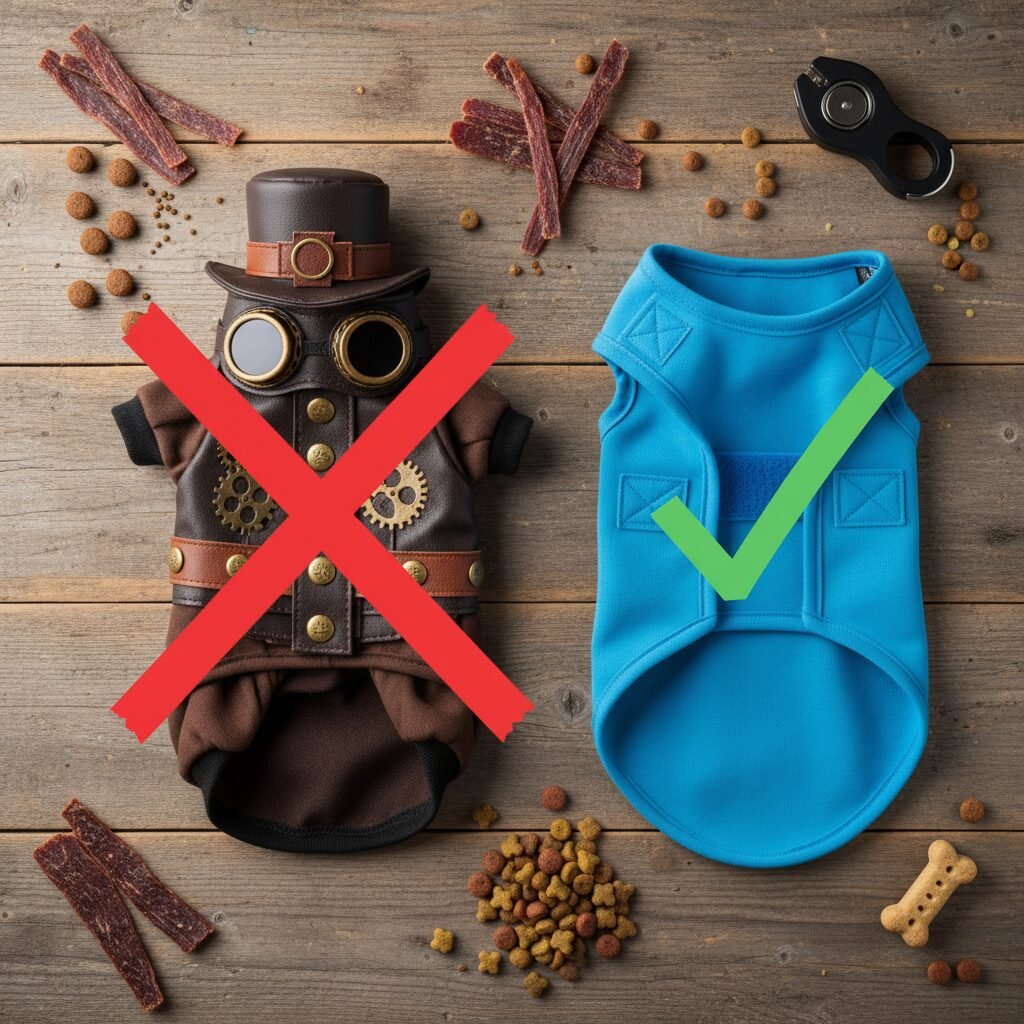
Success begins with selecting the appropriate equipment. A costume must be ergonomically designed to allow for a full range of motion. It should not impede the dog’s ability to walk, relieve themselves, bark, or see clearly. Avoid costumes with masks that cover the eyes or muzzles that restrict panting, as panting is a dog’s primary method of thermoregulation.
Key Selection Criteria:
- Fabric: Choose breathable, lightweight materials to prevent overheating.
- Fit: Ensure the costume is not too tight (constricting blood flow) or too loose (causing tripping hazards).
- Hazards: Remove small buttons, bells, or loose strings that could be chewed off and swallowed, posing a choking risk.
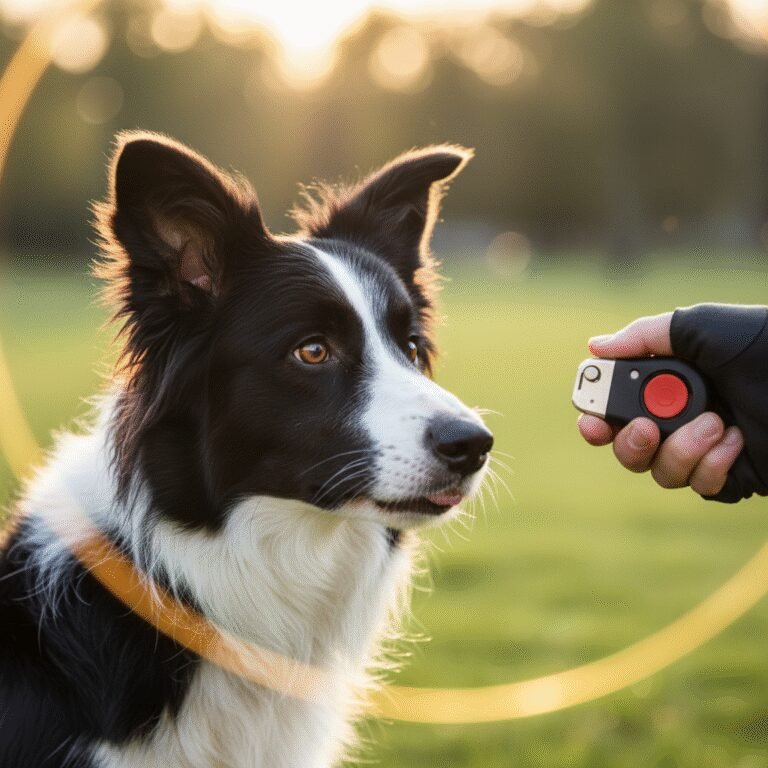
Additionally, gather your training tools: a clicker (or a verbal marker word like ‘Yes!’) and high-value rewards such as freeze-dried liver, cheese, or boiled chicken. The goal is to create a strong positive association with the garment.
The Step-by-Step Desensitization Protocol
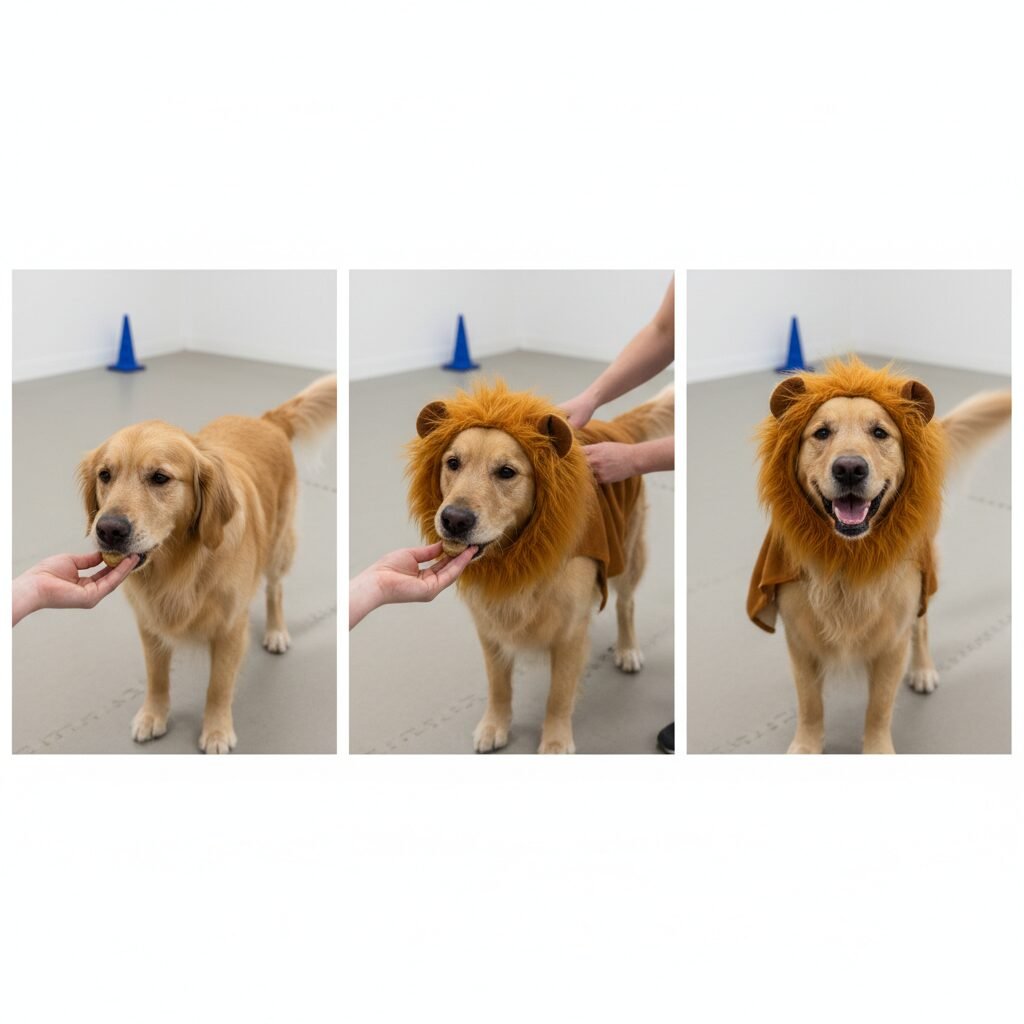
Desensitization is the process of gradually exposing the dog to a stimulus (the costume) at a low intensity to prevent a fear response. Do not attempt to put the costume on the dog immediately. Follow this progressive protocol over several days.
Phase 1: Investigation
Place the costume on the floor. Allow your dog to investigate it at their own pace. Whenever they sniff or look at the costume, mark (click) and reward. If they ignore it, that is acceptable; do not lure them onto it. We want voluntary engagement.
Phase 2: Tactile Association
Hold the costume in one hand and treats in the other. Bring the costume near the dog without touching them. Mark and treat. Gradually progress to gently touching the dog’s shoulder or back with the fabric, followed immediately by a high-value reward. If the dog backs away, you have moved too fast. Go back to the previous step.
Phase 3: Partial Dressing
If the costume requires the head to go through an opening, use a treat to lure the dog’s head through the hole voluntarily. Do not shove the costume over their face. Let them pull their head out immediately and reward them. Repeat this until they are comfortable pushing their head through.
Phase 4: Fastening and Duration
Once the costume is on, fasten the straps loosely. Feed a steady stream of treats while the costume is on to maintain a positive emotional state. Keep the first session very short—less than 30 seconds—then remove the costume and stop the treats. This teaches the dog that Costume = Treats and No Costume = Boring.
Troubleshooting: The ‘Statue’ Effect and Other Issues
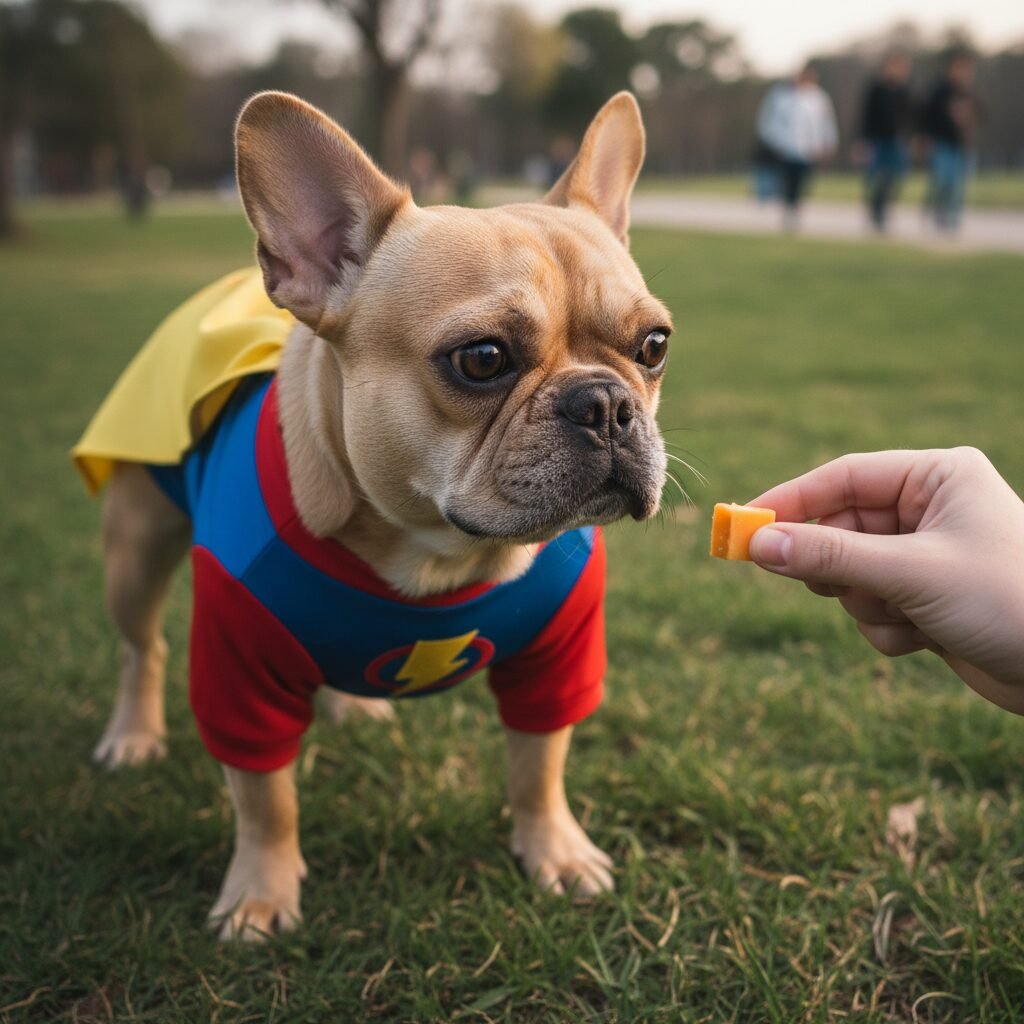
A common reaction during costume training is the ‘statue’ effect, where the dog freezes and refuses to move. This is a sign of mild inhibition or discomfort. It often occurs because the sensation of the fabric feels strange against their fur.
How to address it:
- Encourage Movement: Do not pull the dog. Instead, use a lure or a favorite toy to encourage them to take a step.
- Check the Fit: Ensure the costume isn’t restricting shoulder or hip movement.
- Reduce Duration: If the dog freezes, take the costume off and try a lighter item, like a t-shirt, to build confidence before returning to the costume.
If your dog attempts to chew, paw at, or roll out of the costume, this is a clear rejection. Remove the costume immediately. It is better to have a happy dog in a festive collar than a miserable dog in an elaborate outfit.
Halloween Night: Management and Safety
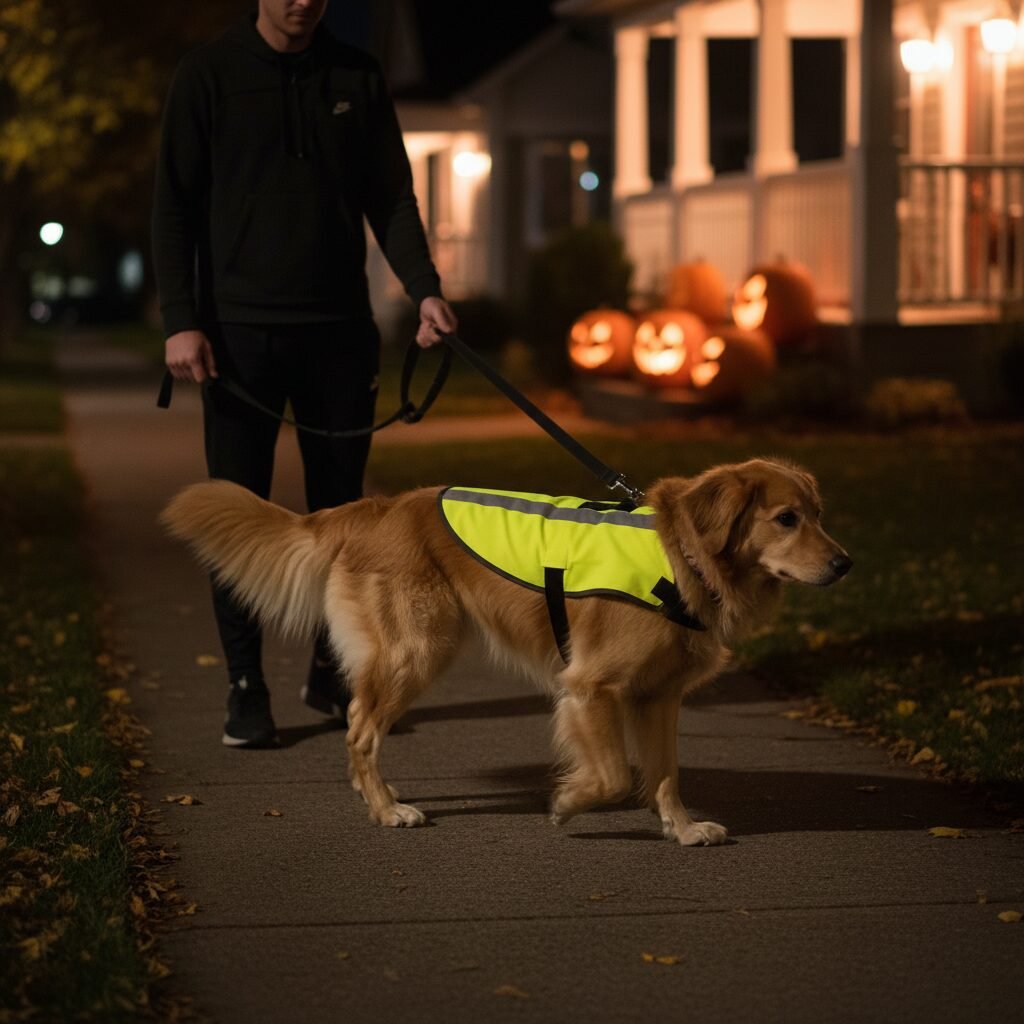
Even a well-trained dog can become overwhelmed on Halloween night due to the doorbell ringing, strange noises, and people in masks. If your dog is wearing a costume, their body language may be harder to read, and their ability to communicate stress is diminished.
Safety Protocols:
- Supervision: Never leave a dog alone in a costume. They can get snagged on furniture or overheat rapidly.
- Visibility: Ensure the costume has reflective elements if you are walking at night.
- Identification: The costume must not cover the dog’s ID tags or collar.
- The ‘Naked’ Option: If your dog shows signs of anxiety as trick-or-treaters arrive, remove the costume and place the dog in a quiet, safe room away from the door.
Final Thoughts on Festive Fun
Ultimately, the question of ‘Cute or Cruel’ is answered by the dog’s reaction. A costume is only cute if the dog is comfortable, happy, and willing to participate. By prioritizing your dog’s welfare, using positive reinforcement, and respecting their boundaries, you can ensure that Halloween remains a treat, not a trick. If your dog simply isn’t a fan of dressing up, embrace their natural beauty—a wagging tail is the best accessory they can wear.