Turn Fish Waste Into Gold: The Shiny-Coat Salmon Skin Jerky Your Dog Will Viral-Obey For
Welcome to the Nutrition Underground
Listen up, savvy dog parents. I am the Canine Nutrition Hacker, and today we are talking about the biggest missed opportunity in your kitchen. You know that slimy, scaly skin you peel off your salmon fillets and toss straight into the garbage? You are literally throwing away liquid gold. In the commercial pet food industry, single-ingredient fish treats are marked up to astronomical levels. They package the exact same ‘waste’ product, slap a fancy rustic label on it, and charge you thirty dollars a pound. Not anymore. We are taking the power back into our own kitchens.
Hacker Disclaimer: I am a savvy dog owner and nutrition hacker, not a veterinarian. While salmon skin is a nutritional powerhouse, it is incredibly rich in healthy fats. Introduce it slowly to avoid stomach upset, and consult your vet if your dog has a history of pancreatitis or fat sensitivities. Always ensure fish is fully cooked to eliminate any risk of parasites.
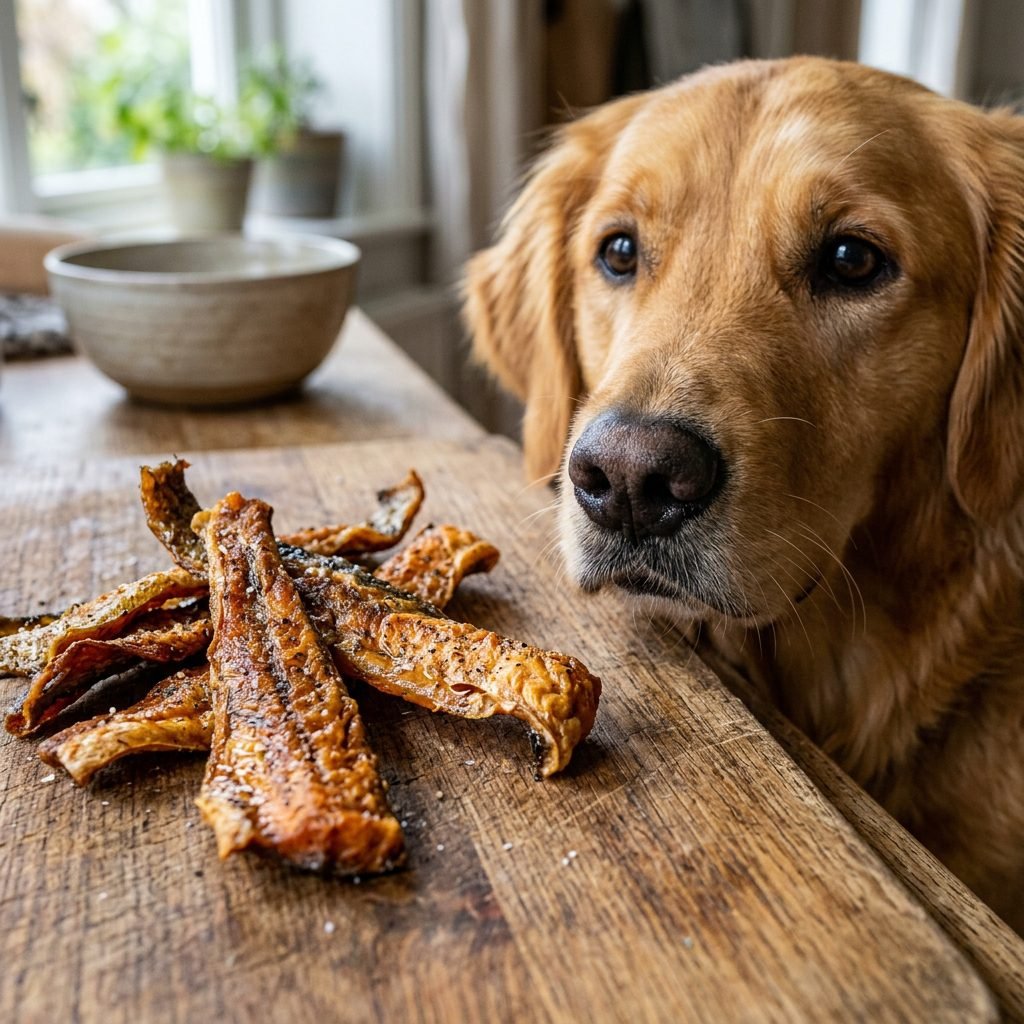
We are going to take that discarded fish skin and transform it into the ultimate high-value training treat. I am talking about a treat so biologically appropriate, so rich in scent and flavor, that your dog will achieve what I call ‘viral-obedience’—that laser-focused, ignore-every-squirrel-in-the-park level of attention. Plus, we are going to flood their system with pure, unadulterated Omega-3 fatty acids for a coat so shiny you can check your reflection in it. Forget the overpriced, stale pet store jerky. It is time to learn how to turn kitchen scraps into a premium superfood.
The Great Pet Store Robbery: Cost Breakdown
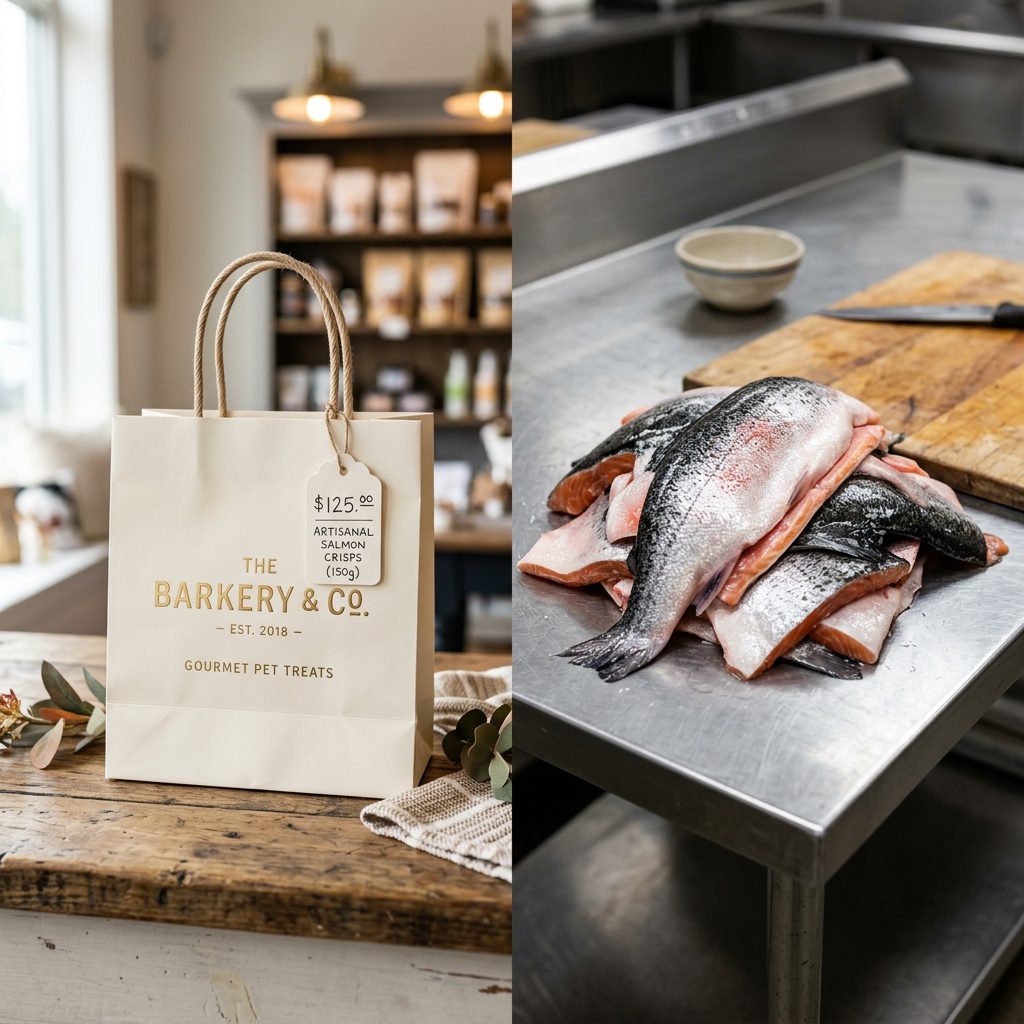
Let us do what we do best: follow the money. Next time you are in a boutique pet store, look at the premium single-ingredient treat aisle. You will see beautifully branded bags of dehydrated salmon skins marketed as exotic delicacies for your pup. If you look closely at the price per ounce, it is borderline criminal. They are selling you the literal byproduct of the human seafood industry at a premium markup. Why? Because they know dog owners are desperate for healthy, single-ingredient options.
The Real Cost of Feeding DIY vs Store-Bought
Let us break down the actual economics of making this yourself versus buying it off the shelf. Spoiler alert: the savings are massive, and the quality of your homemade version will be infinitely better.
| Treat Source | Ingredient Quality | Approximate Cost Per Pound | Verdict |
|---|---|---|---|
| Boutique Pet Store Jerky | Unknown sourcing, often farmed, sitting on shelves for months losing nutrient density. | $30.00 – $45.00 | A massive rip-off. You are paying for marketing, packaging, and shelf space. |
| DIY Salmon Skin Jerky (From your own dinners) | Human-grade, fresh, wild-caught (if you buy wild for yourself). | $0.00 (It was going in the trash!) | The ultimate Canine Hacker win. Free, premium, whole-food nutrition. |
| DIY Salmon Skin Jerky (Buying skins from a fishmonger) | Human-grade, fresh, wild-caught. | $2.00 – $5.00 | Incredible value. High-yield, low-cost superfood that respects your budget. |
By making this yourself, you are not just saving money; you are controlling the entire supply chain. You know exactly how fresh the fish is, how it was prepared, and most importantly, you know that there are absolutely zero chemical preservatives, hidden sugars, or glycerin fillers keeping it shelf-stable. Commercial treats often use glycerin to keep jerky soft, but we want pure, unadulterated nutrition.
The Science of the Shine: Why Salmon Skin?
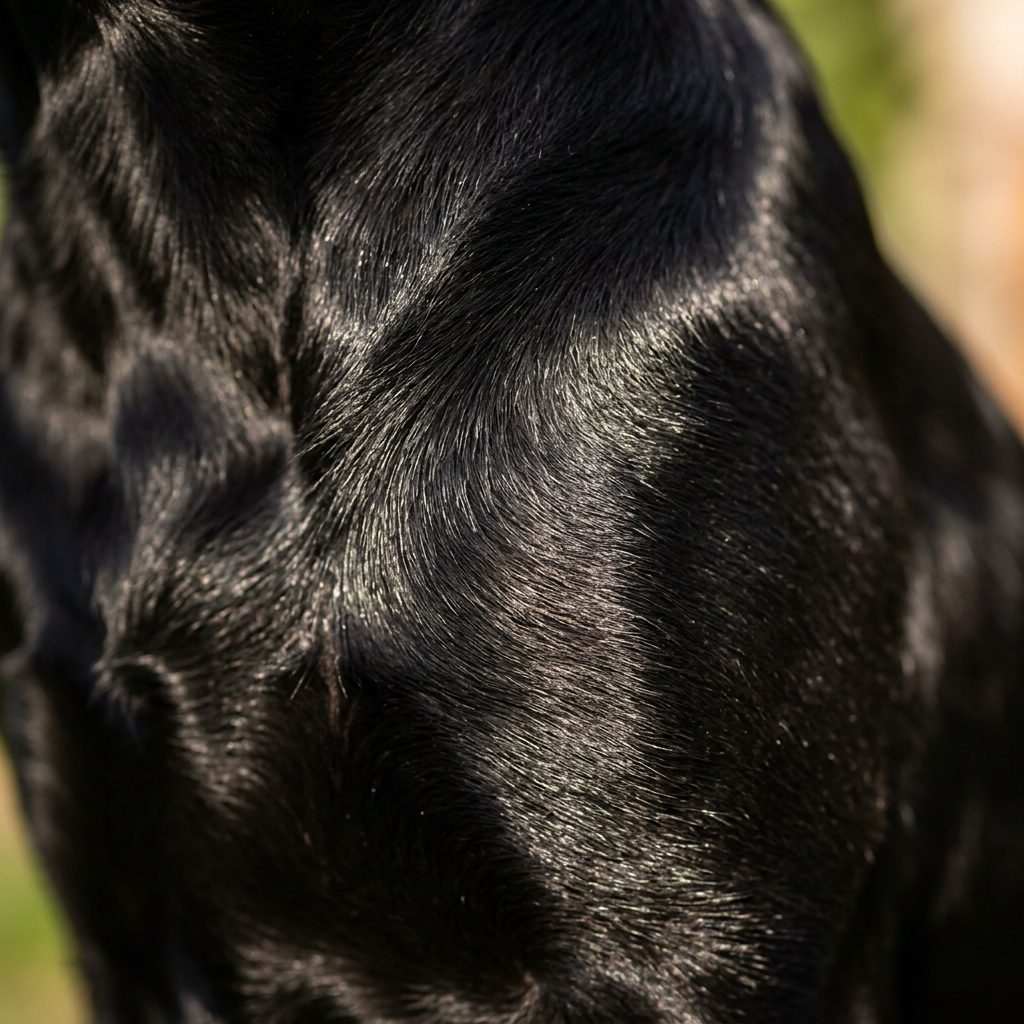
Why are we so obsessed with salmon skin? Because it is arguably the most concentrated source of marine lipids available to us. When you feed commercial kibble, even the ‘premium’ brands that boast about added Omega-3s on the front of the bag, you have to understand the manufacturing process. Those fragile fats are often completely destroyed by the extreme heat and pressure of the extrusion process. What is left is usually rancid or biologically useless by the time you open the bag.
The Hero Ingredients in Fish Skin
- EPA and DHA (Omega-3 Fatty Acids): These are the heavy hitters of the nutrition world. They reduce systemic inflammation, lubricate stiff joints in senior dogs, and provide the essential building blocks for a healthy, resilient skin barrier. This is what cures that dry, flaky winter skin.
- Collagen: The skin of the fish is pure structural protein. Natural marine collagen supports healthy ligaments, tendons, and cartilage, keeping your dog agile and active.
- Vitamin D: Crucial for bone health and immune function, naturally occurring in the fat of cold-water fish. Dogs cannot synthesize Vitamin D from the sun like humans can; they must get it from their diet.
When you feed these fats in their whole-food, gently cooked state, the bioavailability skyrockets. Within just three to four weeks of replacing highly processed wheat-based treats with this DIY salmon skin jerky, you will notice a drastic reduction in dander, less obsessive scratching, and a coat that feels like spun silk. You are literally feeding their skin from the inside out.
Sourcing the Goods: Safe Fish Only
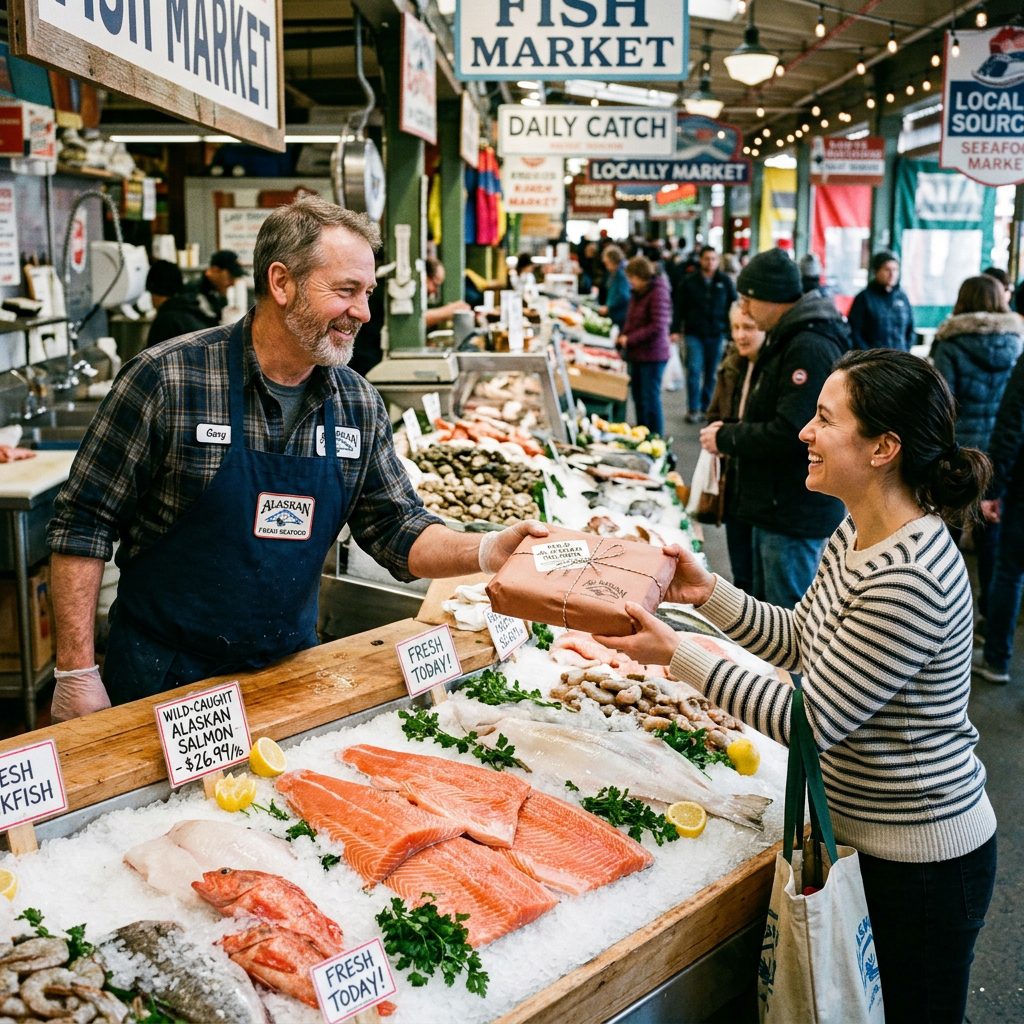
As a Canine Nutrition Hacker, you cannot just grab any fish off the discount rack and call it a day. We need to talk about sourcing and safety, because getting this wrong can be dangerous for your dog.
Enemy Number One: Salmon Poisoning Disease
If you live in the Pacific Northwest of the United States or Canada, you need to be hyper-aware of Salmon Poisoning Disease (SPD). It is caused by a specific parasite found in raw wild salmon, trout, and other anadromous fish that contains a bacteria called Neorickettsia helminthoeca. It is fatal to dogs if left untreated. This is why we NEVER feed raw salmon to our dogs. The good news? Cooking the skin thoroughly, which we do in this jerky recipe, completely destroys the parasite and the bacteria, making it 100% safe.
Wild-Caught vs. Farm-Raised
- Wild-Caught Alaskan Salmon: This is the absolute gold standard. It has a superior Omega-3 to Omega-6 ratio, naturally consumes a diet of astaxanthin-rich krill (which makes it pink), and is free from the artificial dyes and heavy antibiotic use often found in farmed fish pens.
- Farmed Salmon (Atlantic): If this is all you can afford or find, it is still a decent source of protein and fat, but it is higher in pro-inflammatory Omega-6 fatty acids due to their grain-based diets. If you use farmed, try to source it from reputable aquaculture farms with strict environmental standards.
Insider Secret: Go to your local grocery store’s seafood counter or a dedicated fishmonger. Ask them what they do with the skins when they fillet salmon for human customers. Most of the time, they throw them straight into the trash. If you smile and explain you are making healthy dog treats, they will often give you a massive bag of premium skins for free or for just a couple of dollars!
The Canine Nutrition Hacker’s Viral-Obey Recipe
Alright, let us get into the kitchen and make some magic. This recipe is virtually foolproof, but it requires patience. We want to draw out the moisture slowly so the skin becomes shatteringly crisp, not burnt. If you burn the fats, you destroy the Omega-3s.
Equipment Needed
- A standard conventional oven or a dedicated food dehydrator.
- Parchment paper (Do not use aluminum foil or bare baking sheets, the skin will stick like superglue).
- A sharp chef’s knife or heavy-duty kitchen shears.
The Step-by-Step Process
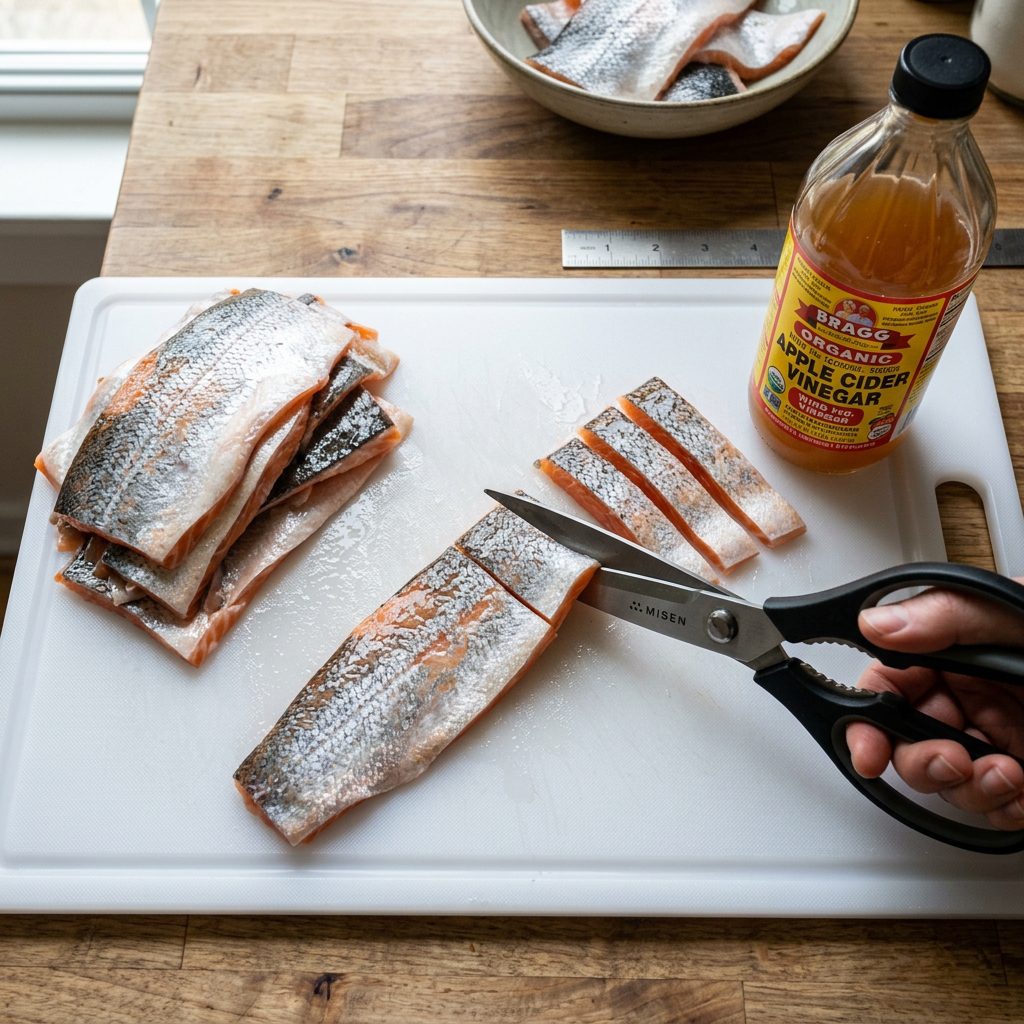
- Prep the Skins: Take your fresh or thawed salmon skins and lay them flat on a cutting board. If there are large chunks of pink meat still attached, leave them! That is bonus high-value protein. Ensure all scales are either removed or tightly attached (most commercial fillets are pre-scaled, but it is worth checking).
- Slice into Strips: Using your shears, cut the skins into strips about one inch wide and four inches long. Remember, they will shrink by about half during the dehydration process, so do not cut them too small initially.
- The Vinegar Wash (Optional but Highly Recommended): Toss the strips in a large bowl with a splash of raw apple cider vinegar and let sit for 5 minutes. This helps cut the intense ‘fishy’ odor while baking, adds a touch of healthy digestive enzymes, and helps clean the skin. Pat them completely dry with a paper towel afterward. Moisture is the enemy of jerky.
- Arrange for Baking: Lay the strips flat on a baking sheet lined with parchment paper. Make sure they are not overlapping or touching, or they will steam instead of crisping up.
- The Low and Slow Bake: Preheat your oven to 200 degrees Fahrenheit (or set your dehydrator to 145 degrees Fahrenheit). Bake for 2 to 3 hours. Check them at the 2-hour mark. You want them to be stiff, dry, and easily snappable. If they are still chewy or greasy in the middle, keep them in for another 30 minutes.
- Cooling: Let them cool completely on a wire rack. As they cool to room temperature, they will harden further into the ultimate crunchy jerky.
When you pull these out of the oven, the smell will be potent to you, but to your dog, it is the culinary equivalent of a five-star Michelin meal. They will do backflips for just a one-inch piece. Use these specifically for high-distraction training environments.
Batch Cooking & Storage Insider Secrets
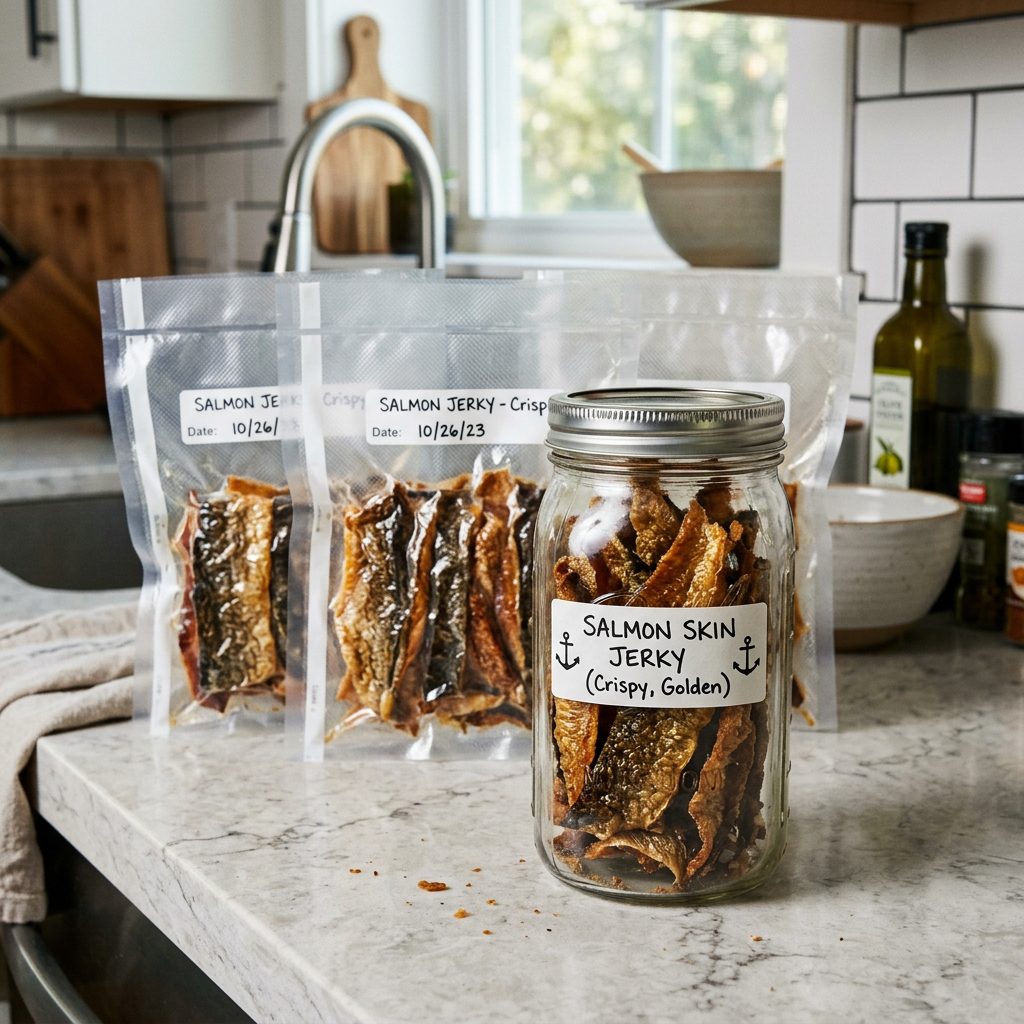
Because this process takes a few hours of oven time, you want to make it worth your while. Batch cooking is the secret weapon of the savvy dog owner. You do not want to be doing this every single week.
Maximizing Your Yield
When you score a big haul of skins from the fishmonger, prep and bake them all at once. If you have a multi-tier dehydrator, load up every single tray. The energy cost of running an oven or dehydrator is exactly the same whether you make three strips or thirty strips. Maximize your time and your electricity.
Hacker Tip: Batch Freezing: Fish oils are incredibly delicate and prone to oxidation (rancidity). If you leave a huge bag of homemade salmon jerky on the counter at room temperature for a month, those precious Omega-3 fats will spoil, and it will do your dog more harm than good. Keep a small 3-day supply in an airtight glass jar in the fridge. Take the rest of your massive batch, portion it into vacuum-sealed bags or heavy-duty freezer bags, and throw them straight into the deep freeze. They will last up to 6 months frozen!
When you need more training treats, just pull a bag from the freezer. Because all the moisture has been removed, they thaw in literally minutes on the counter and retain all that incredible, coat-boosting nutritional power. By mastering this simple storage hack, you ensure your dog gets peak-fresh Omega-3s every single day without ever paying the exorbitant retail markup.
Conclusion
And there you have it—the ultimate Canine Nutrition Hacker guide to turning seafood waste into biological gold. By taking a little time to process these discarded salmon skins, you are actively bypassing the overpriced, over-marketed commercial pet treat industry. You are taking absolute control of your dog’s health, protecting their aging joints, and giving them a show-stopping, shiny coat, all while keeping your hard-earned money right where it belongs: in your wallet.
The next time you make a beautiful salmon dinner for yourself, or the next time you walk past the seafood counter at the grocery store, remember the hidden nutritional treasure sitting right there. Bake up a batch this weekend. Watch your dog’s eyes widen when they catch that first scent wafting from the oven. Watch how fast they sit, stay, and obey when you hold a piece in your hand. That is the true power of high-value, whole-food nutrition. Stay savvy, keep hacking those ingredient labels, and never stop giving your dog the absolute best.