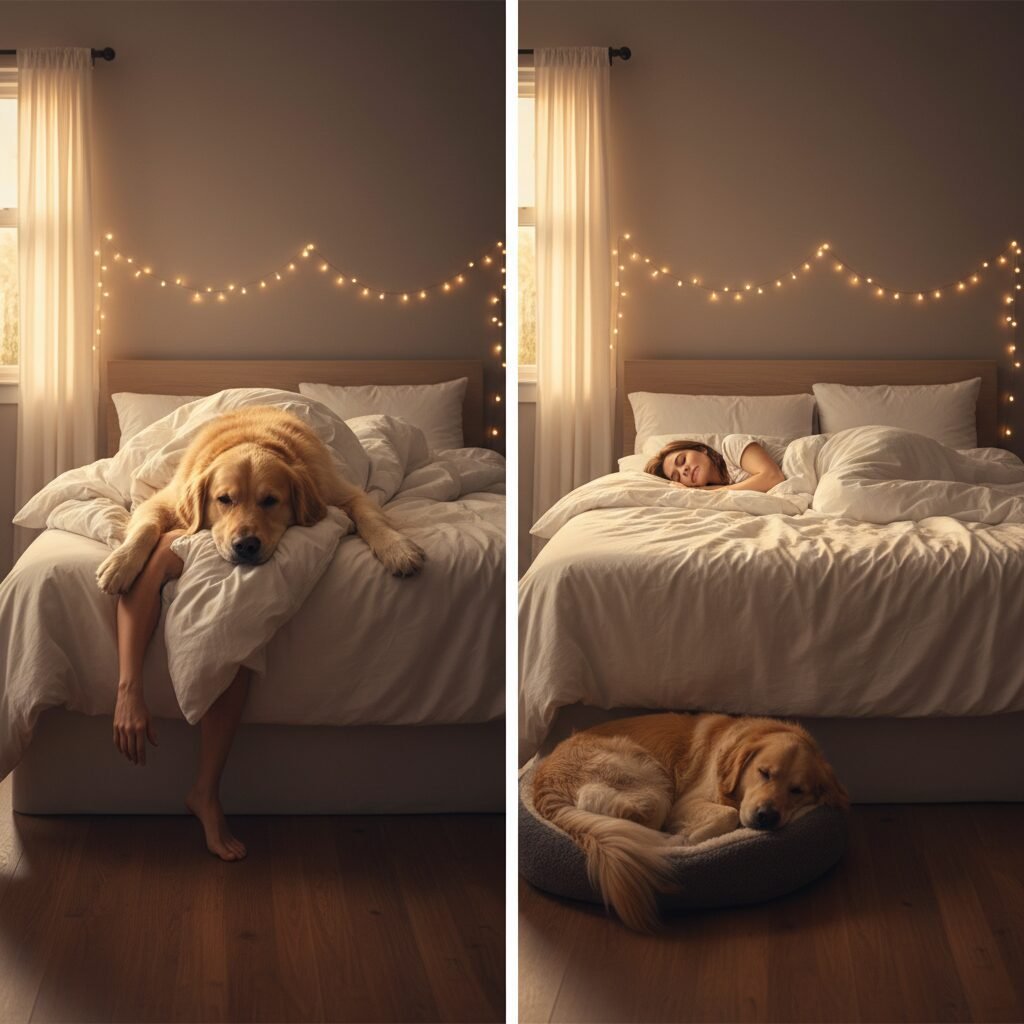
Reclaim Your Mattress! Train Your Dog To Sleep In Their Own Bed Tonight
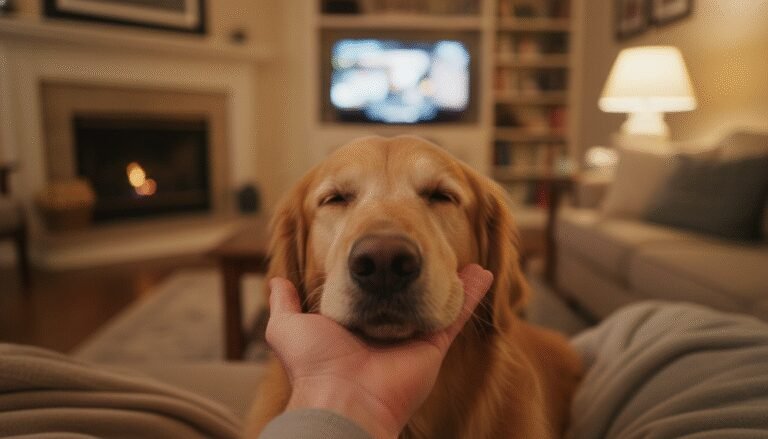
There is an undeniable comfort in the rhythmic breathing of a sleeping dog. For many owners, allowing their canine companion into the bed starts as a bonding experience or a way to provide comfort during a stormy night. However, what begins as a cuddle session often evolves into a disrupted sleep cycle, characterized by limited legroom, overheating, and the distinct challenge of maneuvering around a sprawling 70-pound animal. If you are reading this, you have likely reached the breaking point where the novelty of co-sleeping has worn off, and the necessity for restorative sleep has taken priority.
As a canine specialist, I often remind clients that reclaiming your mattress is not an act of rejection; it is a healthy establishment of boundaries that benefits both the human and the dog. Dogs thrive on routine and clear expectations. When a dog understands that they have a designated, safe, and comfortable space of their own, it can actually reduce anxiety and resource-guarding behaviors. This guide will walk you through a professional, step-by-step protocol to train your dog to sleep in their own bed, ensuring that tonight—and every night after—is restful for everyone involved.
Step 1: Setting the Stage for Success
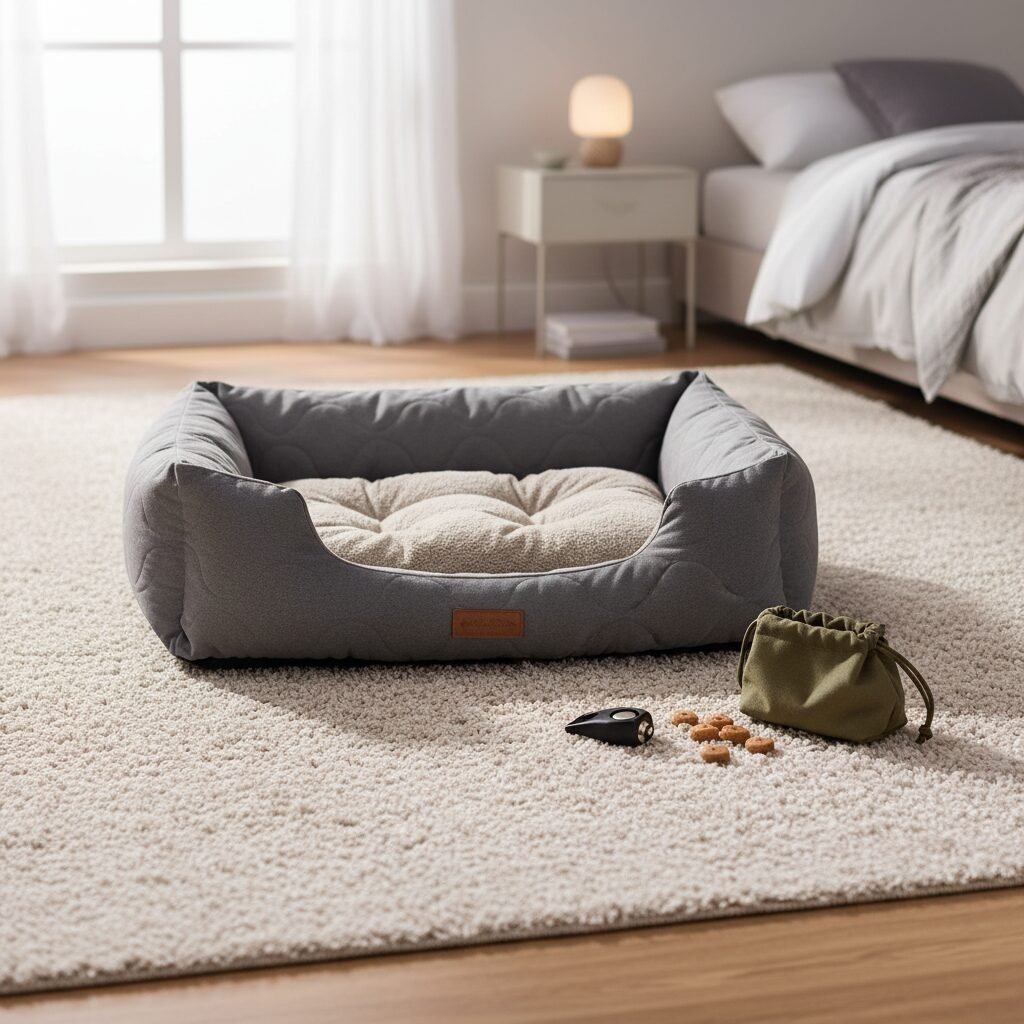
Before we begin the behavioral modification, we must address the environment. You cannot expect a dog to choose a thin mat on a hard floor over your plush, elevated mattress. To compete with your bed, you must offer an alternative that is equally, if not more, appealing.
- Select the Right Bed: Observe how your dog sleeps. Do they curl into a tight ball? A donut or bolster bed is ideal. Do they stretch out fully? An orthopedic flat mattress is necessary. Ensure the bed is sized correctly; if they cannot fully stretch out, they will return to your bed.
- Location Matters: Dogs are social sleepers. Suddenly banishing them to the laundry room will trigger isolation distress. Initially, place the new dog bed directly next to your side of the bed. This allows them to smell you and feel your presence without physically being on the mattress.
- High-Value Rewards: You will need treats that are significantly better than their usual kibble. Think freeze-dried liver, small pieces of cheese, or boiled chicken. We are building a value history for the new bed.
Step 2: The ‘Go to Place’ Foundation (Daytime Training)
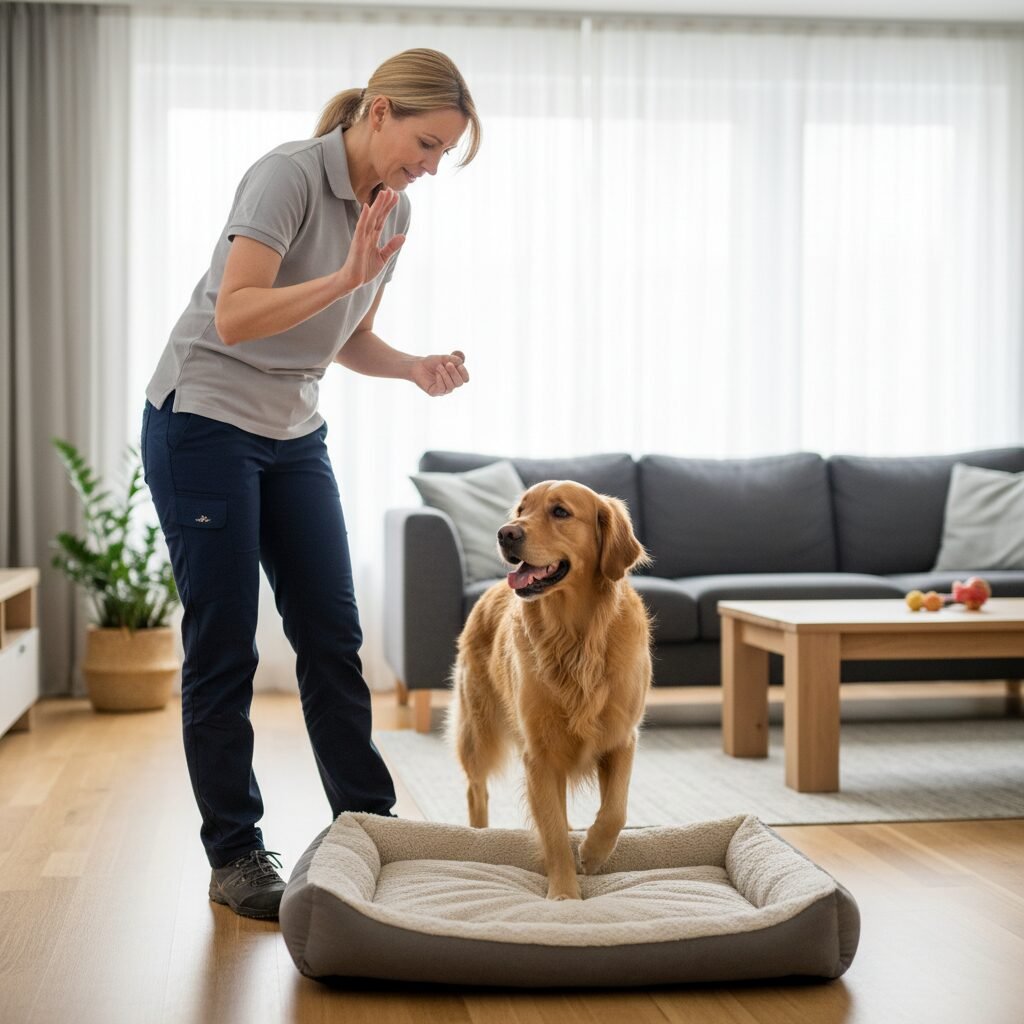
A common mistake owners make is attempting this training for the first time at 11:00 PM when everyone is exhausted. Training must happen during the day when the dog is alert and you have patience. We utilize the “Place” command to create a positive association with the bed.
The Lure and Reward Method
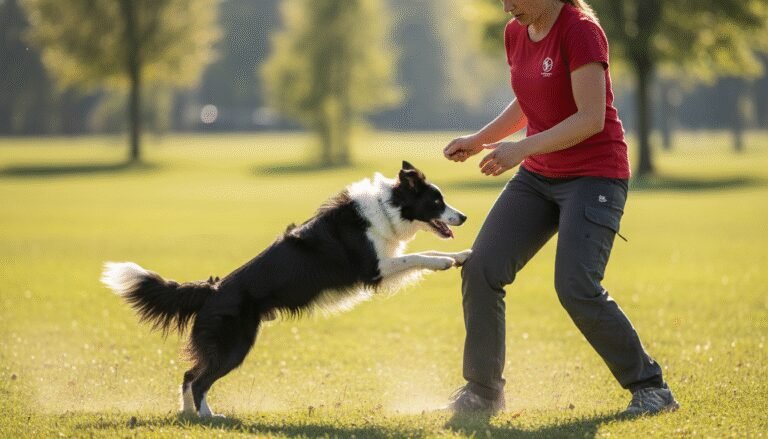
Stand near the dog bed with your high-value treats. Use a treat to lure your dog onto the bed. The moment all four paws are on the cushion, mark the behavior with a verbal “Yes!” or a clicker, and immediately deliver the reward on the bed, not in your hand. This teaches the dog that the bed itself is the source of the reward.
Repeat this process 10 to 15 times in short sessions. Once the dog is happily hopping onto the bed, add your verbal cue, such as “Go to Bed” or “Place.” Gradually increase the duration they must stay on the bed before releasing them. The goal is to make the dog bed the most lucrative spot in the house.
Step 3: The Nighttime Routine and Transition
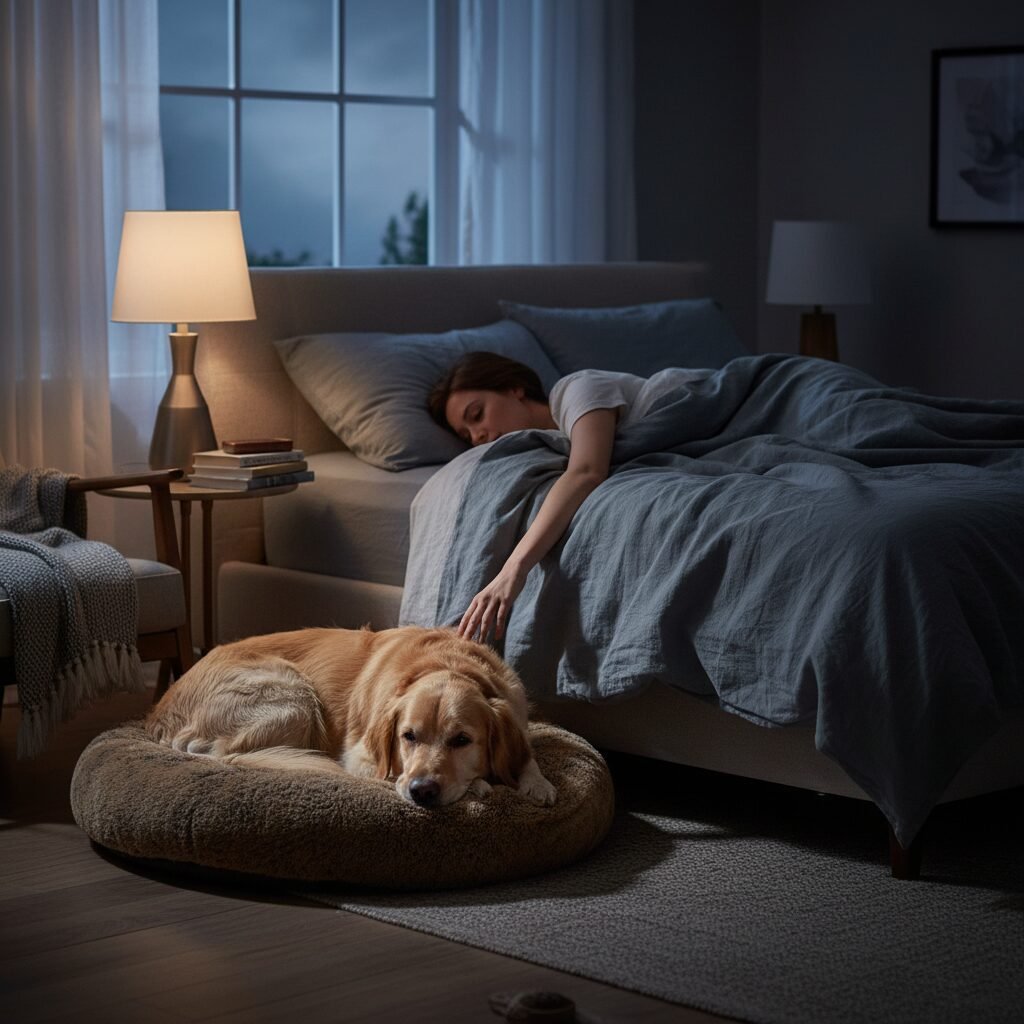
When night falls, the stakes are higher. Your dog has a habit of jumping up, and breaking a habit requires consistency. Establish a wind-down routine that signals sleep is approaching. This might include a final potty break, dimming the lights, and perhaps a calming chew toy enjoyed specifically on their bed.
When you enter the bedroom, give the “Go to Bed” cue you practiced during the day. If your dog attempts to jump on your mattress, use your body to block the space calmly—do not shove or yell. Simply occupy the space and guide them back to their bed. Reward them heavily for settling in their spot.
The Tether Technique: If your dog is persistent and jumps up the moment you close your eyes, you may need to use a leash tether. Secure a short leash to a heavy piece of furniture near their bed. The leash should be long enough for them to stand, turn around, and lie down comfortably, but short enough to prevent them from jumping onto your mattress. This removes the option of the bad behavior, preventing the self-reinforcement of jumping up.
Step 4: Troubleshooting Whining and Persistence

The most difficult part of this process is the “extinction burst.” This is a behavioral term referring to the temporary increase in the frequency or intensity of an unwanted behavior when reinforcement is removed. In simple terms: your dog will try harder to get into your bed before they give up.
- Distinguish Needs from Wants: If your dog whines, ensure they do not need to use the bathroom. If they have been emptied, the whining is likely a protest.
- The Art of Ignoring: Attention, even negative attention like scolding, can reinforce the behavior. If they whine, ignore it. If they jump up, silently remove them and place them back on their bed. Do not engage in conversation.
- Consistency is Crucial: If you let them up “just this once” because you are tired, you have taught them that persistence pays off. You have essentially turned your bed into a slot machine; they will keep pulling the lever (whining) hoping for a jackpot.
Step 5: Maintenance and Long-Term Success
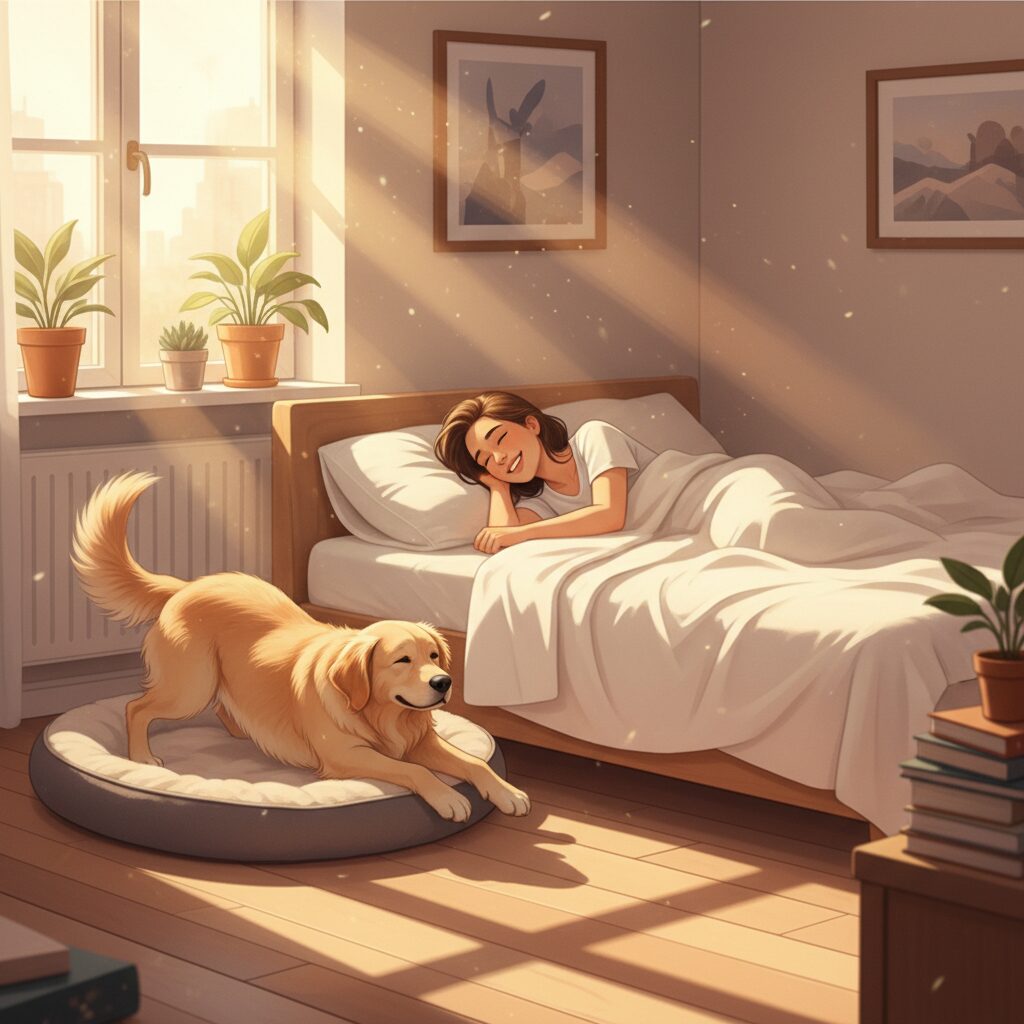
Once your dog is sleeping through the night in their own bed, it is vital to maintain the boundary. Do not invite them onto your bed for morning cuddles immediately, as this can blur the lines for some dogs. If you do wish to allow them up for affection, ensure it is on your terms and only after they have been invited.
Continue to randomly reward your dog for lying on their bed during the day. If you catch them napping there on their own accord, drop a treat between their paws. This passive reinforcement confirms that they have made a good choice. Over time, the bed becomes their sanctuary, a place of high value and security, and your mattress returns to being a place for human rest.
Restoring Harmony to the Pack
Reclaiming your mattress is not about loving your dog less; it is about respecting the biological needs of both species. Sleep deprivation affects your patience, your health, and your ability to be a good dog owner. By following this structured approach, you are providing your dog with clarity and security. Remember, training is a linear process, but progress can sometimes feel slow. Stick to the routine, remain calm, and celebrate the small victories. Within a week or two of consistent effort, you will likely find that your dog prefers their own space, and you will finally enjoy the uninterrupted sleep you deserve.