Directional Commands: How to Teach Your Dog ‘Gee’ and ‘Haw’
When most people hear the terms ‘Gee’ and ‘Haw,’ they envision a team of Huskies pulling a sled across the frozen tundra of Alaska. While these directional commands—’Gee’ for right and ‘Haw’ for left—are indeed the backbone of mushing and sled dog racing, their utility extends far beyond the snow. For the modern dog owner, teaching directional cues can significantly enhance the quality of walks, hikes, agility training, and urban navigation.
As a Canine Specialist, I often recommend directional training not just for working breeds, but for any dog that accompanies their owner on outdoor adventures. Whether you are navigating a crowded city street, trail running (canicross), bikejoring, or simply want better control during off-leash activities, having a dog that understands specific turning commands improves safety and communication. It transforms the walk from a physical activity into a mental workout, engaging your dog’s brain and strengthening the bond between handler and canine.
In this comprehensive guide, we will move beyond basic obedience and delve into the specifics of spatial cues. We will cover the necessary tools, the step-by-step mechanics of teaching ‘Gee’ and ‘Haw,’ and how to troubleshoot common confusion during the learning process.
Prerequisites and Essential Tools for Success
Before introducing complex directional concepts, it is imperative that your dog has a solid foundation in basic obedience. A dog that pulls excessively on the leash or does not respond to their name will struggle to learn spatial cues because their focus is not on the handler. Ideally, your dog should understand a loose-leash walking concept and a marker word (like ‘Yes’ or a clicker sound) that indicates they have performed a correct behavior.
Required Equipment
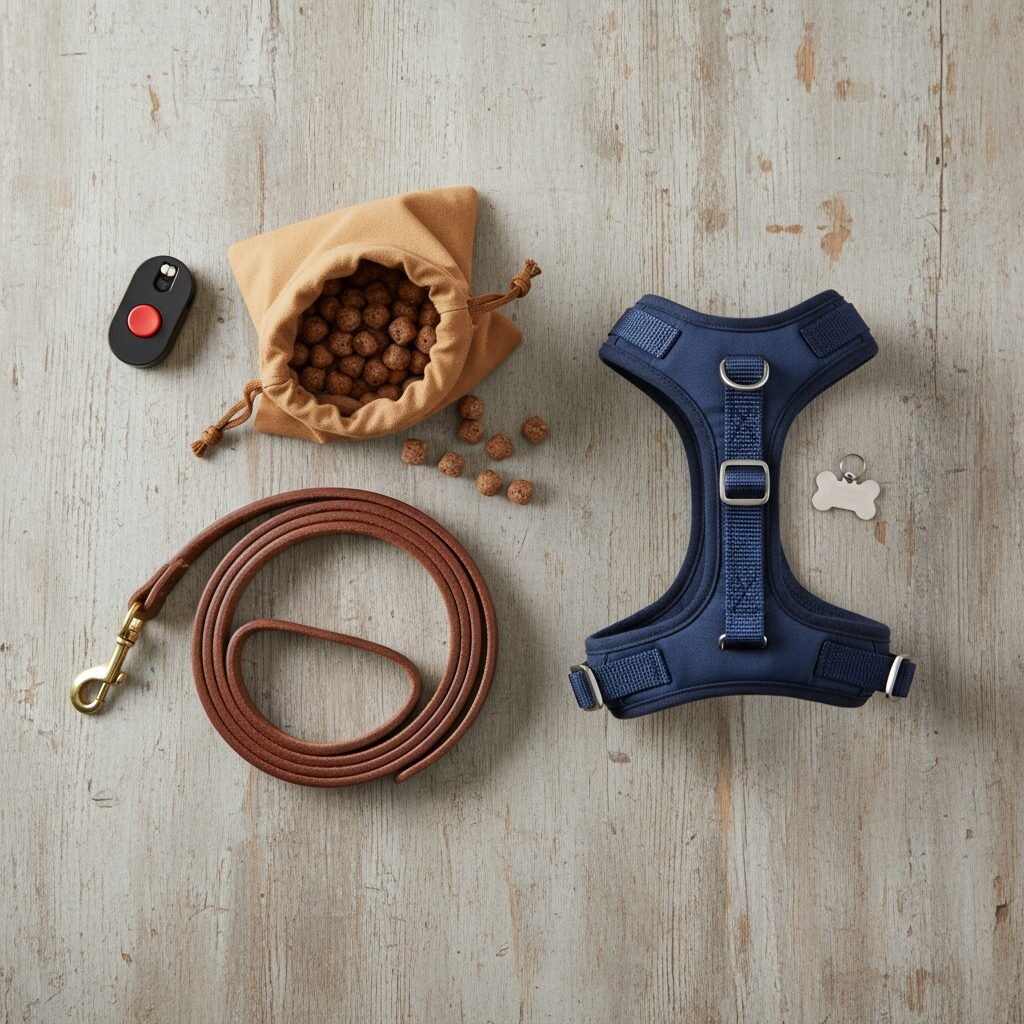
To teach these commands effectively, you will need specific tools designed to facilitate learning without causing stress or physical correction:
- High-Value Treats: Use soft, smelly treats cut into pea-sized pieces. You want the dog to swallow them quickly without stopping to chew, maintaining the flow of the walk.
- Standard Leash: A 4 to 6-foot fixed-length leash is essential. Do not use a retractable leash during this training phase, as the variable tension confuses the dog regarding their position relative to you.
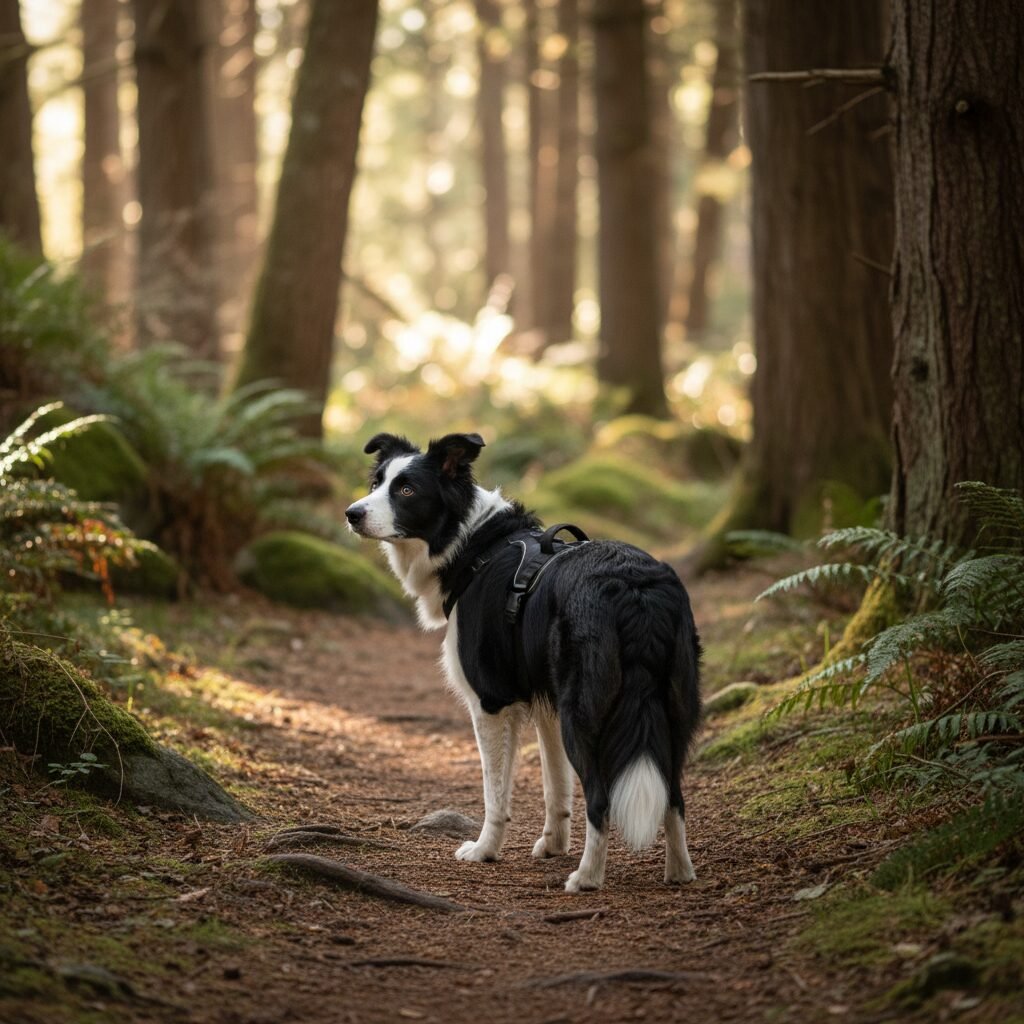
- Harness vs. Collar: For directional training, especially if you plan to transition to pulling sports like canicross, a comfortable Y-harness is preferred over a collar to prevent neck strain if the dog turns abruptly.
- A Distinct Location: Begin your training in a low-distraction environment. A quiet hallway or a boring stretch of sidewalk is better than a busy park.
The Mechanics of ‘Gee’: Teaching the Right Turn
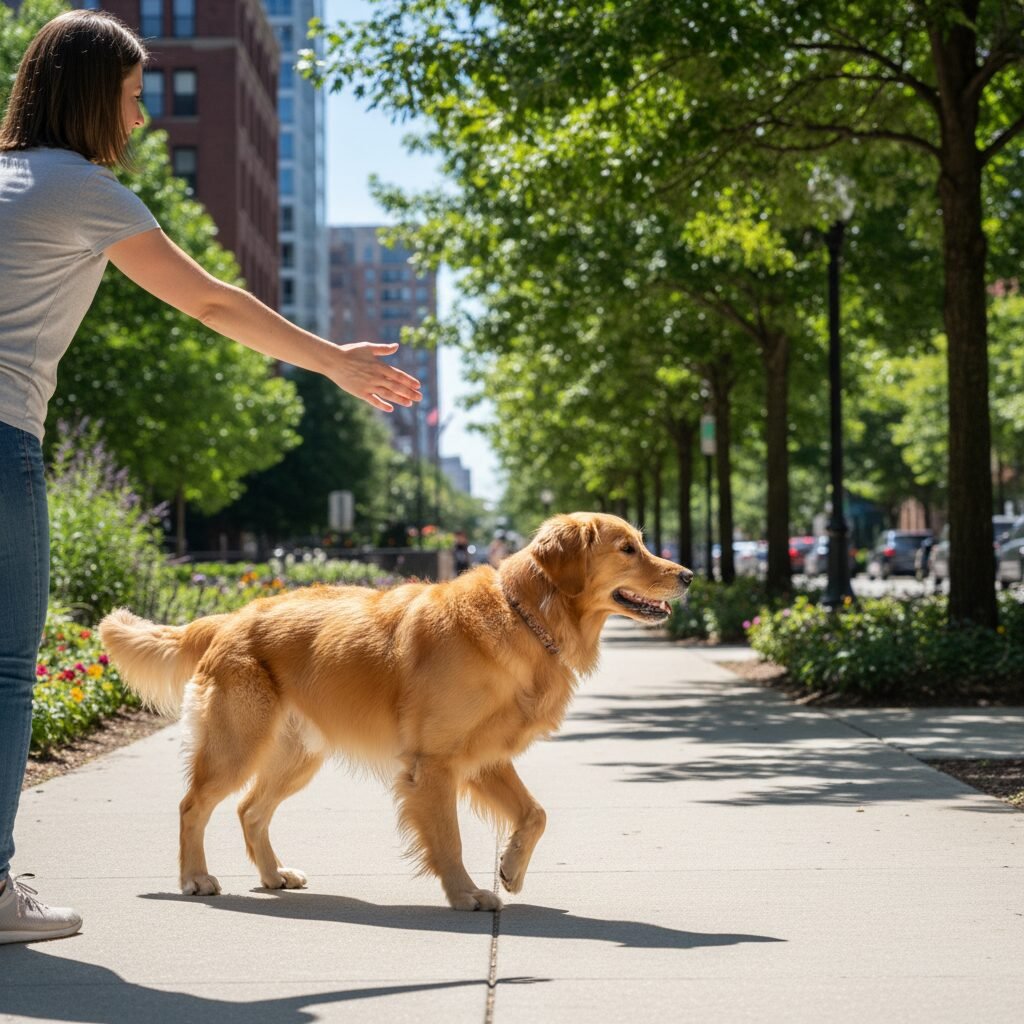
The command ‘Gee’ (pronounced with a soft ‘G’, like ‘jeep’) is the universal cue for turning right. The goal is to associate the verbal cue with the physical action of turning right before the turn actually happens.
Step-by-Step Instruction
Follow this protocol to introduce the right turn:
- Step 1: The Setup. Walk with your dog on a loose leash. Approach a natural right-hand turn, such as a street corner or a bend in a trail.
- Step 2: The Cue. Approximately two to three paces before the turn, clearly say the command "Gee."
- Step 3: The Lure and Guide. Immediately after saying the word, use a treat in your right hand to lure the dog’s nose toward the right. If you are walking, you can gently guide them with your body language by angling your shoulders to the right.
- Step 4: The Mark and Reward. The moment the dog commits to the right turn, mark the behavior with your clicker or verbal marker ("Yes!") and deliver the reward while you are moving in the new direction.
Repeat this process specifically at corners. Eventually, you will stop luring and simply give the verbal command. If the dog turns their head or body to the right upon hearing "Gee," mark and reward heavily. This indicates the dog has connected the word to the direction.
The Mechanics of ‘Haw’: Teaching the Left Turn
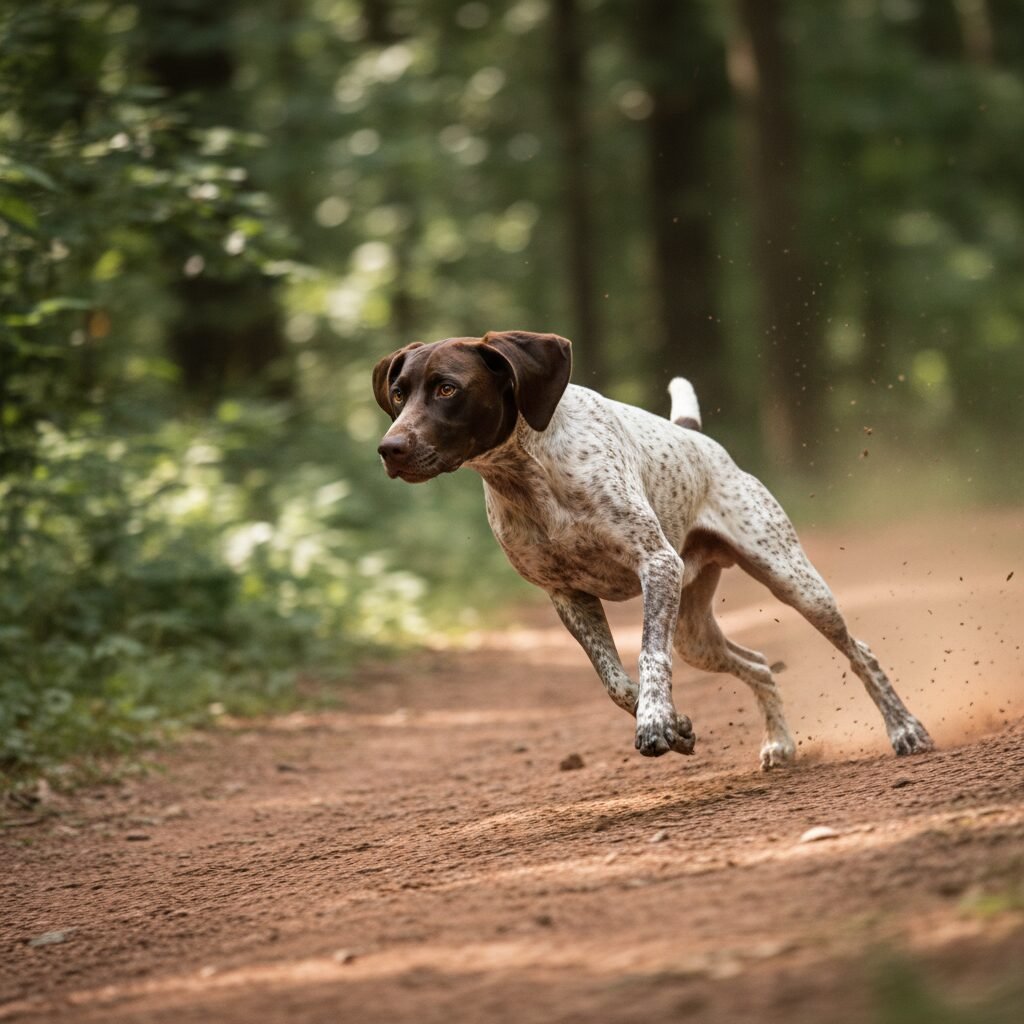
The command ‘Haw’ corresponds to a left turn. Because dogs are traditionally trained to heel on the left side, teaching ‘Haw’ can sometimes be slightly more challenging as it requires the dog to move away from your leg (if heeling) or cross in front of you, depending on your positioning.
Step-by-Step Instruction
To teach the left turn, we mirror the process used for ‘Gee’ but with careful attention to body positioning:
- Step 1: Anticipate the Turn. Identify a sharp left turn on your walking route. Ensure you have the dog’s attention before reaching the corner.
- Step 2: The Cue. Say "Haw" clearly a few seconds before the turn.
- Step 3: The Body Block (Optional). If the dog is walking on your left, you may need to use your body to gently guide them leftward, effectively ‘herding’ them into the turn. If they are out in front (as in canicross), use a treat in your left hand to lure the nose left.
- Step 4: Reinforcement. As the dog turns left, mark and reward. Consistency is key here. Ensure you do not accidentally reward a diagonal drift; you want a distinct turn.
It is often helpful to practice ‘Gee’ and ‘Haw’ in separate sessions initially to avoid confusion. Once the dog shows 80% accuracy with one, you can begin mixing them into the same walk.
Generalizing the Commands and Fading the Lure
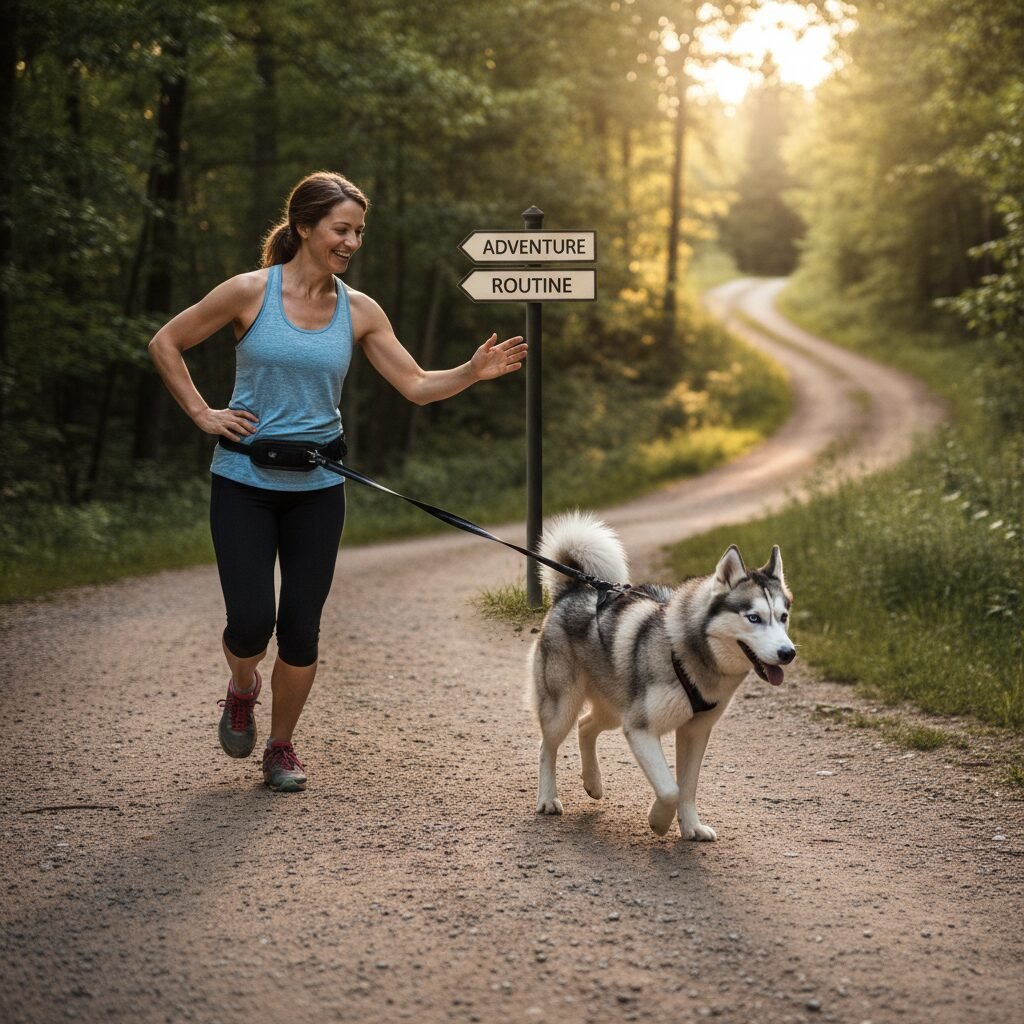
Once your dog understands the basics of ‘Gee’ and ‘Haw’ on a quiet sidewalk, it is time to generalize the behavior. Dogs are contextual learners; they may understand ‘Gee’ means ‘turn right at this specific street corner’ but fail to understand it means ‘turn right’ on a forest trail. To build fluency, you must vary the environment.
Increasing Difficulty
Begin practicing on different surfaces: grass, gravel, and pavement. Introduce the commands at T-intersections on trails where the choice is clearly left or right. As the dog becomes more confident, you must stop using the food lure. Instead, use the environment as the reward. For example, if your dog loves to sniff a specific tree, ask for a ‘Gee’ toward the tree. The reward is the permission to go sniff.
Timing is Critical: As you pick up speed (for runners or cyclists), you must issue the command earlier. A dog running at full speed needs more time to process the auditory cue and adjust their stride than a dog walking at a heel. Aim to give the command 3 to 5 seconds before the turn during high-speed activities.
Troubleshooting Common Mistakes
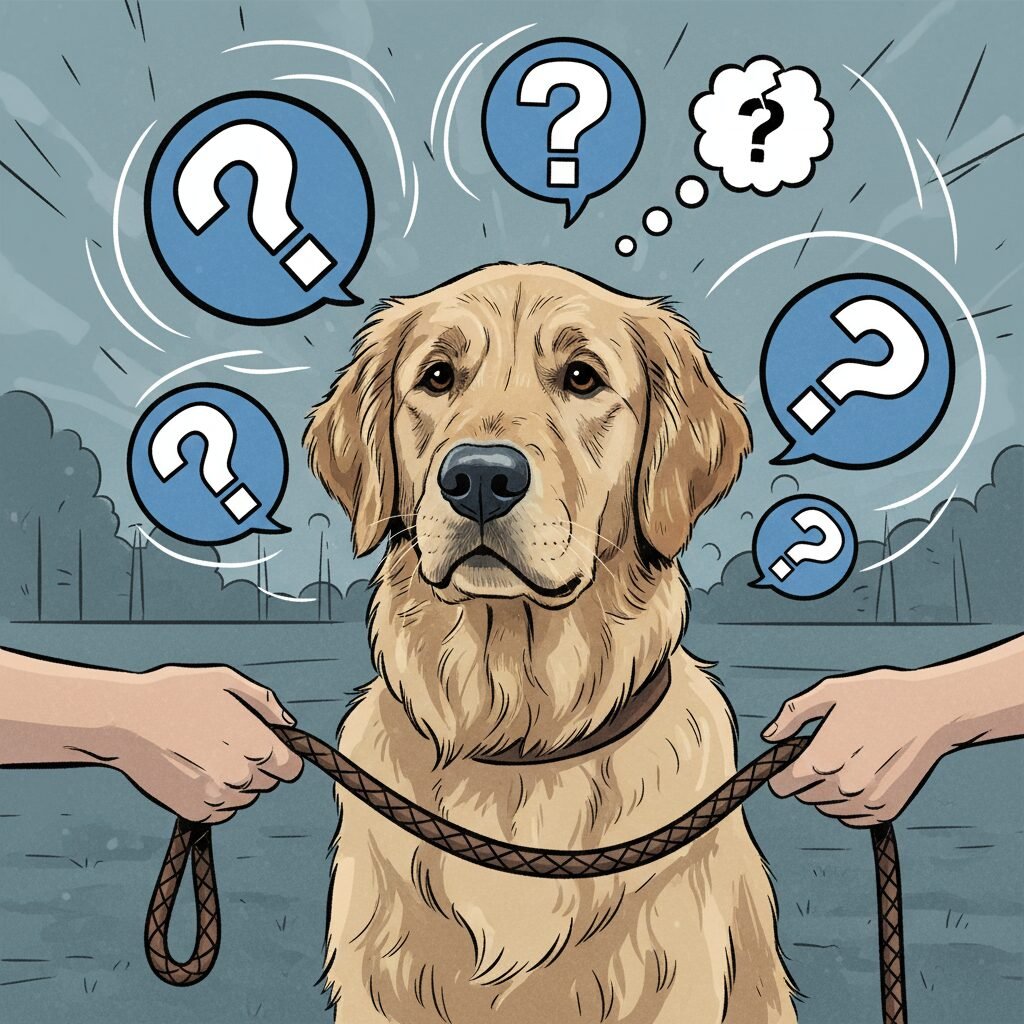
Even intelligent dogs can struggle with directional concepts. Here are the most common issues handlers face and how to resolve them:
- The ‘Mixing It Up’ Problem: If your dog turns left when you say ‘Gee,’ do not scold them. Simply stop moving. A lack of forward motion is a negative punishment (removing the reward of the walk). Reset the dog to the starting point and try again. If they continue to struggle, go back to luring with a treat for a few repetitions.
- Late Cues: If you give the command while you are already turning, the dog is learning to follow your body, not the word. You must be disciplined enough to speak before you change your trajectory.
- Over-Correction: Never yank the leash to force a turn. This creates a negative association with the command. We want the dog to turn eagerly, not out of fear of a leash correction.
- Lack of focus: If the dog is sniffing or distracted, they will not hear the cue. Ask for eye contact or a ‘watch me’ command before issuing the directional cue.
Final Thoughts on Directional Mastery
Teaching your dog ‘Gee’ and ‘Haw’ is a rewarding journey that elevates your communication to a new level. It transforms a simple walk into a collaborative effort where you are the navigator and your dog is the pilot. While it requires patience and repetition, the payoff is a safer, more controlled, and enjoyable outdoor experience.
Remember that training sessions should always be short and positive. If you or your dog becomes frustrated, take a break and play a game instead. With consistency and positive reinforcement, your dog will soon be navigating trails with the precision of a lead sled dog, regardless of their breed or background.