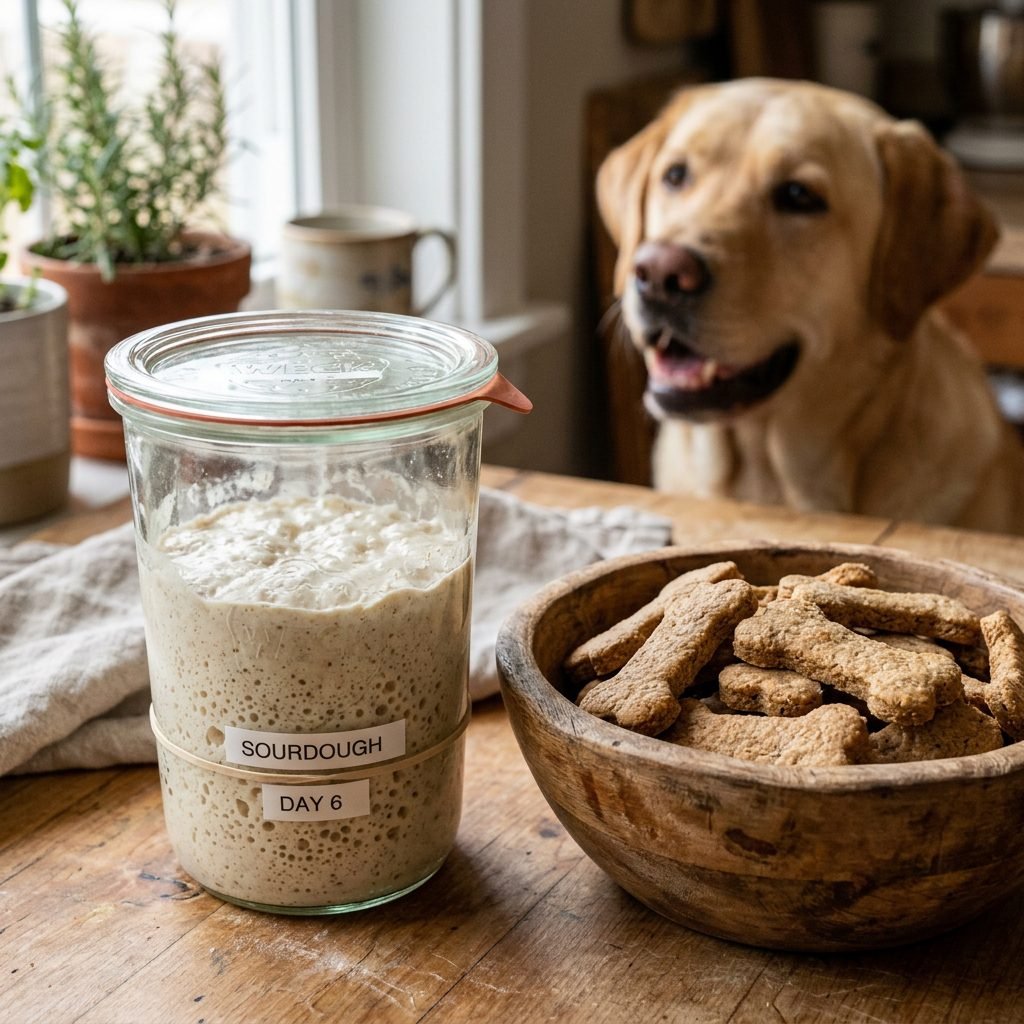
Stop Throwing Away Your Starter! Make These Active Sourdough Starter Dog Biscuits Instead
The ‘Discard’ Myth: Why Your Sourdough Waste is Canine Gold
If you have joined the sourdough revolution, you know the heartbreak of the ‘discard.’ Every time you feed that bubbly, fermented beast on your counter, a portion of it usually ends up in the trash. As the Canine Nutrition Hacker, I’m here to tell you that you are literally throwing away a gut-health powerhouse. While humans love the tangy crumb of a sourdough loaf, your dog can benefit immensely from the fermented goodness of a sourdough starter—provided you handle it correctly. Most commercial dog treats are loaded with ‘wheat flour’ that is hard for dogs to digest, leading to inflammation and gas. By using an active sourdough starter, we are using the power of wild yeast and lactobacilli to pre-digest the grains, making them more bioavailable and easier on your pup’s tummy. We aren’t just making treats; we are making functional snacks that act as prebiotics for your dog’s microbiome. Let’s stop the waste and start the hacking.
The Safety First Rule: The ‘Raw Dough’ Danger
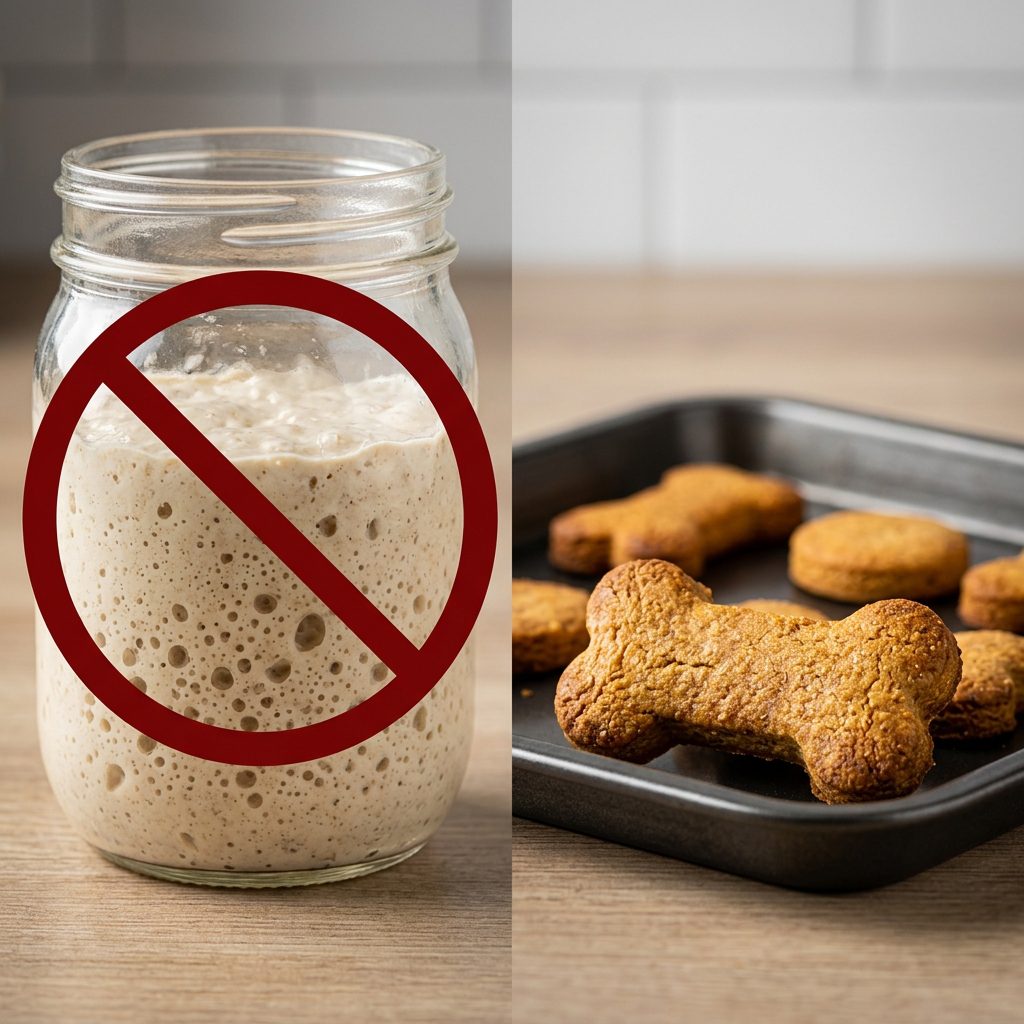
CRITICAL SAFETY DISCLAIMER
Before we touch a single mixing bowl, we need to address the elephant in the kitchen. NEVER feed your dog raw sourdough starter or raw dough. I cannot stress this enough. Raw yeast dough undergoes fermentation in the warm, moist environment of a dog’s stomach. This produces two life-threatening issues: Ethanol Poisoning (as the yeast produces alcohol) and Gastric Dilatation-Volvulus (GDV/Bloat) as the dough expands. However, once these biscuits are fully baked and dehydrated, they are perfectly safe and incredibly nutritious. Always consult with your veterinarian before introducing new foods if your dog has a history of pancreatitis or severe grain allergies.
Why Baked Sourdough is Different
The baking process kills the active yeast, stopping the production of CO2 and alcohol. What remains are the metabolites of the fermentation process: lactic acid, enzymes, and broken-down gluten proteins. This is the ‘hacker’ secret—we use the fermentation to do the digestive work before the treat ever hits your dog’s tongue.
The Real Cost Breakdown: DIY vs. Premium ‘Artisan’ Treats
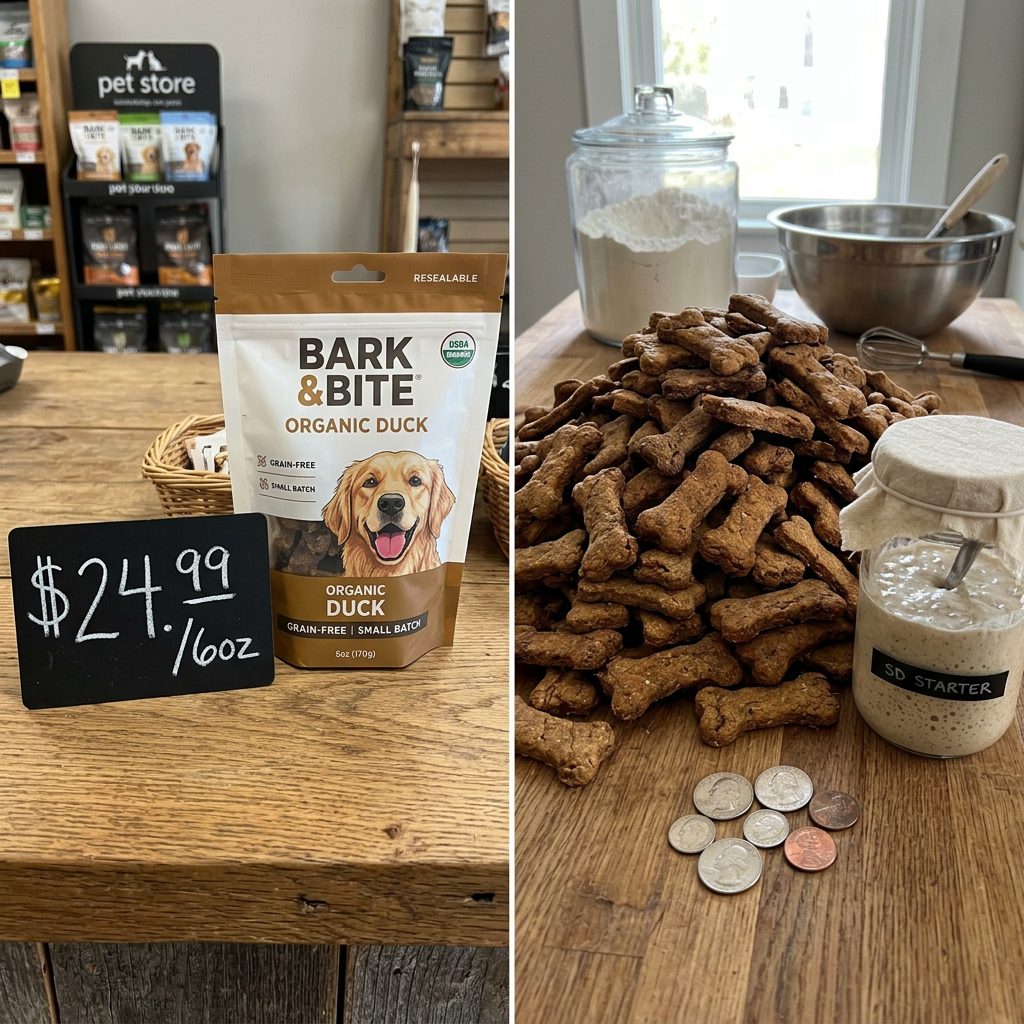
Stop Overpaying for ‘Natural’ Labels
If you walk into a boutique pet store, you’ll see ‘Artisan Fermented Treats’ selling for a premium. They use the same logic we are using here, but they charge you for the branding. Let’s look at the numbers. A 50lb dog usually consumes about 2-3 treats a day. If you’re buying high-end, you’re hemorrhaging money on what is essentially flour and water.
| Metric | Premium Store-Bought (Artisan) | Hacker Sourdough DIY |
|---|---|---|
| Price per Pound | $18.00 – $26.00 | $1.50 – $2.75 |
| Primary Ingredient | Whole Wheat Flour | Fermented Sourdough Starter |
| Bioavailability | Low (Standard Grains) | High (Fermented/Pre-digested) |
| Preservatives | Tocopherols/Citric Acid | None (Natural Lactic Acid) |
| Waste Factor | None | Reduces Kitchen Waste (Discard) |
Hacker Tip: By using your discard, your ‘raw material’ cost for the starter is effectively zero. You are only paying for the additional flour and any ‘hero’ ingredients like pumpkin or egg.
The Hero Ingredients: Building the Perfect Biscuit
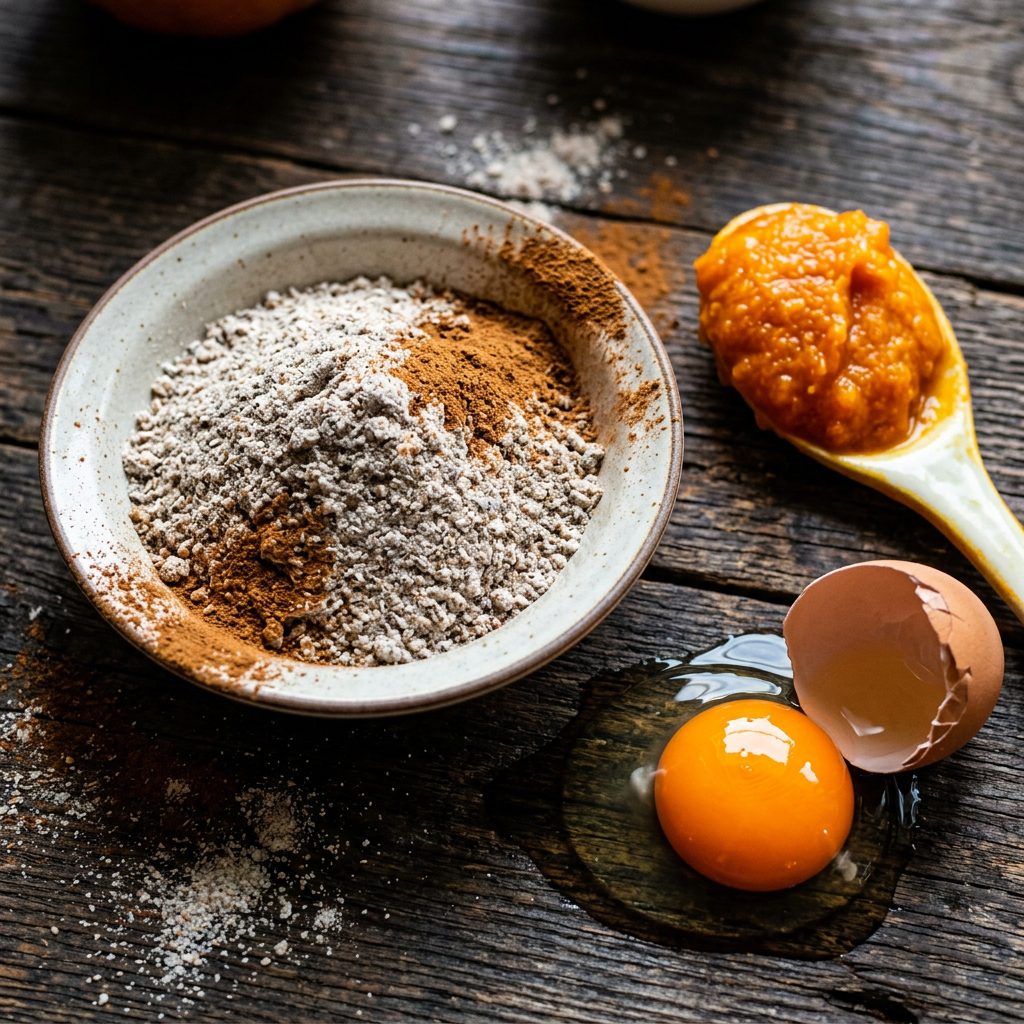
The ‘First 5’ Analysis
When I analyze a treat, I look at the first five ingredients. In our hacker recipe, we control every single one. No ‘meat by-products,’ no ‘corn gluten meal,’ and absolutely no Xylitol (always check your peanut butter!).
- Active Sourdough Starter (or Discard): The base. Provides the enzymatic action.
- Whole Grain Flour (Oat or Rye): Rye is particularly low in gluten and high in fiber, making it a ‘hero’ grain for dogs.
- Pure Pumpkin Puree: Not pumpkin pie filling! Pumpkin adds soluble fiber to help with digestion.
- Pasture-Raised Egg: Provides the lecithin and protein needed to bind the dough and shine the coat.
- Ceylon Cinnamon: A powerful anti-inflammatory (avoid Cassia cinnamon in large amounts).
The Anti-Nutrient Factor
Grains contain phytic acid, which can block the absorption of minerals like zinc and iron in your dog’s gut. The long fermentation of sourdough neutralizes phytic acid. This is why sourdough is the only way I recommend feeding grains to dogs with sensitive systems.
The Safe Chef Guide: Step-by-Step Sourdough Biscuits
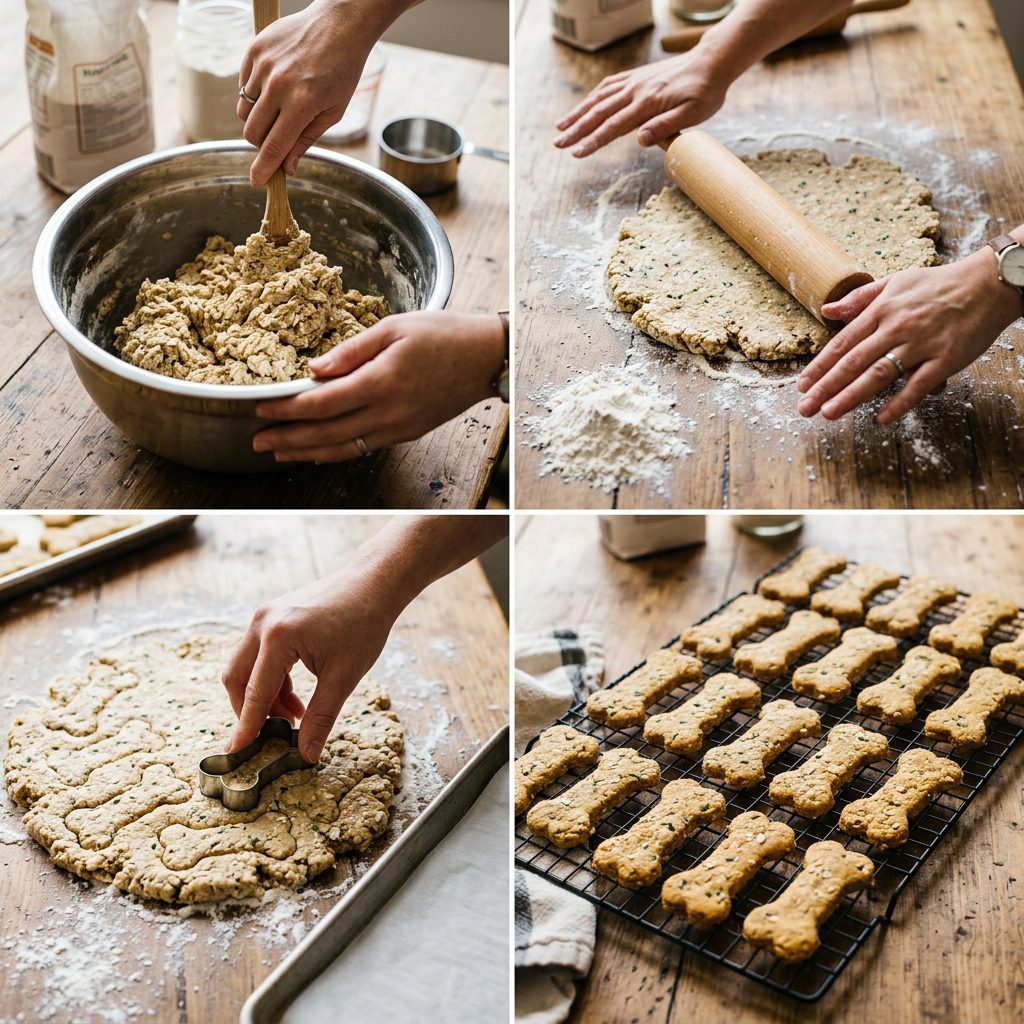
The Actionable Recipe
This recipe uses a 1:1:1 ratio strategy that is easy to remember and hard to mess up. We want a very stiff dough—much stiffer than bread dough—to ensure the biscuits are crunchy and shelf-stable.
Ingredients:
- 1 Cup Active Sourdough Starter (discard is fine)
- 1/2 Cup Pure Pumpkin Puree
- 2 to 2.5 Cups Whole Wheat or Rye Flour (adjust until dough isn’t sticky)
- 1 Egg
- 1 tsp Ceylon Cinnamon
Instructions:
- Mix: Combine starter, pumpkin, egg, and cinnamon. Slowly add flour until a stiff ball forms.
- The Hacker Wait (Optional): Let the dough sit in the fridge for 4-8 hours. This allows the bacteria to further break down the gluten.
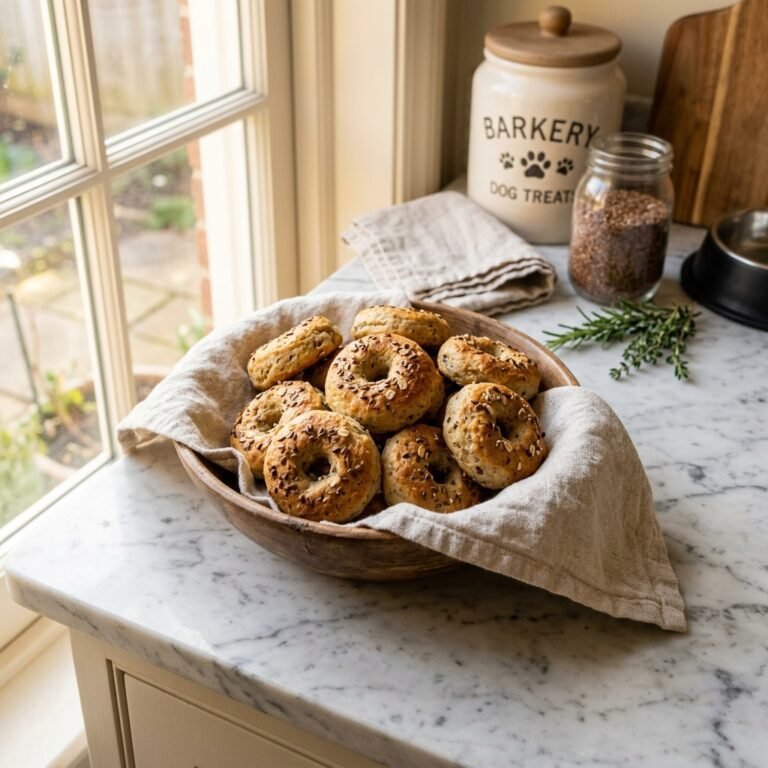
- Roll & Cut: Roll out to 1/4 inch thickness. Use a bone-shaped cutter or just a pizza cutter for squares.
- Bake: Bake at 350°F (175°C) for 30 minutes.
- The ‘Crunch’ Phase: Turn the oven off but leave the biscuits inside with the door slightly ajar for 2 hours. This dehydrates them, making them ‘crunchy’ which helps with dental plaque removal.
Batch Cooking & The ‘Shelf Life’ Secret
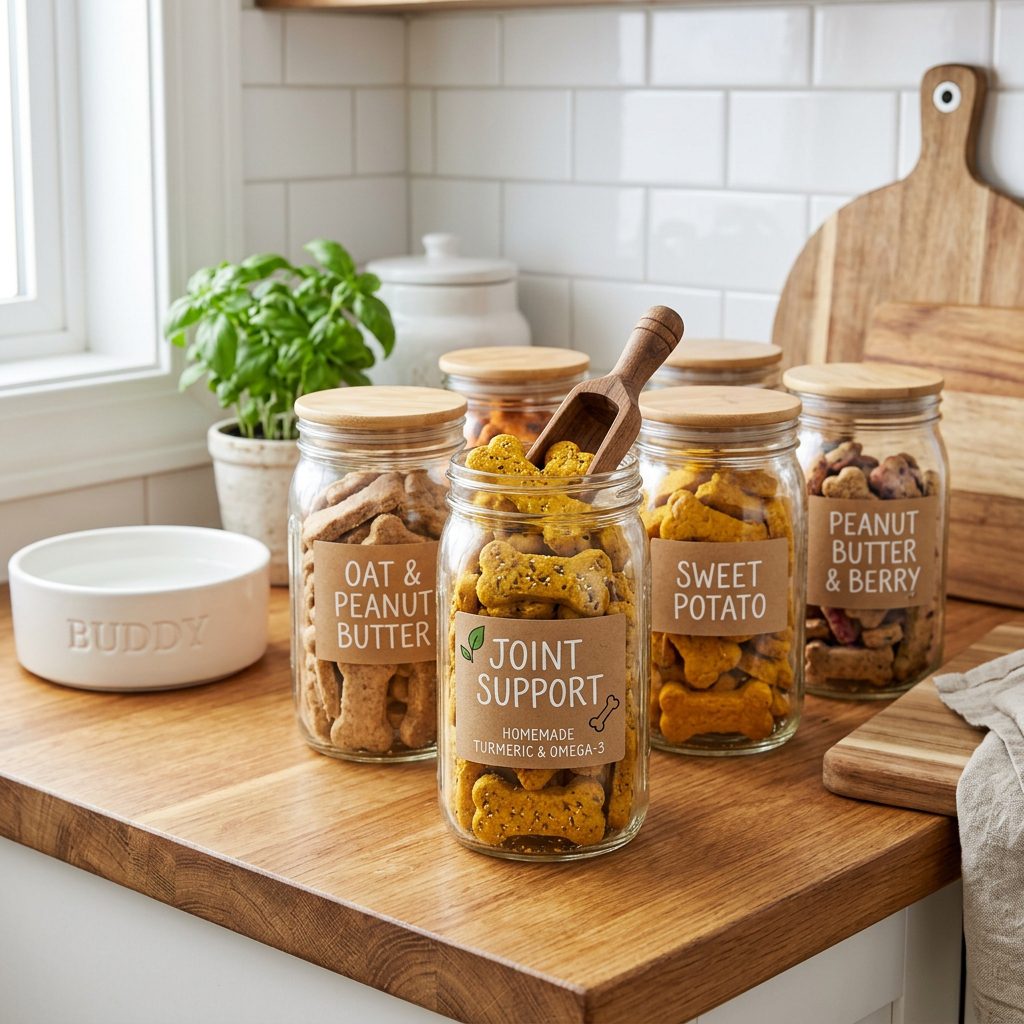
How to Store Your Hacker Haul
Since we aren’t using industrial preservatives, we have to be smart about storage. Moisture is the enemy. If your biscuits are ‘bendy,’ they will mold. They need to ‘snap’ when broken.
- Room Temp: Store in an airtight glass jar for up to 2 weeks.
- Fridge: Up to 4 weeks.
- Freezer: Up to 6 months. (I keep a ‘master bag’ in the freezer and pull out a week’s worth at a time).
Insider Secret: If you find your biscuits have softened, pop them back in a 200°F oven for 20 minutes to ‘re-crisp’ them. This removes any moisture they absorbed from the air.
Customizing for Health Issues
If your dog has joint pain, add 1 tablespoon of Turmeric (with a pinch of black pepper to activate the curcumin). If they have bad breath, finely chop some Fresh Parsley into the dough. This is the beauty of the DIY approach—you are the pharmacist.
The Verdict: Why Your Dog Will Thank You
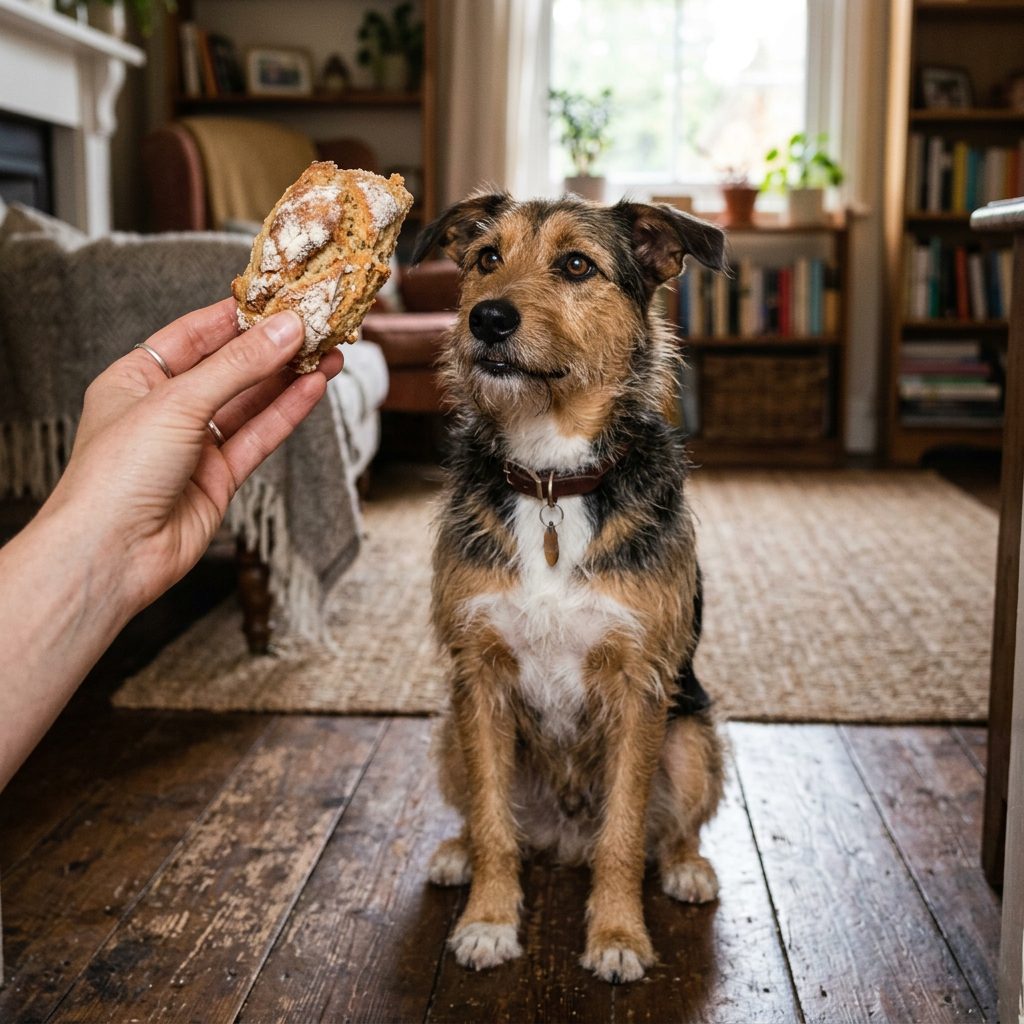
More Than Just a Treat
When you stop throwing away your starter and start making these biscuits, you are doing three things: reducing waste, saving hundreds of dollars a year, and providing your dog with a superior source of nutrition. Most store-bought treats are ’empty calories.’ These are functional calories. You’ll likely notice your dog has less gas, a shinier coat (thanks to the egg and fermented grains), and more excitement for reward-based training.
Remember, being a Canine Nutrition Hacker isn’t about being perfect; it’s about being informed. You now have the secret to turning a ‘waste product’ into the most sought-after snack in the neighborhood. Your dog doesn’t care if the starter was a 100-year-old heirloom from San Francisco—they just care that it’s delicious. And you’ll care that it’s healthy.
Conclusion
Final Thoughts from the Hacker
Making your own sourdough dog biscuits is the ultimate ‘insider’ move for savvy dog owners. You’ve bypassed the marketing fluff of the pet food industry and used ancient fermentation techniques to create a snack that is both safe and scientifically superior to standard biscuits. Stop wasting your discard. Your dog’s gut—and your wallet—will thank you. Now get in that kitchen, fire up the oven, and show your pup what real nutrition tastes like!