The 1-Ingredient Oven Chicken Jerky That Will Make Your Dog Forget Store-Bought Treats!
Let’s talk about the ‘Big Pet Food’ tax you’re currently paying. You walk into a boutique pet store, grab a 4-ounce bag of ‘artisanal’ chicken jerky, and drop $18.99 without blinking. As a Canine Nutrition Hacker, I’m here to tell you that you’re essentially paying $75.00 per pound for what is effectively dried-out poultry. Even worse? If you flip that bag over and read the fine print, you’ll often find things that have no business being in a carnivore’s snack: vegetable glycerin, ‘natural’ smoke flavors (which can be a code for chemicals), and enough salt to preserve a mummy.
Your dog doesn’t need a chemistry lab to enjoy a snack. They need protein. High-quality, lean, bioavailable protein. Today, I’m pulling back the curtain on how you can create professional-grade, high-value training treats in your own kitchen using exactly one ingredient. No dehydrator? No problem. We’re using your oven. This isn’t just a recipe; it’s a financial and nutritional liberation for you and your pup. Get ready to watch your dog become your kitchen’s permanent shadow.
The Forensic Review: Store-Bought vs. Homemade
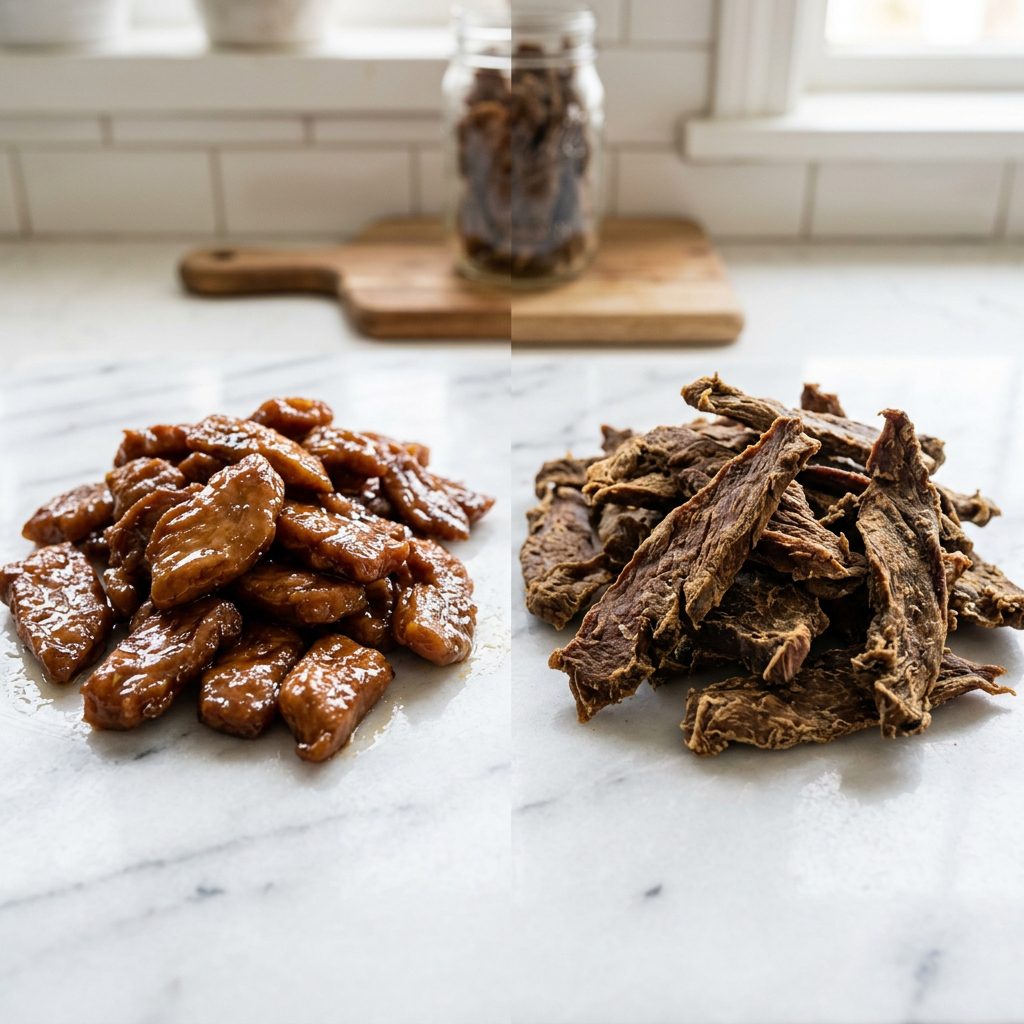
Before we touch a knife, we need to understand the enemy. Most commercial jerky treats are manufactured using a process that prioritizes shelf-life over health. They use humectants (like glycerin) to keep the meat soft, but these additives provide zero nutritional value and can lead to digestive upset in sensitive dogs.
The ‘First 5 Ingredients’ Truth
When you look at a leading ‘premium’ jerky brand, the list often looks like this: Chicken, Vegetable Glycerin, Salt, Chicken Broth, Vinegar. Why is the glycerin there? To add weight and moisture so the company can sell you less meat for more money. By making it yourself, you eliminate the fillers and the hidden sodium. Let’s look at the cold, hard numbers.
| Feature | Store-Bought ‘Premium’ | Hacker’s Homemade Jerky |
|---|---|---|
| Main Ingredient | Chicken (often with fillers) | 100% Lean Chicken Breast |
| Preservatives | Glycerin, Salt, BHA/BHT | None (Natural Dehydration) |
| Price Per Pound | $60 – $80 | $12 – $18 (Post-shrinkage) |
| Nutrition Grade | C+ (Due to additives) | A+ (Pure Protein) |
Hacker Tip: Commercial jerky is often sourced from international suppliers where safety standards vary. By buying human-grade chicken from your local butcher, you are in total control of the supply chain.
The Safety First Protocol: The Safe Chef Guide
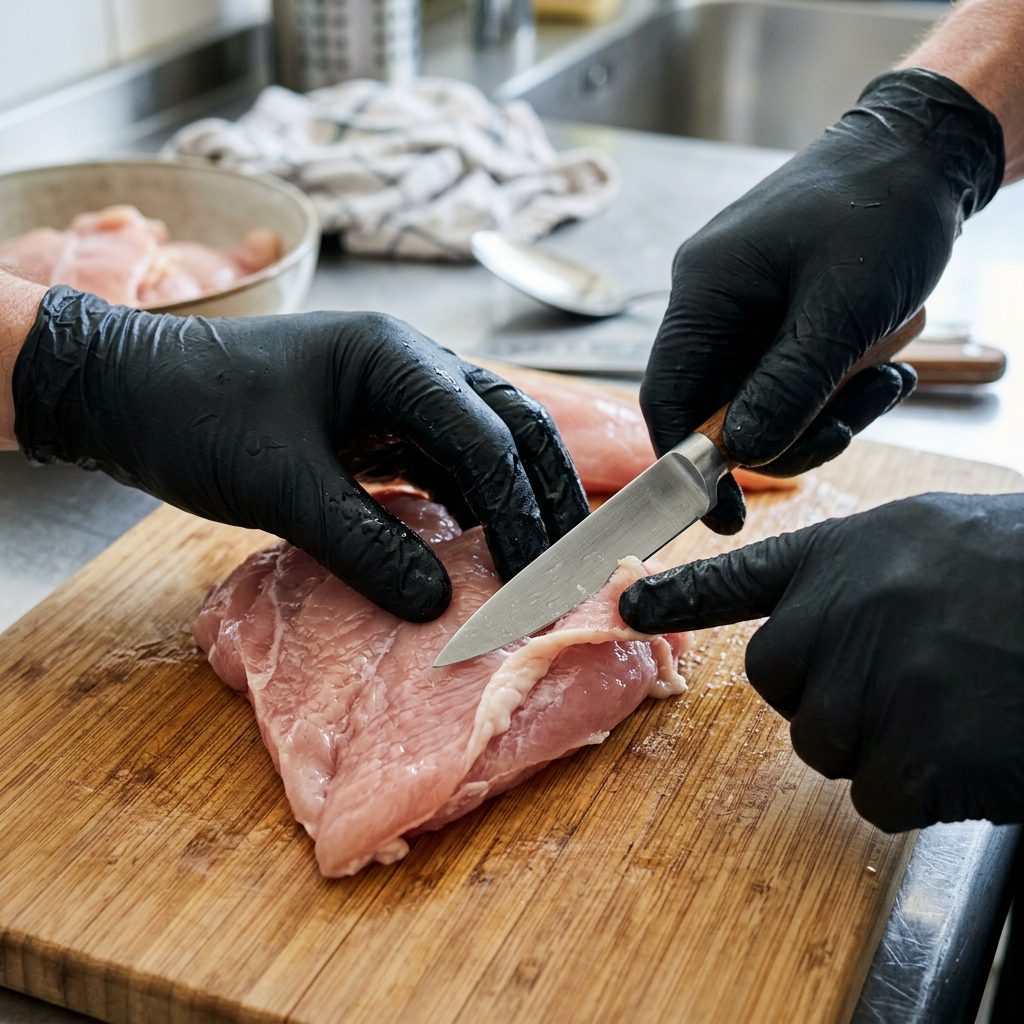
SAFETY DISCLAIMER: I am not a veterinarian. While I have spent years analyzing canine nutrition, you should always consult your vet before introducing new treats, especially if your dog has a history of pancreatitis or kidney issues. Homemade treats do not contain preservatives, so proper handling is non-negotiable.
Pathogen Control
The biggest concern with homemade jerky is Salmonella and Listeria. While many raw feeders aren’t bothered by this, the ‘Hacker’ way is to be bulletproof. To ensure safety, the USDA recommends heating meat to an internal temperature of 160°F. Our oven method will maintain a consistent temperature that dries the meat while killing off the nasties. Always wash your hands, knives, and cutting boards with hot, soapy water after prepping the raw chicken.
The Fat Factor
Fat is the enemy of jerky. Fat does not dry out; it goes rancid. This is why we only use lean chicken breast. Trim every single white bit of fat you see. The leaner the meat, the longer the shelf life and the safer it is for your dog’s pancreas.
The Master Recipe: 1 Ingredient, Infinite Tail Wags
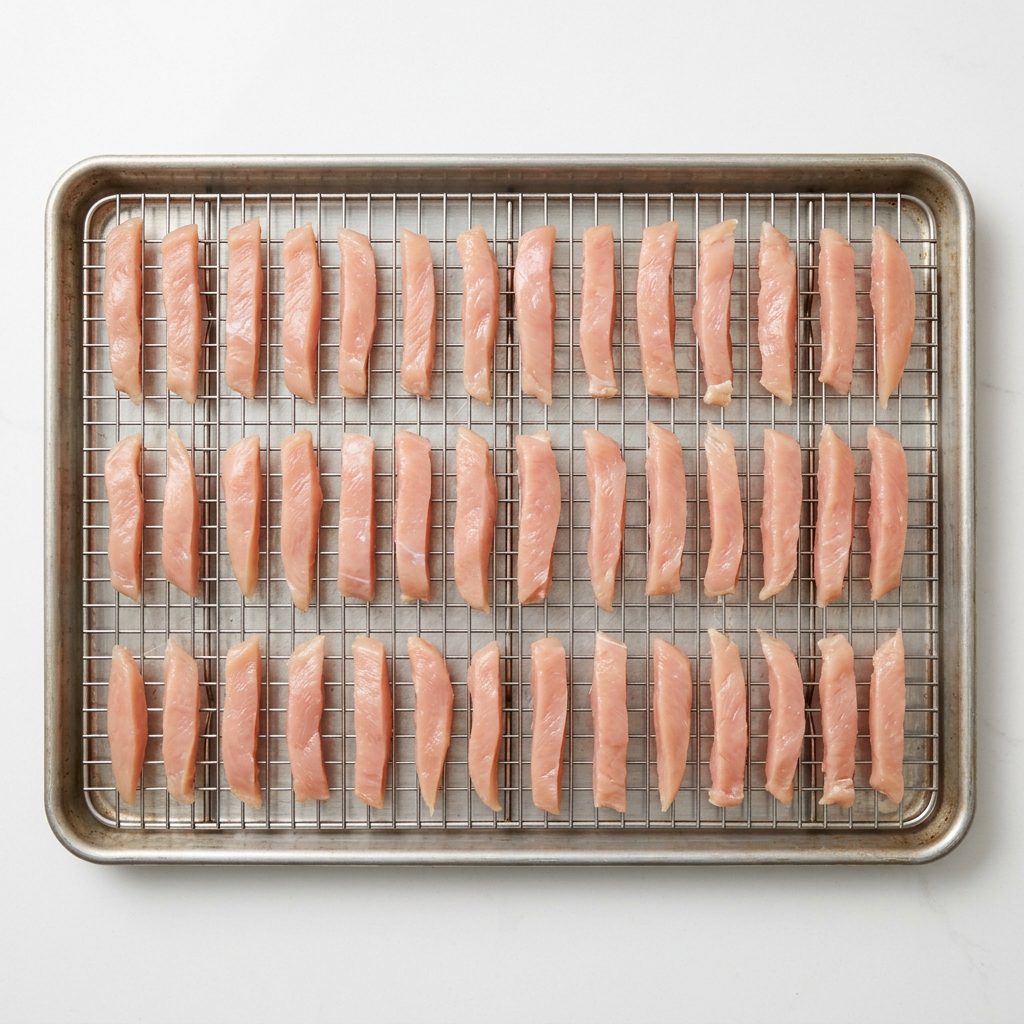
This is the core of our operation. We are going to transform standard chicken breasts into high-value ‘dog gold.’ The secret isn’t in the seasoning (because there isn’t any); it’s in the slicing technique.
Ingredients & Tools
- 1-3 lbs of Boneless, Skinless Chicken Breasts
- A very sharp chef’s knife
- A wire cooling rack
- A baking sheet
Step-by-Step Instructions
- The ‘Firm-Up’ Trick: Place your chicken breasts in the freezer for 30-45 minutes. You don’t want them frozen solid, just firm. This allows you to cut paper-thin slices without the meat sliding around.
- The Slice: Slice the chicken into 1/8-inch thick strips. Hacker Secret: Slice with the grain for a tougher, chewier treat that lasts longer, or against the grain for a more brittle treat that’s easier for senior dogs to crunch.
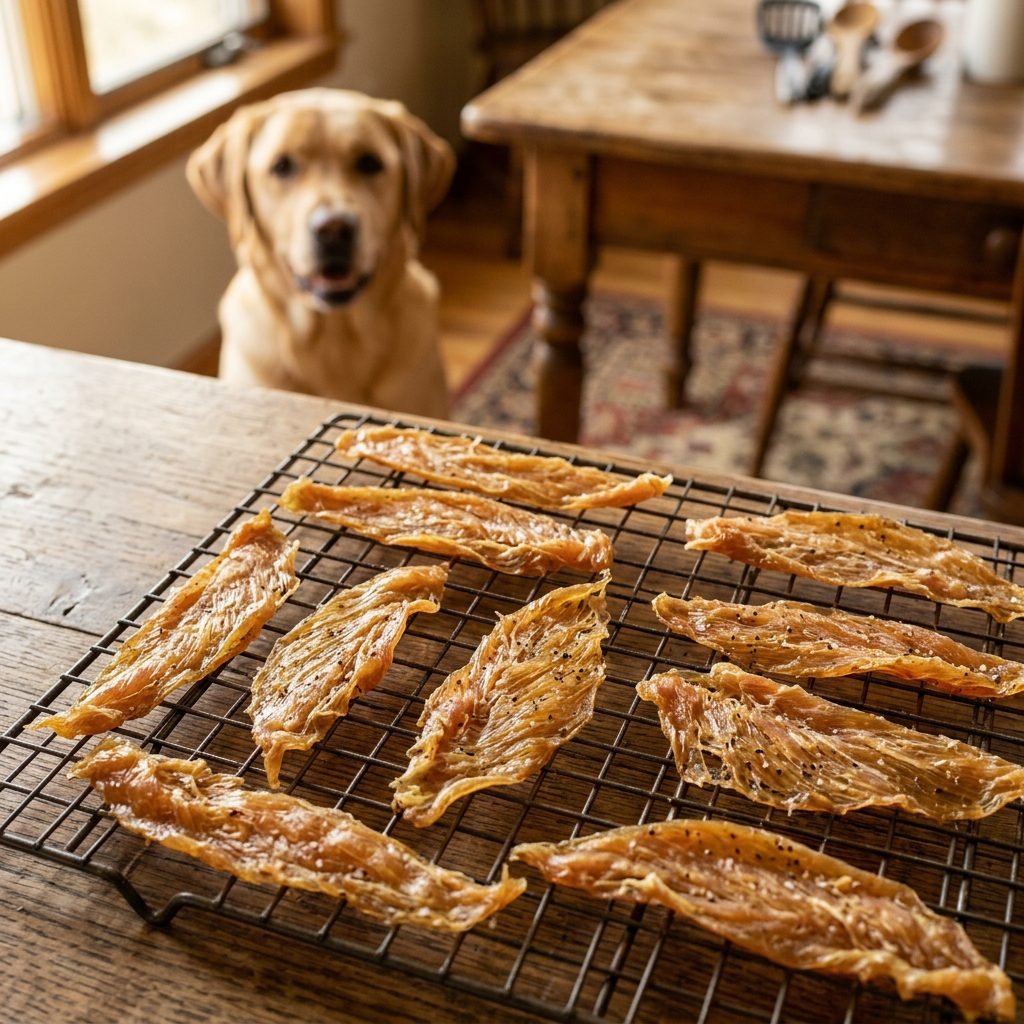
- The Setup: Place a wire cooling rack on top of your baking sheet. This allows hot air to circulate 360 degrees around the meat, ensuring it dries rather than ‘cooks’ in its own juices.
- The Load: Lay the strips across the rack. Ensure they aren’t touching. Airflow is your best friend here.
- The Bake: Set your oven to its lowest possible setting—usually 170°F to 175°F (75°C). Place the tray inside.
- The Wait: Let them dehydrate for 4 to 6 hours.
Insider Secret: If your oven doesn’t go below 200°F, prop the door open slightly with a wooden spoon to let excess heat escape and keep the air moving.
The Snap Test: Knowing When It’s Done
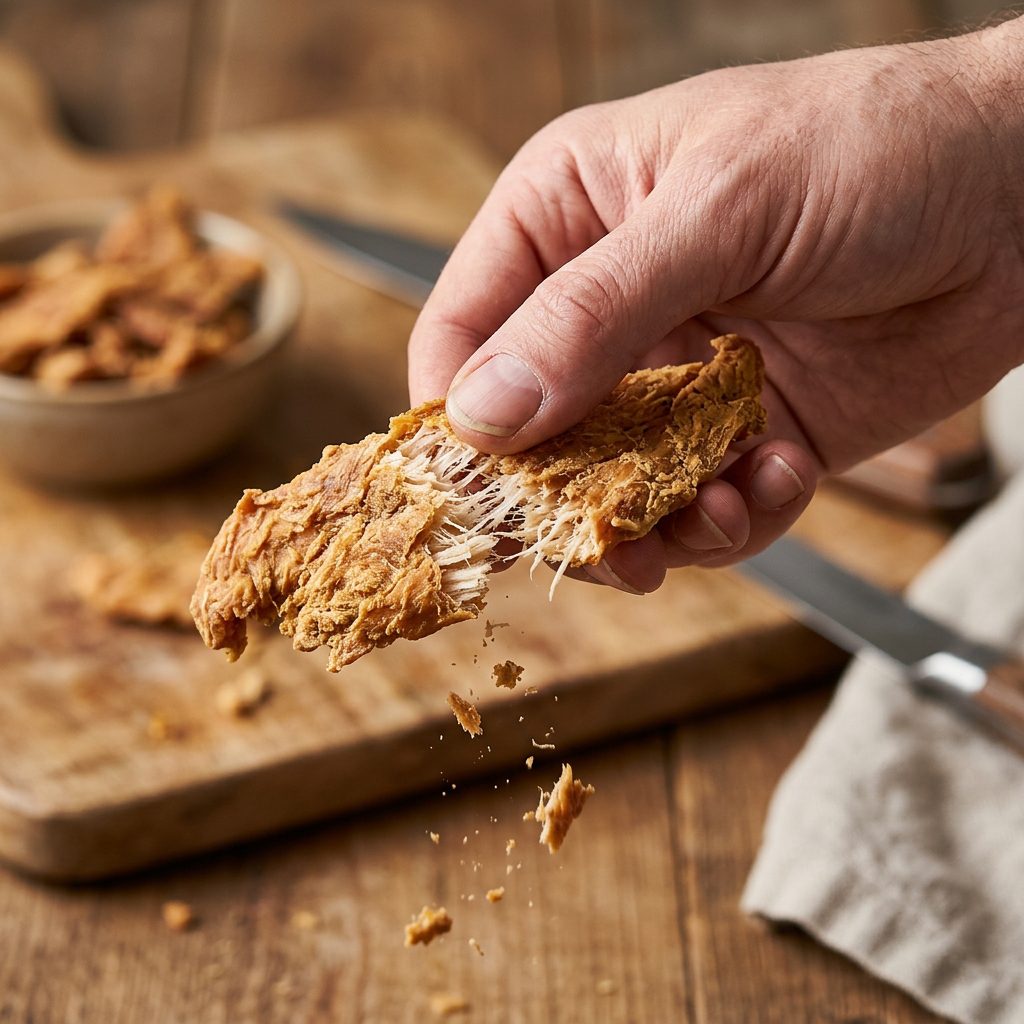
How do you know when the jerky is ready? You don’t want to leave it too soft (too much moisture leads to mold), but you don’t want it to turn into charcoal. We use the Snap Test.
Take a piece out of the oven and let it cool for one minute. Bend it. It should have a ‘leathery’ feel. If it snaps cleanly in half, it is perfectly dehydrated. If it feels ‘squishy’ or bends like a wet noodle, it needs another 30-60 minutes. Remember, moisture is the playground of bacteria. We want that moisture content as low as possible for a shelf-stable product.
Approximate Dehydration Times
| Thickness | Oven Temp | Estimated Time |
|---|---|---|
| 1/8 inch (Paper Thin) | 175°F | 3.5 – 4 Hours |
| 1/4 inch (Standard) | 175°F | 5 – 6 Hours |
| 1/2 inch (Chewy) | 175°F | 7+ Hours (Not Recommended) |
Storage & Batch Cooking Secrets
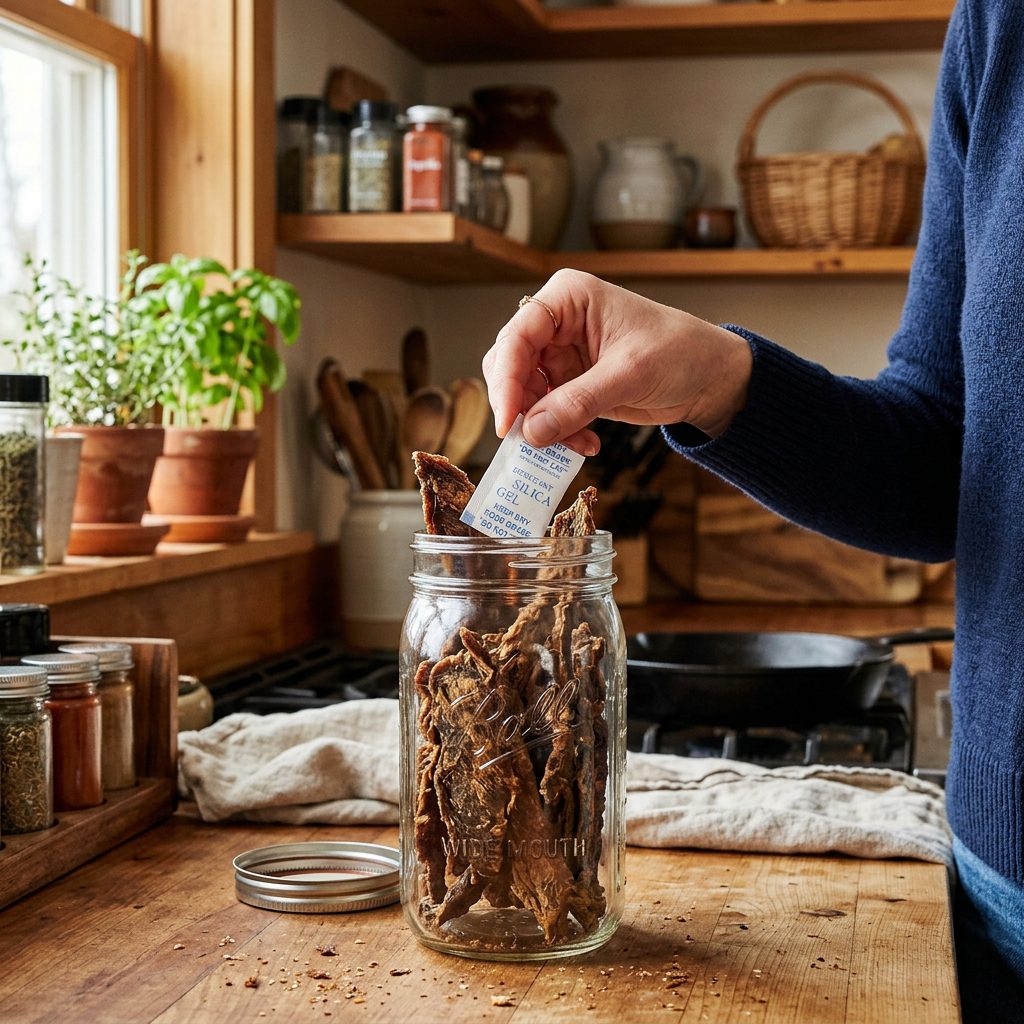
Since we aren’t using chemical preservatives like potassium sorbate, you can’t just leave this jerky in a plastic bag on the counter for three months. As a Canine Nutrition Hacker, you need a storage strategy.
The Cooling Phase
Never bag warm jerky. The residual heat will create condensation (moisture) inside the bag, and you’ll have a moldy mess within 48 hours. Let the jerky cool completely on the rack for at least 2 hours until it is room temperature.
Storage Tiers
- Countertop: In an airtight glass jar for up to 7 days.
- Refrigerator: In a sealed container for up to 3 weeks.
- Freezer: This is the pro move. Homemade jerky stays perfect in the freezer for 6 months. Since it has so little moisture, it doesn’t really ‘freeze’ solid; you can pull a piece out and give it to your dog immediately.
Hacker Tip: Save those little ‘Do Not Eat’ silica gel packets from your (human) snack bags or shoe boxes. Toss a clean one into your dog’s jerky jar to absorb any stray moisture!
The Cost Breakdown: Is It Really Worth It?
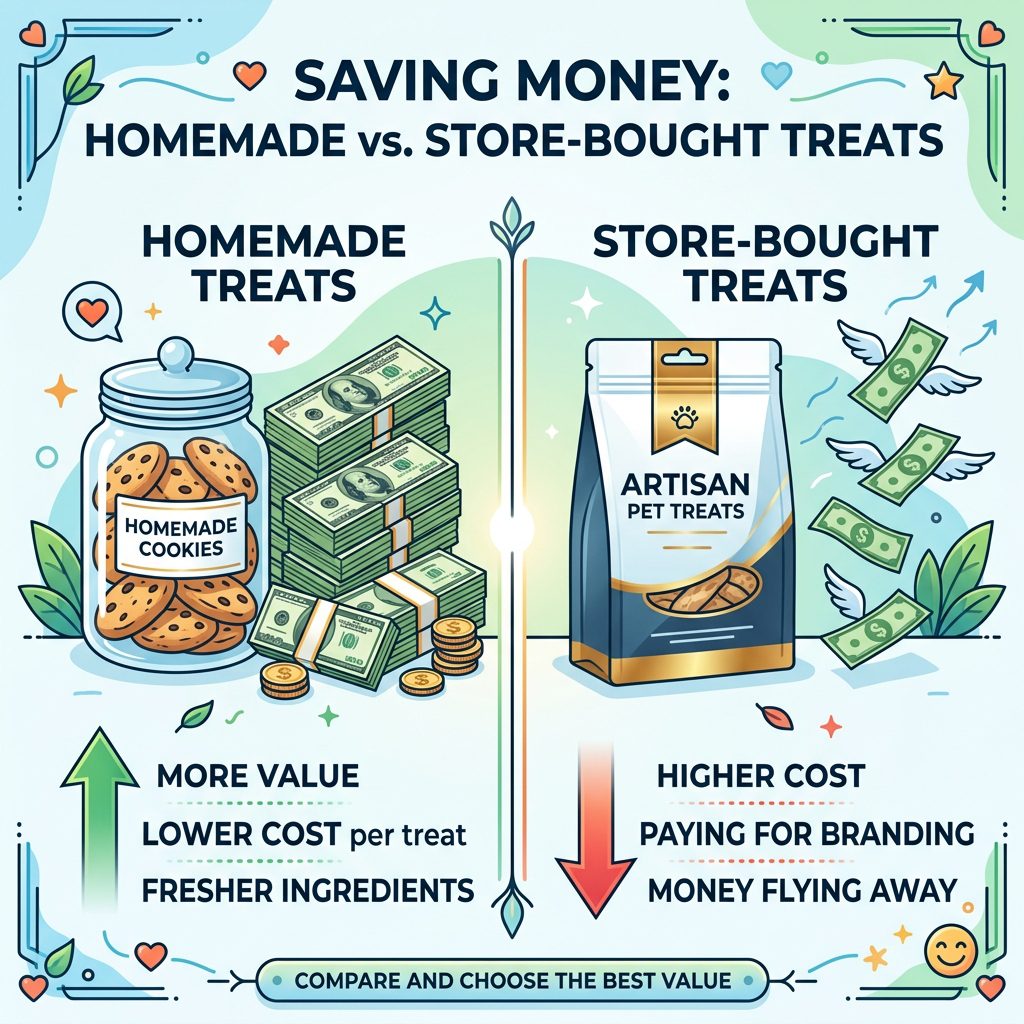
Let’s do the math that the pet food companies don’t want you to do. You can usually find chicken breast on sale for about $2.99 to $4.99 per pound. When you dehydrate meat, it loses about 75% of its weight in water. This means 1 pound of raw chicken yields roughly 4 ounces of jerky.
If you buy 4 lbs of chicken for $12.00, you end up with 1 lb (16 oz) of pure, high-grade jerky. Compare that to the ‘premium’ brands that charge $15.00 for a tiny 4 oz bag. You are getting four times the product for the same price, and yours is infinitely healthier.
Annual Savings Calculation
If you give your dog two strips of jerky a day, you likely spend around $400 a year on treats. By switching to the Hacker Method, you can cut that down to $100 a year. That’s $300 back in your pocket—enough for a high-quality orthopedic bed or a few extra vet checkups.
Conclusion
There you have it—the ultimate insider secret to reclaiming your dog’s health and your wallet’s dignity. This 1-ingredient chicken jerky is more than just a snack; it’s a statement. It says you care enough to look past the flashy packaging and the marketing jargon of Big Pet Food. You are now a Canine Nutrition Hacker, capable of producing better quality food in your kitchen than most multi-million dollar corporations produce in their factories.
Start small, find the ‘snap’ that your dog loves best, and watch their engagement during training sessions skyrocket. Once they’ve tasted 100% pure, oven-dried chicken, those ‘mystery meat’ biscuits won’t stand a chance. Welcome to the revolution—one slice at a time.