The Sweetest Trick: Teach Your Dog Chin For Instant Anxiety Relief
We’ve all been there. The fireworks start, the thunderstorm rolls in, or the doorbell rings, and our beloved dog transforms into a bundle of nerves. It’s heartbreaking to see them so stressed, and it can leave us feeling helpless. What if you had a secret signal, a special trick that could cut through the panic and tell your dog, ‘I’m here, you’re safe’?
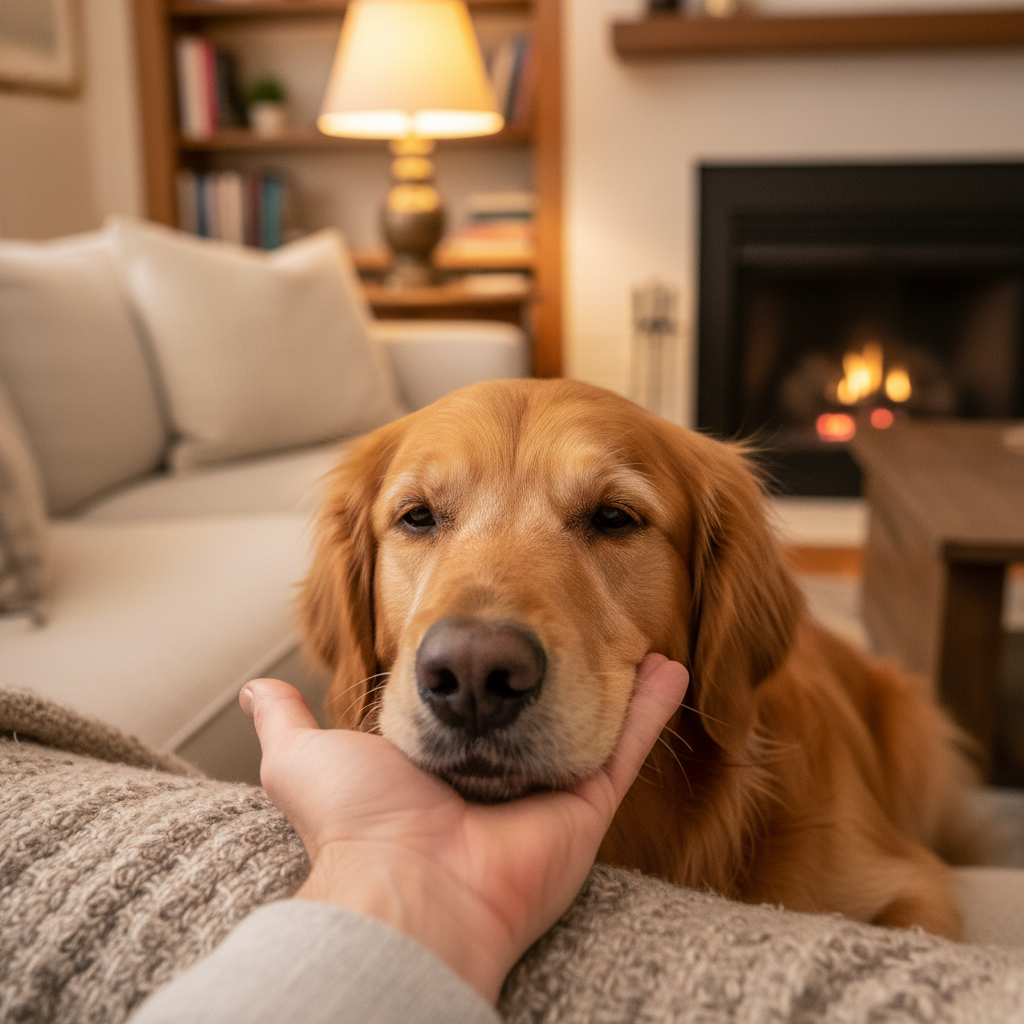
Enter the ‘chin rest.’ It sounds simple, and it is! But don’t let its simplicity fool you. Teaching your dog to rest their chin in your hand or on your lap on cue is one of the most powerful, connection-building behaviors you can train. It’s more than just a cute party trick; it’s a tool for communication, a way to offer comfort that your dog actively chooses to accept. This guide will walk you through everything you need to know to teach this sweet trick and unlock a new level of trust and tranquility with your best friend.
Why the ‘Chin Rest’ is More Than Just a Cute Trick
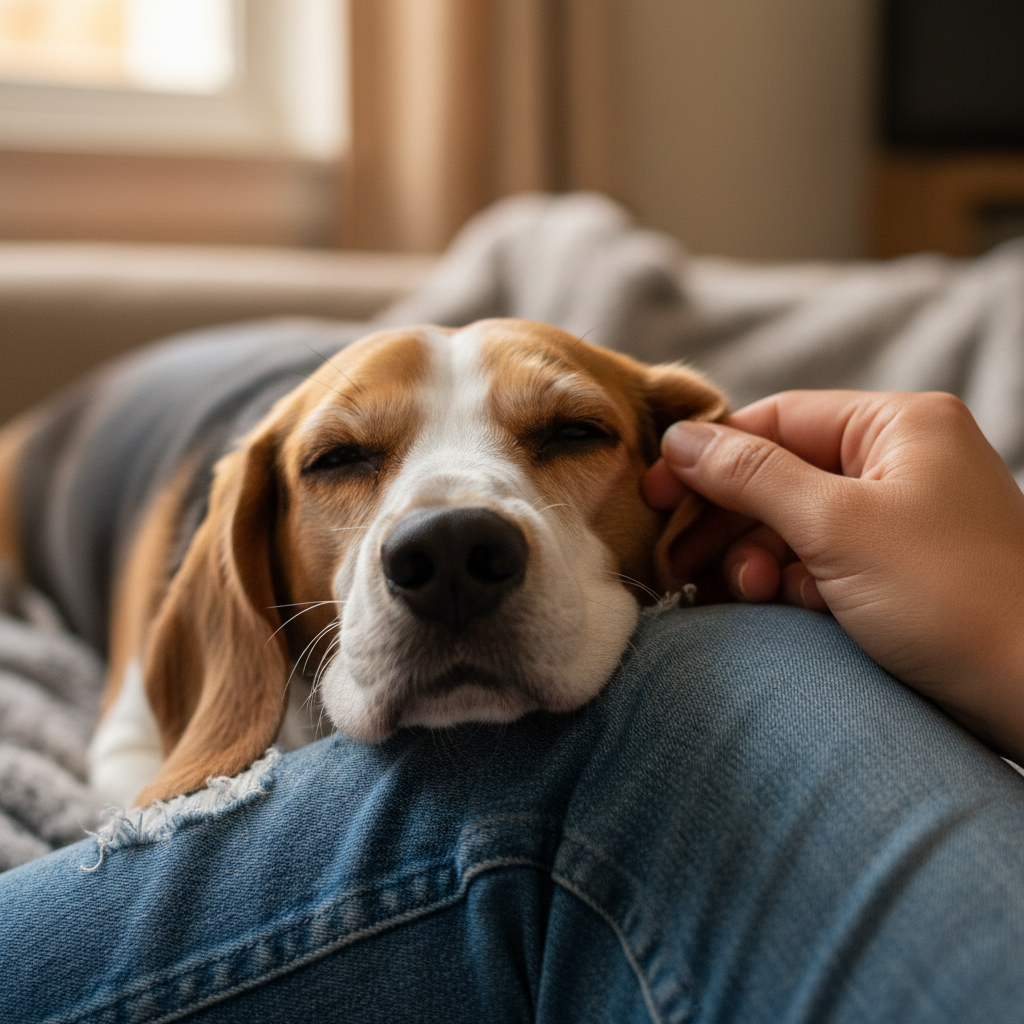
So, what’s the big deal about a chin rest? It’s all about the psychology behind the action. Unlike a hug, which can feel restrictive and scary to many dogs, the chin rest is a behavior your dog chooses to do. It’s an act of consent and trust.
Here’s why it works so well for anxiety:
- It’s a Grounding Mechanism: For an anxious dog, the world can feel overwhelming. Focusing on a simple, familiar task like resting their chin gives their brain something predictable to do. The physical contact provides gentle, steady pressure, which has a naturally calming effect (similar to a weighted blanket).
- It Builds Trust: By asking your dog to perform this action and rewarding them for it, you’re creating a positive feedback loop. You’re not forcing comfort on them; you’re inviting them into a safe space. This builds a profound level of trust and strengthens your bond.
- It’s a Redirection Tool: When you see your dog starting to get nervous, you can cue the ‘chin’ command. This interrupts the cycle of escalating anxiety and redirects their attention from the scary thing (the thunder) to a positive thing (you and the rewarding trick).
- It’s a Health Check in Disguise: Once your dog is comfortable with this behavior, it becomes an amazing tool for cooperative care. You can more easily check their eyes, ears, and teeth when they are calmly resting their head in your hands.
Expert Tip: Think of the chin rest as a form of doggy meditation. It’s a learned behavior that helps your dog center themselves and focus on your connection, rather than on external stressors.
Gearing Up for Success: Simple Tools for a Big Impact
The beauty of this trick is its simplicity. You don’t need any fancy equipment or expensive gear. You probably have everything you need right now!
What You’ll Need:
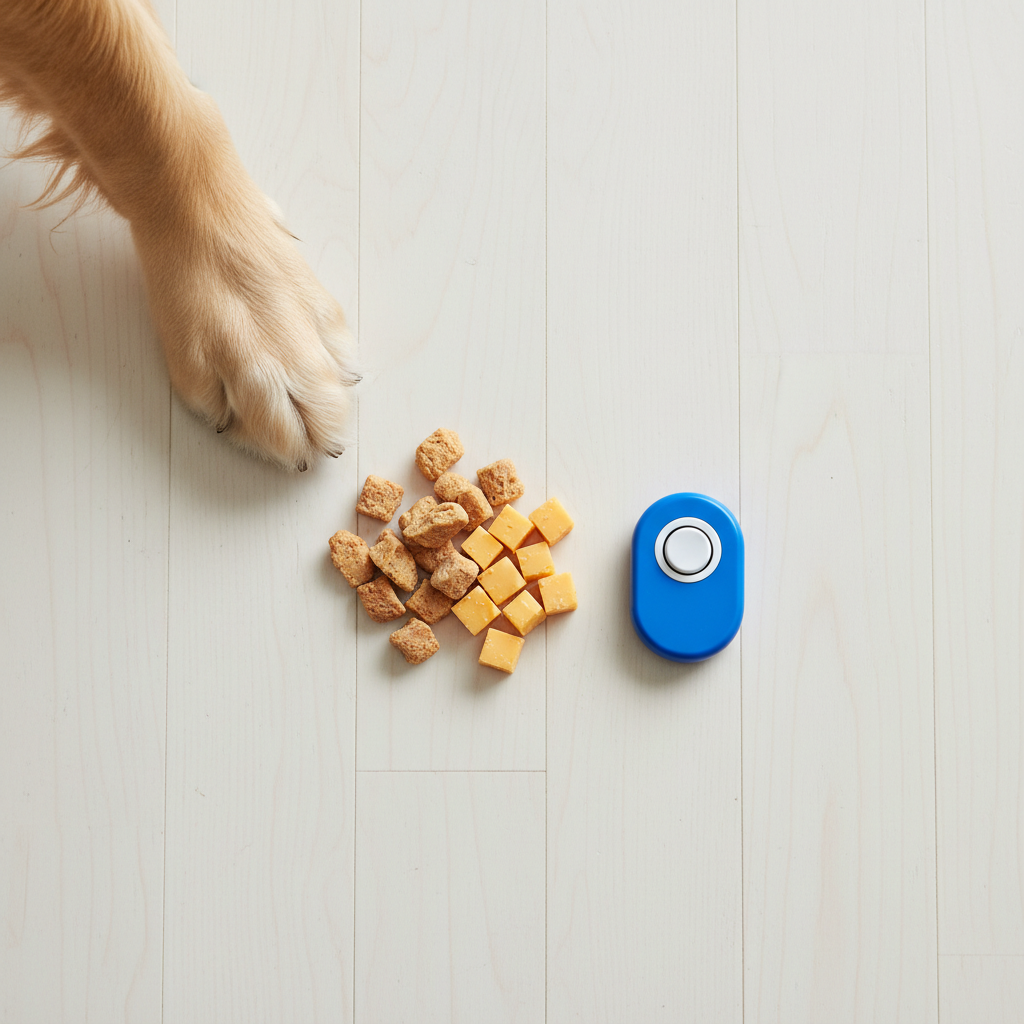
- High-Value Treats: This is key! We’re not talking about their regular kibble. High-value means something they absolutely love and don’t get all the time. Think tiny pieces of cheese, cooked chicken, hot dogs, or a soft, smelly training treat. The treats should be small—about the size of a pea—so you can do lots of repetitions without filling them up too quickly.
- A Quiet, Comfortable Space: Start your training sessions in a low-distraction environment, like your living room when things are calm. This helps your dog focus on you and the task at hand.
- A Positive Attitude: Your dog feeds off your energy! Keep training sessions short (just 2-5 minutes at a time), upbeat, and fun. If you or your dog gets frustrated, just end the session with an easy win (like a ‘sit’) and try again later.
- Optional: A Clicker: If you’re familiar with clicker training, this is a great behavior to use it with! The clicker ‘marks’ the exact moment your dog does the right thing, making your communication crystal clear. If you don’t use a clicker, a simple, happy ‘Yes!’ works just as well.
Teaching the ‘Chin’ Command: A Step-by-Step Guide
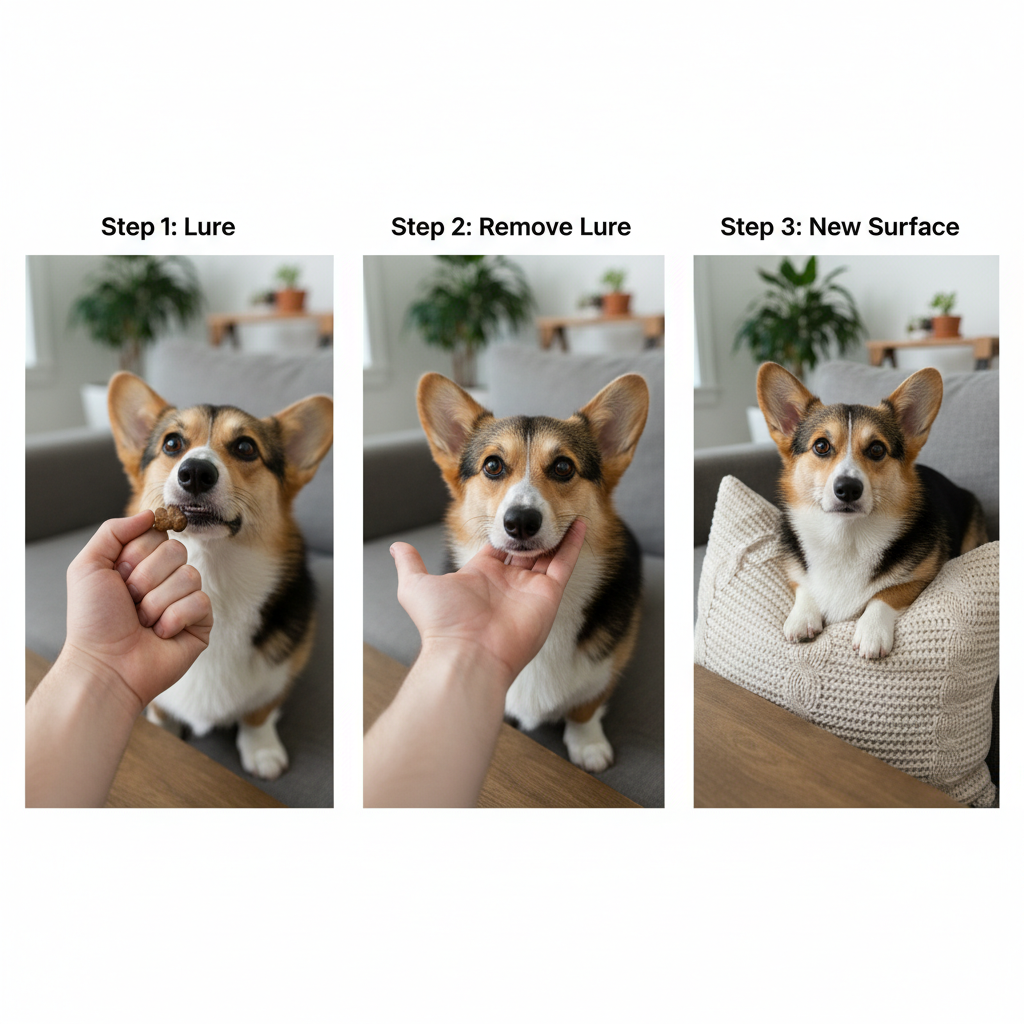
Ready to get started? Remember to be patient and celebrate the small wins! Here’s how to break it down into easy steps.
- Step 1: Lure the Behavior. Sit on the floor or a couch with your dog in front of you. Take a tasty treat and hold it in your closed fist. Place your fist on your knee or on the floor. Your dog will naturally come to investigate and will likely nudge, lick, or paw at your hand to get the treat. The moment their chin makes contact with your hand, say ‘Yes!’ (or click) and open your hand to give them the treat. Repeat this 5-10 times.
- Step 2: Transition to an Empty Hand. Now, pretend you have a treat in your hand, but it’s actually empty. Present your fist in the same way. Your dog, expecting a treat, should touch their chin to your hand again. The instant they do, mark with ‘Yes!’ and reward them with a treat from your other hand. This is a crucial step! It teaches them that the reward comes from you, not from the magic treat hand.
- Step 3: Shape the Behavior. Once your dog is reliably touching your fist, you can switch to an open, flat palm. Hold your palm out. At first, they might be confused. Just be patient. Reward any interaction at first, like a nose touch. Then, start waiting for their chin to make contact before you mark and reward. You can also start asking for a slightly longer duration, waiting a second or two before marking and rewarding.
- Step 4: Add the Verbal Cue. Now that your dog is offering the behavior consistently, you can name it! Right as you present your hand and they are about to put their chin on it, say your cue clearly: ‘Chin!’ (or ‘Rest,’ or whatever word you choose). Mark and reward as soon as they do it. After a few repetitions, start saying the cue just before you offer your hand.
- Step 5: Generalize, Generalize, Generalize! Practice in different places! Ask for a ‘Chin’ on your other knee, on a pillow on the floor, on the arm of the sofa, or even on your foot. This helps your dog understand that ‘Chin’ means to place their chin on the object you’re indicating, no matter where you are.
From Trick to Tool: Using the Chin Rest for Real-World Anxiety
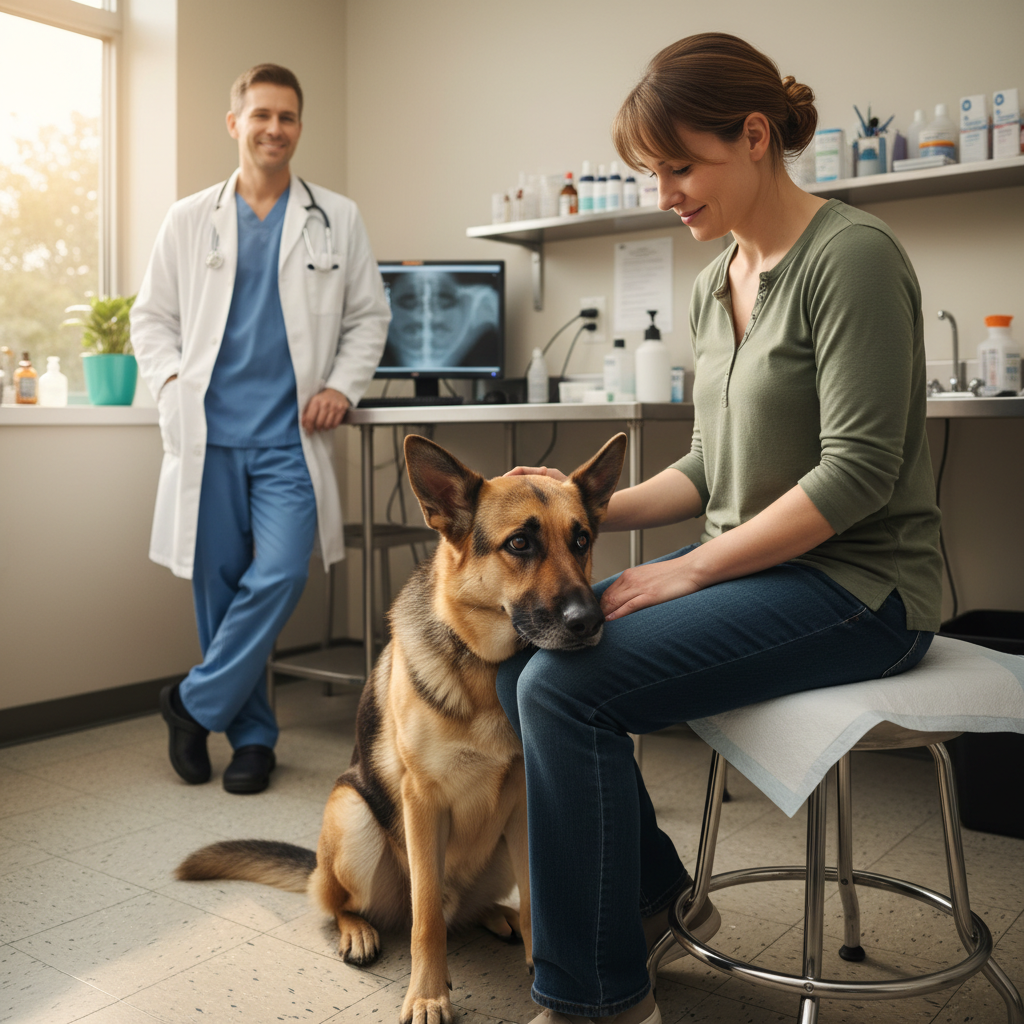
You’ve done the work, and your dog has a rock-solid ‘chin’ command. Now it’s time to turn this cute trick into a powerful calming tool. The key is to introduce it to stressful situations gradually.
Start Small
Don’t wait for a full-blown panic attack to try it for the first time. Use it in mildly alerting situations. For example:
- When you hear a distant siren.
- When a car door slams outside.
- Just before a guest you know your dog likes comes to the door.
Cue ‘Chin,’ and when they do it, reward them calmly and generously. You are teaching them a new default behavior: ‘When I feel a little unsure, I can check in with my person and get reassurance.’
During Stressful Events
For bigger events like thunderstorms or vet visits, the chin rest becomes an anchor. Find a comfortable spot with your dog and ask for the chin rest. You can reward them for holding the position for a few seconds at a time. While their chin is resting on you, speak in a low, calm voice and breathe slowly. Your calm energy will transfer to them.
Important Takeaway: The goal isn’t to distract your dog from the scary thing, but to give them a constructive, comforting action to perform while the scary thing is happening. It gives them a sense of control and predictability in an unpredictable situation.
At the vet, you can ask for a chin rest on your lap while you wait, or even on the exam table. This cooperative behavior can make examinations less stressful for everyone involved—your dog, you, and the veterinary staff.
Conclusion
Teaching your dog the chin rest is so much more than adding another trick to their repertoire. It’s about opening a new line of communication. It’s a way for you to offer support and for your dog to say, ‘Yes, I’d like some comfort right now.’ By investing a little time and a handful of tasty treats, you’re building a powerful tool that can provide genuine relief when your dog needs it most. So give it a try! Be patient, have fun, and enjoy the quiet moments of connection this sweet and simple trick will bring you.