Impress Your Friends: How to Teach Your Dog to Spin on Command Fast
Have you ever watched a dog on TV or at the park perform a perfect, zippy spin and thought, ‘I wish my dog could do that!’? Well, great news! The ‘spin’ command is one of the most fun and straightforward tricks you can teach your furry friend. It’s a real crowd-pleaser that looks complex but is surprisingly simple to master.
Not only is it a fantastic party trick, but teaching your dog to spin is also a wonderful way to boost their confidence, provide mental stimulation, and strengthen the bond you share. Using just a handful of tasty treats and a bit of patience, you can have your pup twirling like a pro in no time. Let’s get started on this fun training adventure!
Getting Started: What You’ll Need
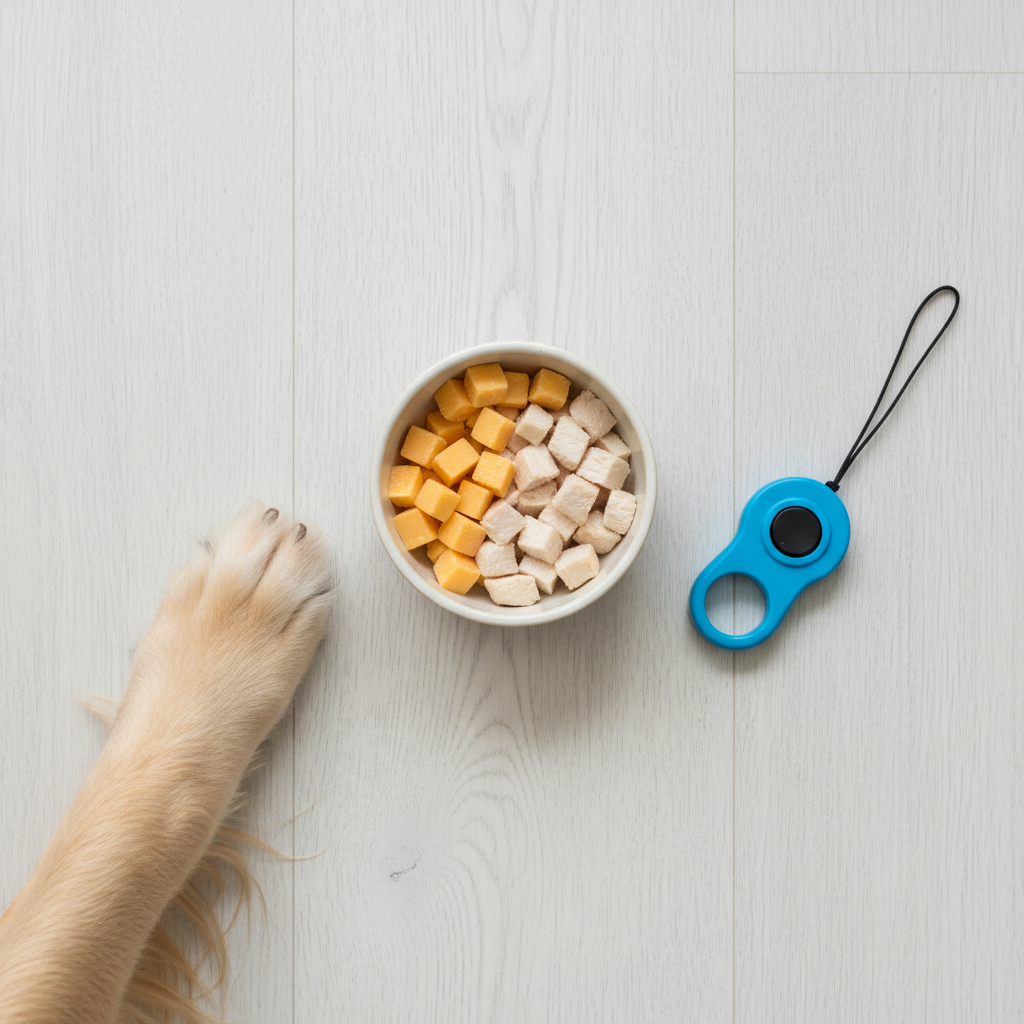
Before you and your pup start your dance lessons, it’s best to gather a few simple supplies. Having everything ready ensures your training sessions are smooth, efficient, and super positive. You don’t need any fancy equipment, just a few key items:
- High-Value Treats: These aren’t your dog’s everyday kibble. Think small, soft, and extra-delicious morsels that will really get their attention. Tiny pieces of cooked chicken, cheese, or store-bought training treats work wonders. The goal is to make the reward so exciting that your dog is eager to work for it.
- A Quiet Training Space: Find a spot in your home with minimal distractions. A living room or a quiet hallway is perfect. You want your dog’s focus to be entirely on you and the fun new game you’re about to play, not on the mail carrier walking by or a squirrel outside the window.
- An Enthusiastic Attitude: This is the most important tool! Dogs are incredibly perceptive and feed off our energy. If you’re excited and positive, they’ll be excited, too. Keep it light, fun, and full of praise.
- A Clicker (Optional): If you’re familiar with clicker training, this is a great time to use it. A clicker is a tool that makes a distinct ‘click’ sound to precisely mark the moment your dog does the right thing. If you don’t have one, no worries! A simple, happy marker word like ‘Yes!’ works just as well.
The 4 Simple Steps to a Perfect Spin
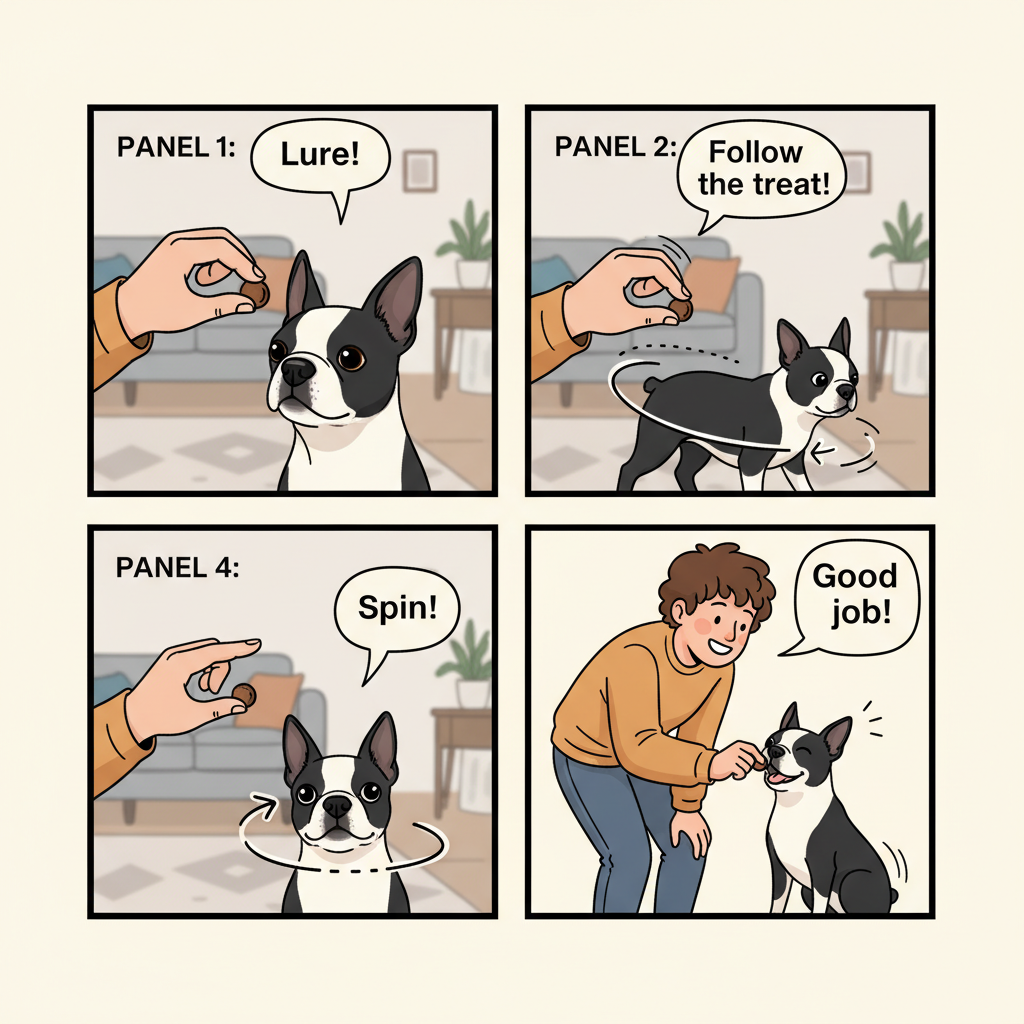
This is where the magic happens! We’ll teach the spin using a technique called ‘luring.’ This means we’ll use a treat to guide your dog’s nose—and where the nose goes, the body follows. Remember to keep your sessions short (just 5-10 minutes at a time) to keep your dog engaged and wanting more.
Step 1: Create the Lure
Hold a tasty treat between your thumb and forefinger. Let your dog sniff it so they know you’ve got the goods. Now, hold the treat right in front of your dog’s nose. Slowly move the treat from their nose towards their shoulder, causing them to turn their head to follow it. The moment they turn their head, say ‘Yes!’ (or click) and give them the treat. Repeat this a few times until they’re eagerly following the treat with their head.
Step 2: Complete the Circle
Once your dog is reliably turning their head, it’s time to go for the full circle. Start the same way, luring their nose towards their shoulder. This time, continue moving your hand in a small circle over their head, guiding them all the way around. Many dogs will naturally follow the treat and complete the spin. The very first time they make it all the way around, even if it’s clumsy, have a mini-party! Give them lots of praise and a few treats. This is a big breakthrough!
Step 3: Fade the Food Lure into a Hand Signal
After your dog is spinning consistently with the treat lure, it’s time to make the signal more subtle. Pretend to hold a treat in your hand (but keep the real one in your other hand). Make the same circular motion with your empty ‘lure’ hand. When your dog spins, praise them enthusiastically and reward them with the treat from your other hand. Gradually, you can make this hand signal smaller and faster—a simple, circular flick of your wrist or finger will eventually be enough.
Step 4: Add the Verbal Cue
Your dog now reliably spins with just a hand signal. It’s time to name the behavior! Just before you give the hand signal, clearly and happily say your cue word, like ‘Spin!’. Say the word, make the hand signal, and reward the spin. After several repetitions, your dog will start to associate the word ‘Spin!’ with the action. Try saying ‘Spin!’ without giving the hand signal. If they do it, you’ve succeeded! If they hesitate, just give them a small hand signal as a hint and keep practicing.
Troubleshooting: When Your Pup Gets Stuck
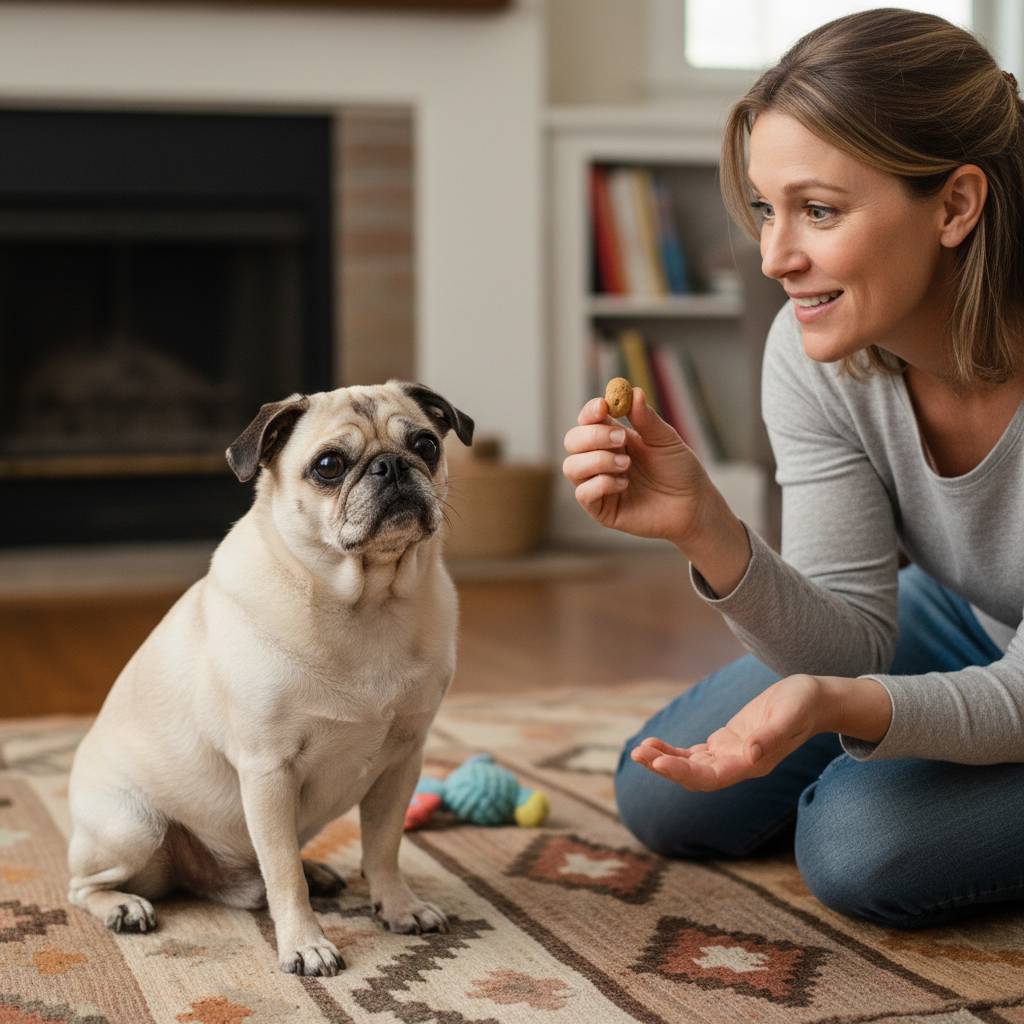
Sometimes, training doesn’t go exactly as planned, and that’s perfectly okay! Every dog learns at a different pace. If you hit a snag, don’t get discouraged. Here are some common issues and how to solve them:
- ‘My dog only turns halfway and then stops.’
This is very common! It usually means you’ve asked for too much, too soon. Go back a step. Reward them for just a quarter turn. Once that’s solid, ask for a half turn. Then a three-quarter turn, and finally, the full spin. Breaking it down into baby steps builds confidence. - ‘My dog just sits and stares at me.’
This could be a motivation issue. Are your treats exciting enough? Try something even more special. Also, make sure your training sessions aren’t too long. A tired or bored dog won’t be an eager student. End on a high note before they lose interest. - ‘My dog seems to get dizzy.’
While dogs don’t get dizzy in the same way we do, repeated spinning can be disorienting. Keep the repetitions low—no more than 3-4 spins per session. It’s also a fantastic idea to teach the spin in the opposite direction with a different cue word (like ‘Twirl’!) to keep things balanced. - ‘My dog is grabbing at my hand instead of following it.’
If you have a mouthy pup, try holding the treat in a closed fist and letting them follow your fist. You can also use a target stick or even a wooden spoon with a dab of peanut butter on the end to keep their teeth away from your fingers.
Pro Tips for a Flawless & Flashy Spin
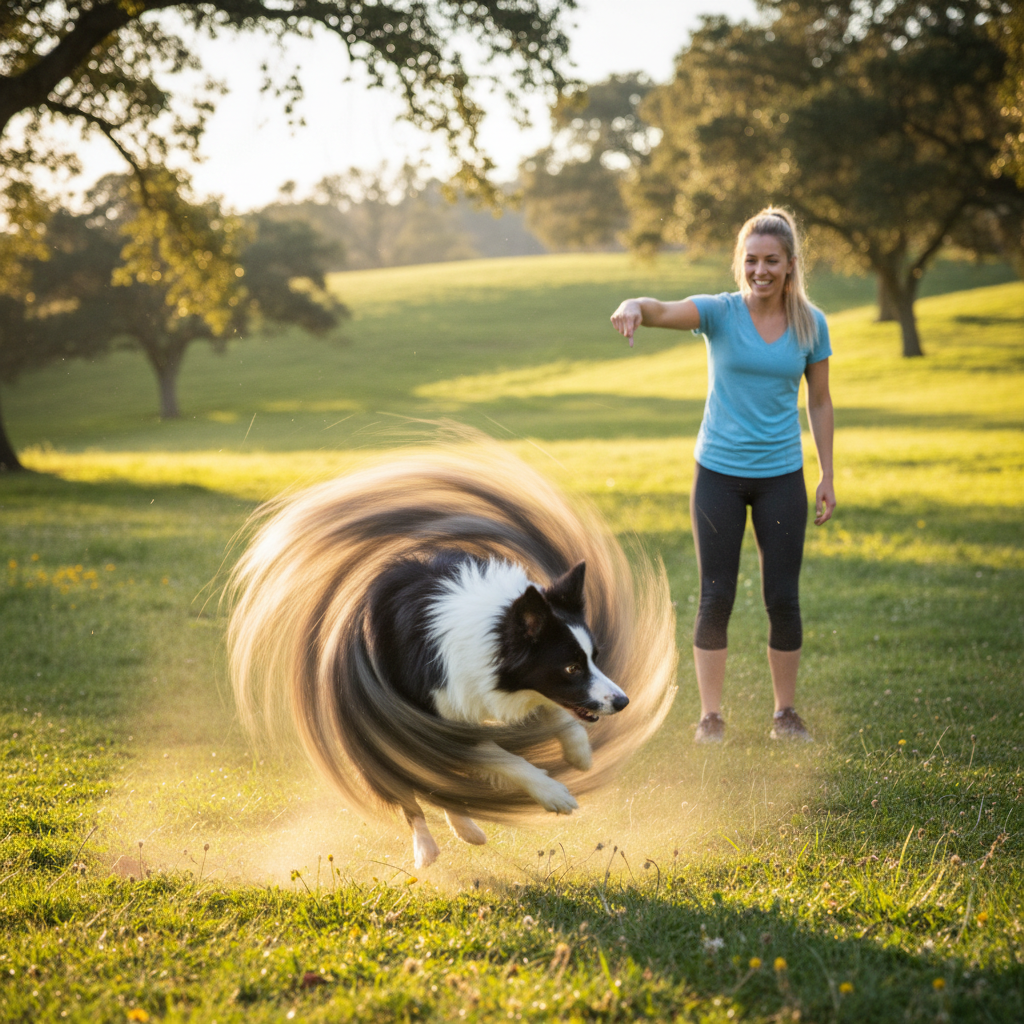
Once your dog has mastered the basic spin, you can polish the trick and make it even more impressive. These pro tips will take your pup’s performance from good to great!
- Build Speed: To get that zippy, fast spin, start rewarding only the faster spins. If your dog does a slow, meandering spin, give them mild praise. But when they whip around quickly, give them a ‘jackpot’—lots of treats and excited praise! They’ll quickly learn that speed earns a better reward.
- Teach Both Directions: As mentioned earlier, teaching the spin in both directions is great for your dog’s physical and mental balance. Use a different verbal cue and a different hand signal for the opposite direction. For example, ‘Spin!’ with a clockwise hand motion, and ‘Twirl!’ with a counter-clockwise motion.
- Proof Your Trick: ‘Proofing’ means teaching your dog to perform the command in different environments and with distractions. Start practicing in the backyard. Then try it on a walk (on leash). Eventually, you can try it at the park. This teaches your dog that ‘Spin!’ means spin, no matter where you are.
- Add Some Distance: Can your dog spin when you’re standing right next to them? Great! Now take one step back and ask for the spin. Gradually increase the distance until you can ask your dog to spin from across the room. It looks incredibly impressive and shows a deep level of understanding.
Conclusion
Congratulations! You now have all the tools and steps to teach your dog one of the most delightful tricks around. Remember that the key to any successful training is patience, positivity, and consistency. Celebrate the small victories, keep your sessions short and sweet, and most importantly, have fun with your dog.
Before you know it, your pup will be spinning on command, ready to show off their new skill to all your friends and family. This is more than just a trick; it’s a new way for you and your best friend to communicate and have a great time together. Now go grab those treats and get ready to twirl!