The Cutest Trick Ever: Teach Your Dog to ‘Hold Hands’ for Photos
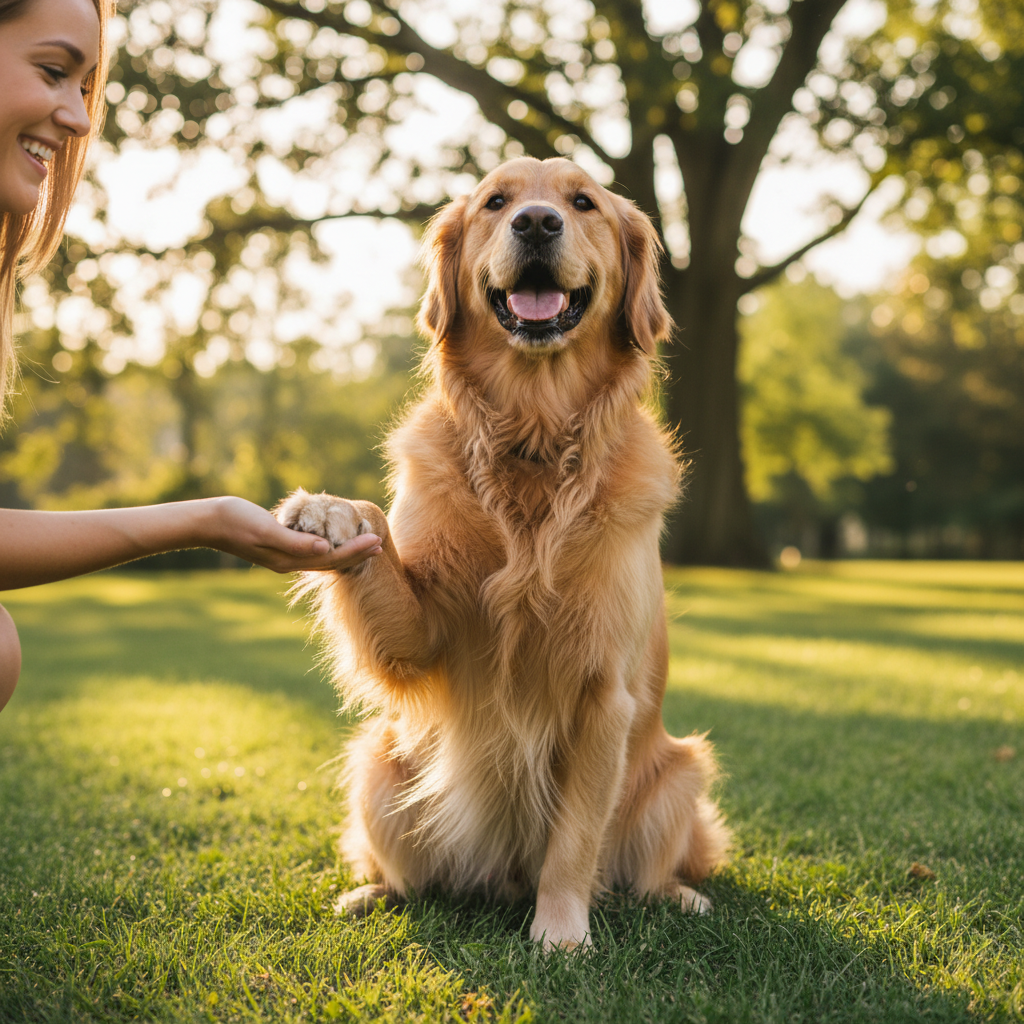
Have you ever scrolled through your feed and seen those impossibly cute photos of a dog lovingly placing its paw in its owner’s hand? It’s more than just a picture; it’s a moment of connection, a sweet gesture that says, ‘We’re a team.’ You might think a trick like that is reserved for Hollywood-trained pups, but what if I told you that you could teach your own furry friend this heartwarming ‘hold hands’ pose? It’s not only possible, but it’s also a fantastic way to strengthen your bond and have a ton of fun together.
This guide is all about breaking down this charming trick into simple, bite-sized steps. We’ll use positive reinforcement, which means lots of treats, praise, and patience. Forget about complicated techniques or needing to be a professional trainer. All you need is a little time, a happy attitude, and a pocketful of your dog’s favorite snacks. Let’s get ready to create some picture-perfect memories!
Gathering Your Tools for Success
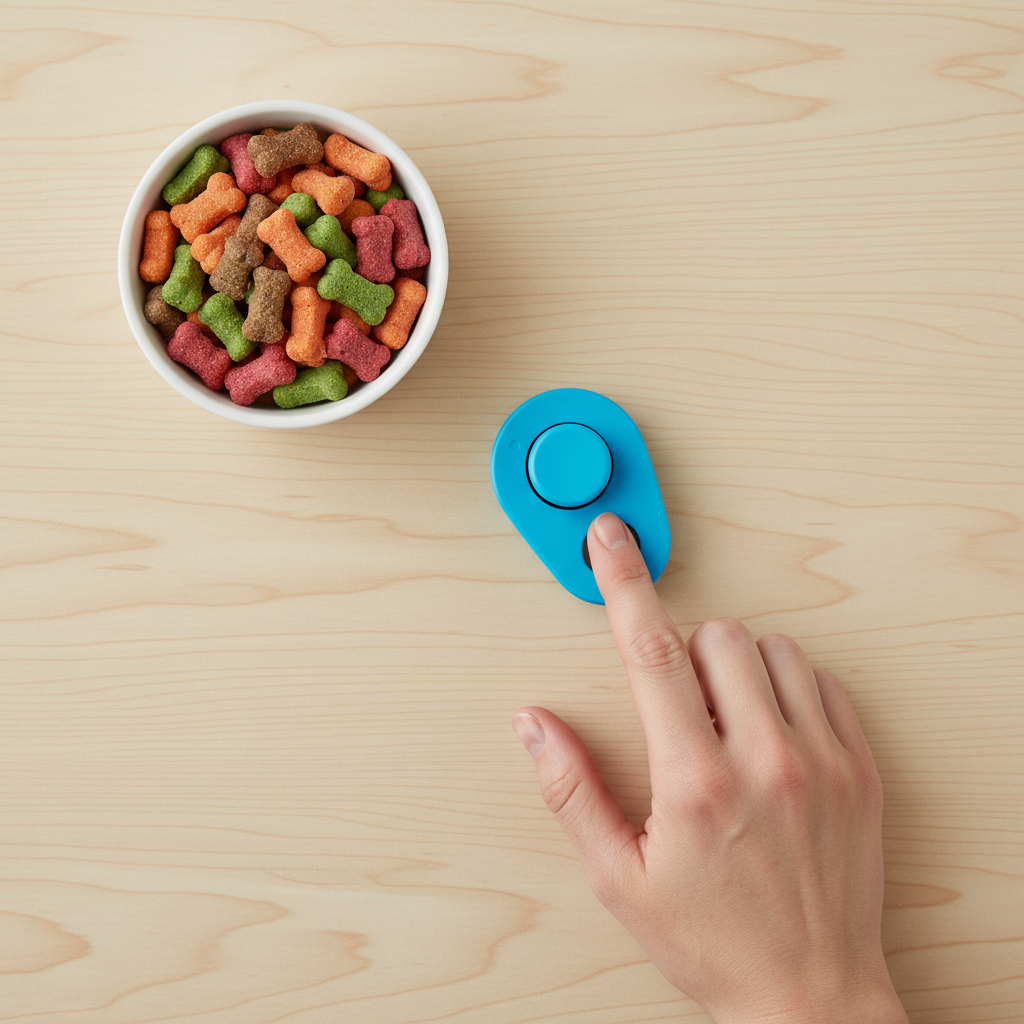
Before we jump into the training, let’s get everything we need in one place. Having your supplies ready means you can keep the training session smooth, fun, and focused on your dog. Think of it as setting the stage for a great performance!
What You’ll Need:
- High-Value Treats: These aren’t your dog’s everyday kibble. We’re talking about the good stuff! Think small, soft, and extra tasty morsels like tiny pieces of chicken, cheese, or commercial training treats that your dog goes wild for. The goal is to make the reward so exciting that your dog is eager to learn.
- A Clicker (Optional but Recommended): A clicker is a fantastic tool for marking the exact moment your dog does something right. The ‘click’ acts as a clear signal that says, ‘Yes, that’s it! A treat is coming!’ If you don’t have a clicker, you can use a consistent marker word like ‘Yes!’ or ‘Good!’ said in an upbeat tone.
- A Quiet, Comfortable Space: Choose a location with minimal distractions. Your living room, a quiet bedroom, or a calm backyard are all great options. You want your dog to be able to focus on you and the fun game we’re about to play, not the squirrel outside the window or the mail carrier at the door.
- A Positive Attitude: This is the most important tool of all! Dogs are incredibly perceptive and feed off our energy. Keep your training sessions short (5-10 minutes is perfect), upbeat, and always end on a positive note. If you feel frustrated, it’s better to end the session with an easy win and try again later.
The Step-by-Step Guide to ‘Holding Hands’
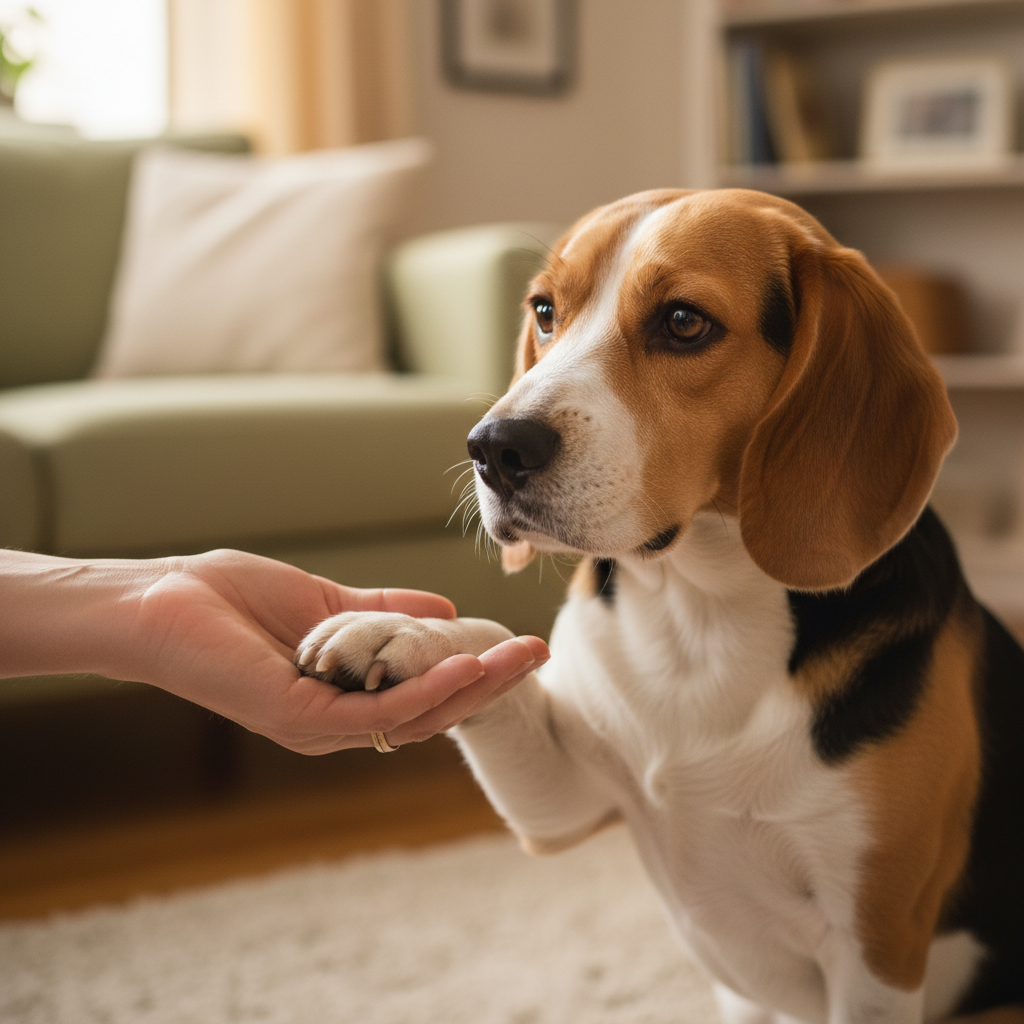
Alright, with our treats in hand and our positive vibes on, it’s time for the main event! Remember, every dog learns at a different pace. Be patient with your pup and celebrate the small victories along the way. Let’s break it down into easy-to-follow steps.
- Step 1: Get Your Dog Comfortable with Paw Touches. Some dogs are sensitive about their paws. Start by sitting on the floor with your dog. Gently touch one of their paws for just a second. The moment you touch it, click (or say ‘Yes!’) and give them a treat. Repeat this several times with different paws until your dog is happy and relaxed about you touching them.
- Step 2: Introduce Your Open Hand. Now, instead of just touching their paw, place your open hand, palm up, on the floor near your dog. Be patient and wait. Out of curiosity, your dog will likely sniff or nudge your hand. The instant they make any contact with it—a sniff, a lick, a paw touch—click and treat! We’re teaching them that interacting with your open hand is a great thing.
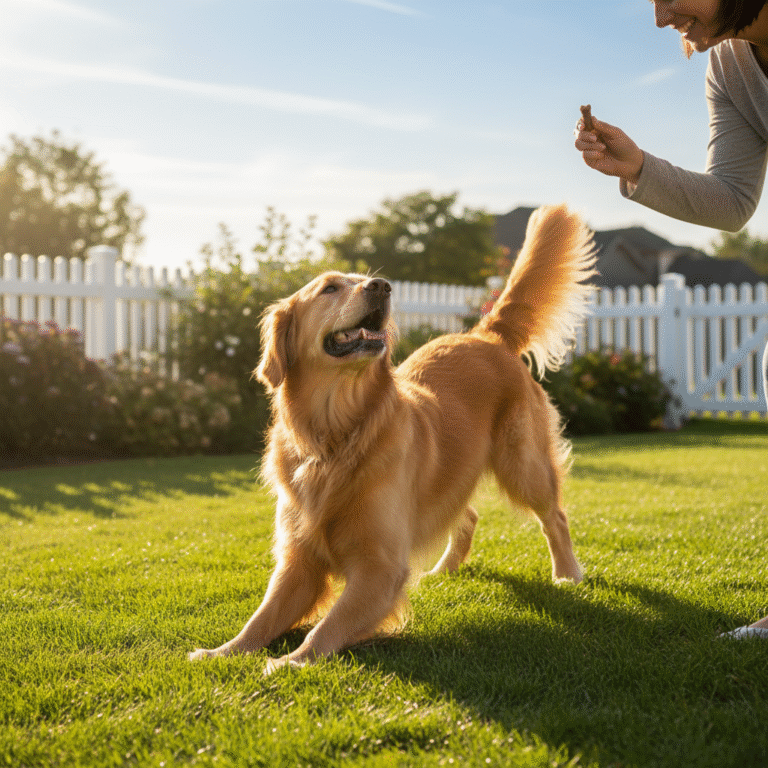
- Step 3: Shape the ‘Paw in Hand’ Behavior. Continue holding your hand out. This time, wait for them to place their paw on it. Even if it’s just for a split second, the moment their paw touches your palm, click and reward with a jackpot of treats (a few treats in a row). This is the ‘aha!’ moment we’re looking for. Practice this until your dog is confidently and consistently placing their paw in your hand when you present it.
- Step 4: Gently Close Your Hand. Once your dog is comfortable resting their paw in your open palm, you can start to gently cup your fingers around it for a brief moment, creating the ‘hold.’ The instant you close your hand, click and treat. Release immediately. The goal is to show them that this gentle hold is safe and rewarding.
- Step 5: Build Duration. Now we add time! Ask for the paw, gently close your hand, and wait just one second before you click and treat. In the next session, try for two seconds. Gradually increase the duration of the ‘hold’ over several short training sessions. If your dog pulls their paw away, you’ve gone too fast. Simply go back to a shorter duration where they were successful and build up more slowly.
- Step 6: Add the Verbal Cue. When your dog is reliably holding your hand for a few seconds, you can add a verbal cue. Right as you present your hand, say your chosen cue, such as ‘Hold hands,’ ‘Paw,’ or ‘Shake.’ When they place their paw in your hand, click and treat. With repetition, they’ll associate the words with the action.
From Trick to Photo: Nailing the Perfect Shot
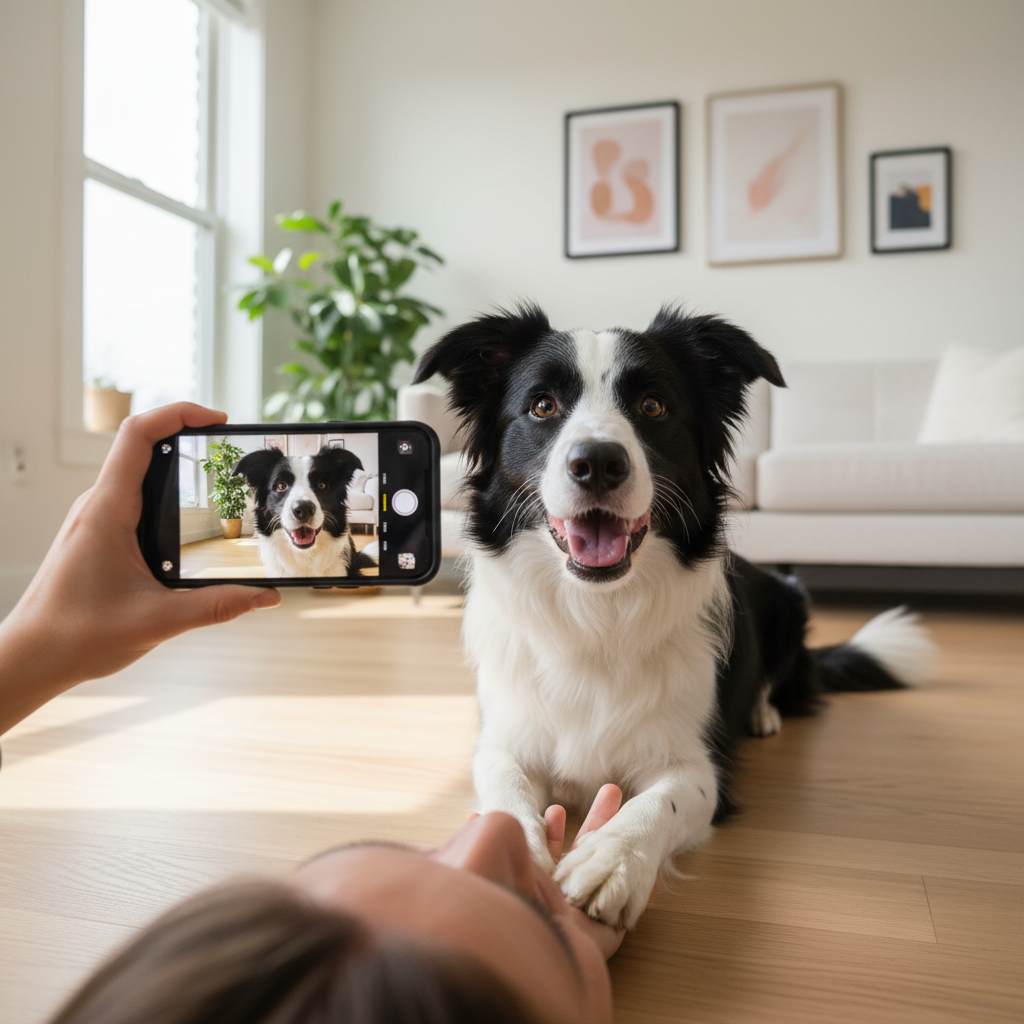
You’ve done the hard work, and your dog is now a hand-holding pro! But how do you capture that magic in a photo? It’s all about preparation and keeping things fun. A stressed dog won’t give you that relaxed, happy expression you’re looking for.
Tips for a Great Photoshoot:
- Choose Good Lighting: Natural light is your best friend. Try taking photos near a large window or outdoors in a shady spot. Avoid harsh, direct sunlight which can cause squinting, and steer clear of using a direct flash, which can create red-eye and startle your dog.
- Set the Scene: Think about your background. A cluttered room can be distracting. A simple background like a plain wall, a nice blanket, or a pretty spot in your yard will make your subjects (you and your pup!) pop.
- Get on Their Level: Don’t just stand over your dog and point the camera down. Get on the floor with them! Photos taken at your dog’s eye level are much more engaging and intimate.
- Keep it Short and Sweet: Don’t expect your dog to pose for an hour. Have your camera or phone ready to go before you ask for the trick. Take a few quick shots, then reward your dog with a treat or a quick play session. It’s better to have a few great photos from a happy dog than a hundred blurry shots from a frustrated one.
Expert Tip: Try using your camera’s burst mode. This will take a rapid series of photos, increasing your chances of capturing that one perfect moment where the lighting, the expression, and the pose are all just right.
Troubleshooting Common Training Hiccups
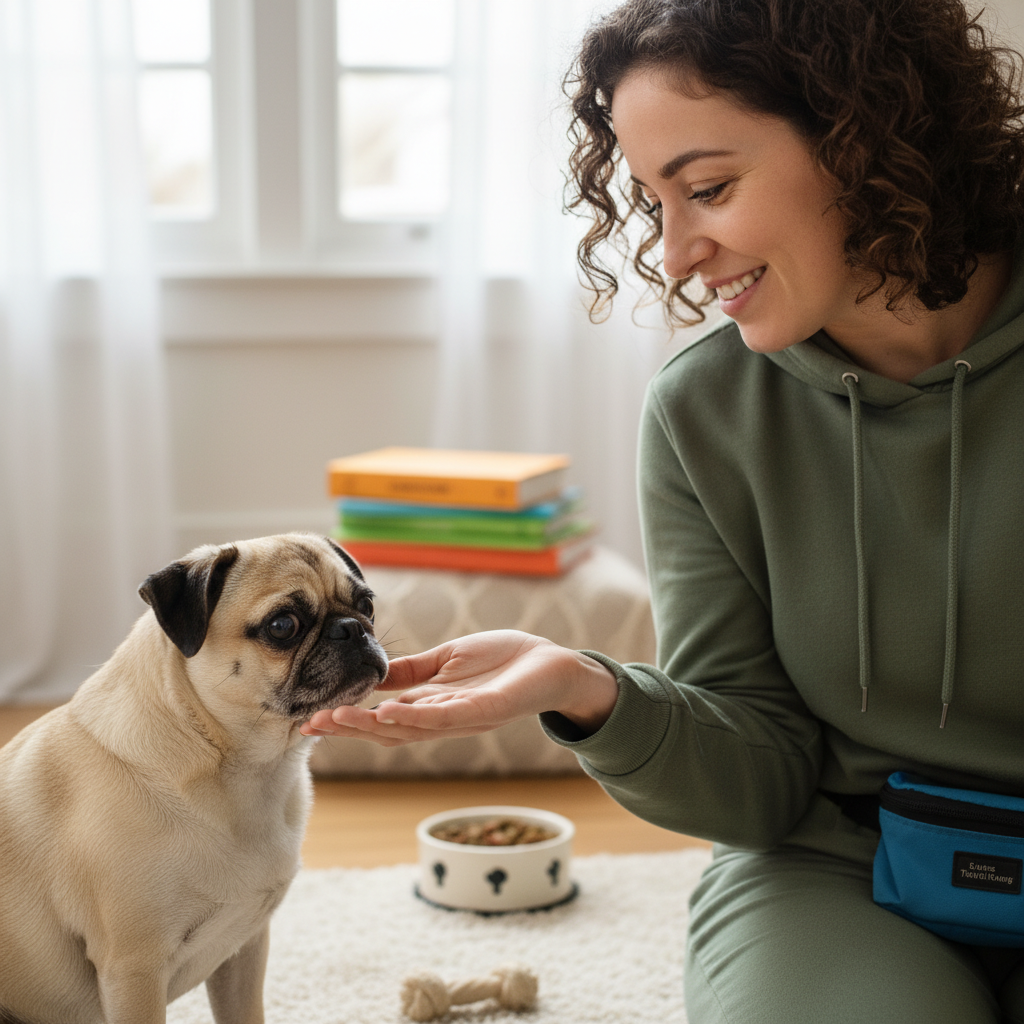
Sometimes, training doesn’t go exactly as planned, and that’s completely normal! Every dog is an individual. Here are a few common bumps in the road and how to navigate them with a positive approach.
My dog pulls their paw away instantly.
This usually means one of two things: they are sensitive about their paws, or we’ve moved too fast. Go back to Step 1 and spend more time just rewarding for simple, quick touches. Make sure every interaction with their paw is positive and brief. Also, check the pressure of your hold. It should be incredibly light and gentle, not a firm grip.
My dog starts nipping or mouthing my hand.
This is common, especially with puppies or mouthy breeds. They’re likely just excited and trying to figure out the game. If your dog mouths you, say ‘Oops!’ in a neutral tone and briefly withdraw your hand for a few seconds. When you present it again, be ready to click and treat for a paw touch, not a mouth touch. You are teaching them that only paw contact earns the reward.
My dog is too distracted to focus.
If your dog can’t seem to focus, your environment might be too stimulating, or your treats might not be exciting enough. Try moving to a quieter room or using an even higher-value treat. Also, make sure your training sessions aren’t too long. A focused five-minute session is far more effective than a distracted fifteen-minute one.
Conclusion
Congratulations! You now have all the steps and tips you need to teach your dog the incredibly charming ‘hold hands’ trick. More than just a cute pose for a photo, this process is a beautiful exercise in communication and trust between you and your best friend. Every time your dog places their paw in your hand, it’s a testament to the bond you’ve built together.
Remember to be patient, keep it positive, and celebrate every bit of progress. Now go grab your camera and your furry model, and get ready to capture some truly unforgettable moments. We can’t wait to see the adorable photos you create!