The ‘Touch’ Trick: The Easiest Way To Boost Your Dog’s Confidence
Have you ever wished for a magic wand to boost your dog’s confidence? Something simple you could do to help your shy pup feel a little braver, or your boisterous buddy focus their energy? Well, it might not be a magic wand, but the ‘touch’ command is pretty close. It’s one of the easiest, most versatile, and most powerful tools in any dog owner’s toolkit.
Often called ‘hand targeting,’ the ‘touch’ trick is simply teaching your dog to touch their nose to your hand (or another object) on cue. It sounds basic, and it is! But don’t let its simplicity fool you. This single command opens up a world of communication between you and your dog. It’s a game, a job, and a confidence-booster all rolled into one. In this guide, we’ll walk you through exactly how to teach this amazing skill and explore all the ways it can transform your relationship with your furry best friend.
What is the ‘Touch’ Command, Anyway?
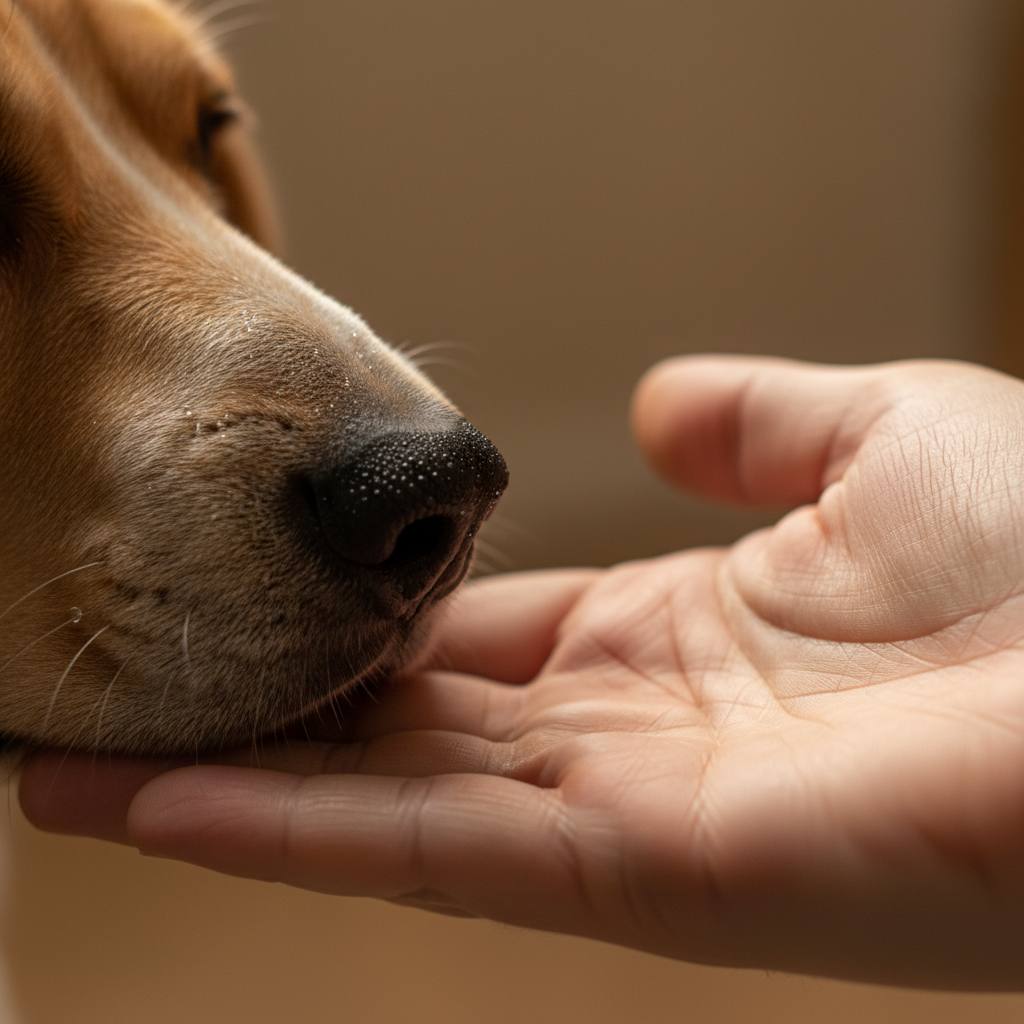
At its core, the ‘touch’ command is a form of target training. You present a target—in this case, your hand—and your dog learns to interact with it using their nose. Why the nose? Because it’s a dog’s primary tool for exploring the world! It feels natural for them to investigate things nose-first.
Think of it as a canine handshake or a high-five. It’s a voluntary, positive action that your dog chooses to perform. This element of choice is crucial for building confidence. Instead of being passively handled, your dog is actively participating in an interaction. This simple shift in perspective can be life-changing for a dog that is anxious or unsure.
Expert Tip: The goal is a gentle ‘boop’ from their nose to your hand. We aren’t asking for a lick or a nibble, just a deliberate touch. This precision helps build focus and body awareness.
The beauty of ‘touch’ lies in its versatility. It’s not just a party trick. It’s a foundational skill that can be used to:
- Redirect your dog’s attention away from distractions.
- Guide them into position (like into the car or onto a vet’s scale) without pulling or pushing.
- Make greetings with strangers less intimidating.
- Serve as a building block for more complex tricks and behaviors.
Essentially, you’re giving your dog a simple, fun ‘job’ they can succeed at every single time. And with every success, their confidence grows.
Gearing Up: What You’ll Need
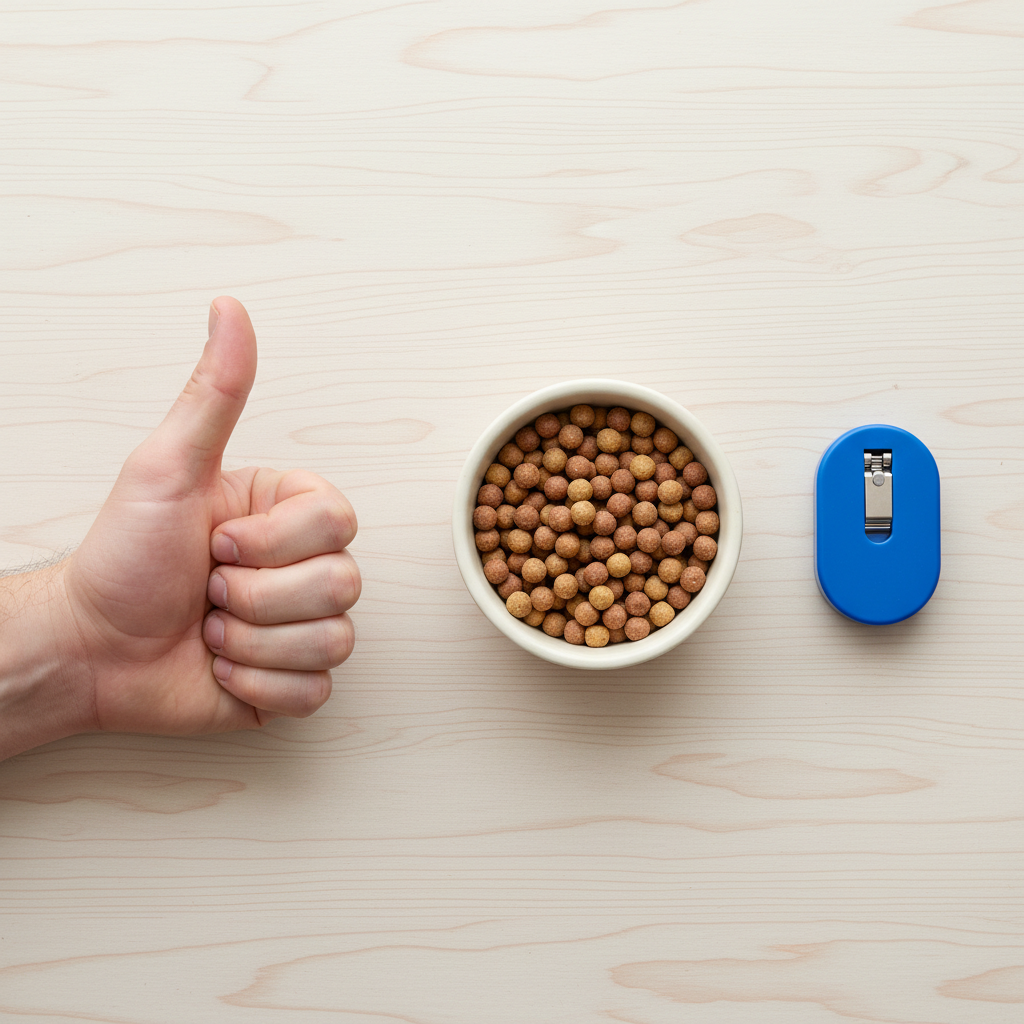
Ready to get started? The best part about teaching ‘touch’ is that you likely already have everything you need. There’s no fancy equipment required, which makes it accessible to every dog owner.
The Essentials:
- High-Value Treats: These are the ‘paycheck’ for your dog’s hard work. Choose something your dog absolutely loves and that they don’t get all the time. Think small, soft, smelly treats like tiny pieces of chicken, cheese, or commercial training treats. The smaller the better, so you can do lots of repetitions without filling them up too quickly.
- A Positive Attitude: This is non-negotiable! Training should be fun for both of you. Keep your energy light, happy, and encouraging. Your dog will pick up on your enthusiasm.
- A Quiet Space: Start your training sessions in a low-distraction environment, like your living room or a quiet backyard. This helps your dog focus on the task at hand without getting sidetracked by squirrels or the mail carrier.
Optional but Helpful:
- A Clicker: A clicker is a fantastic tool for marking the exact moment your dog does the right thing. The ‘click’ is a clear, consistent signal that means ‘Yes! A treat is coming!’ If you don’t have a clicker, a verbal marker word like a cheerful ‘Yes!’ or ‘Good!’ works just as well. The key is to be consistent.
That’s it! The simplicity is part of its charm. You’re not teaching a complex behavior; you’re shaping a natural one and building a positive association with it.
The Step-by-Step Guide to Teaching ‘Touch’
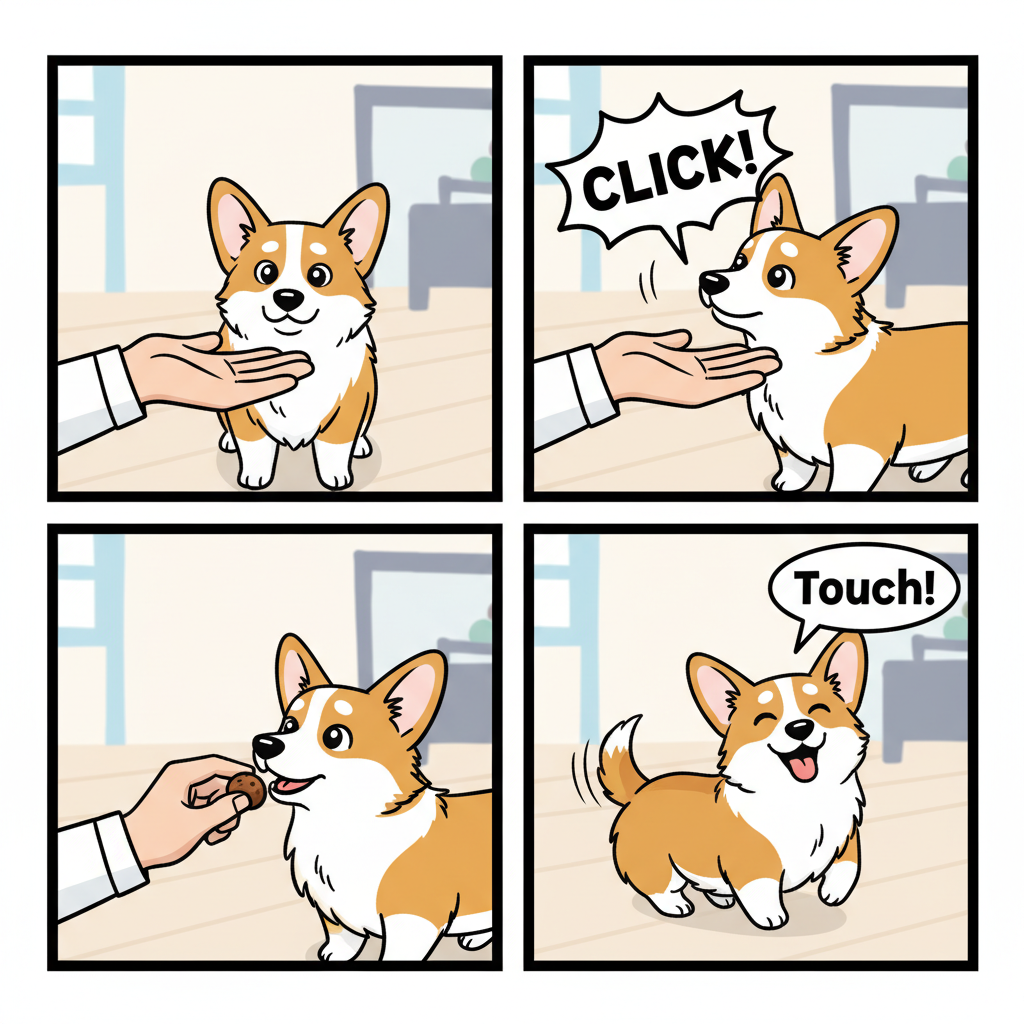
Alright, let’s get to the fun part! Remember to keep sessions short and sweet—just a few minutes at a time is perfect, especially when you’re starting out. End each session on a high note while your dog is still eager to play.
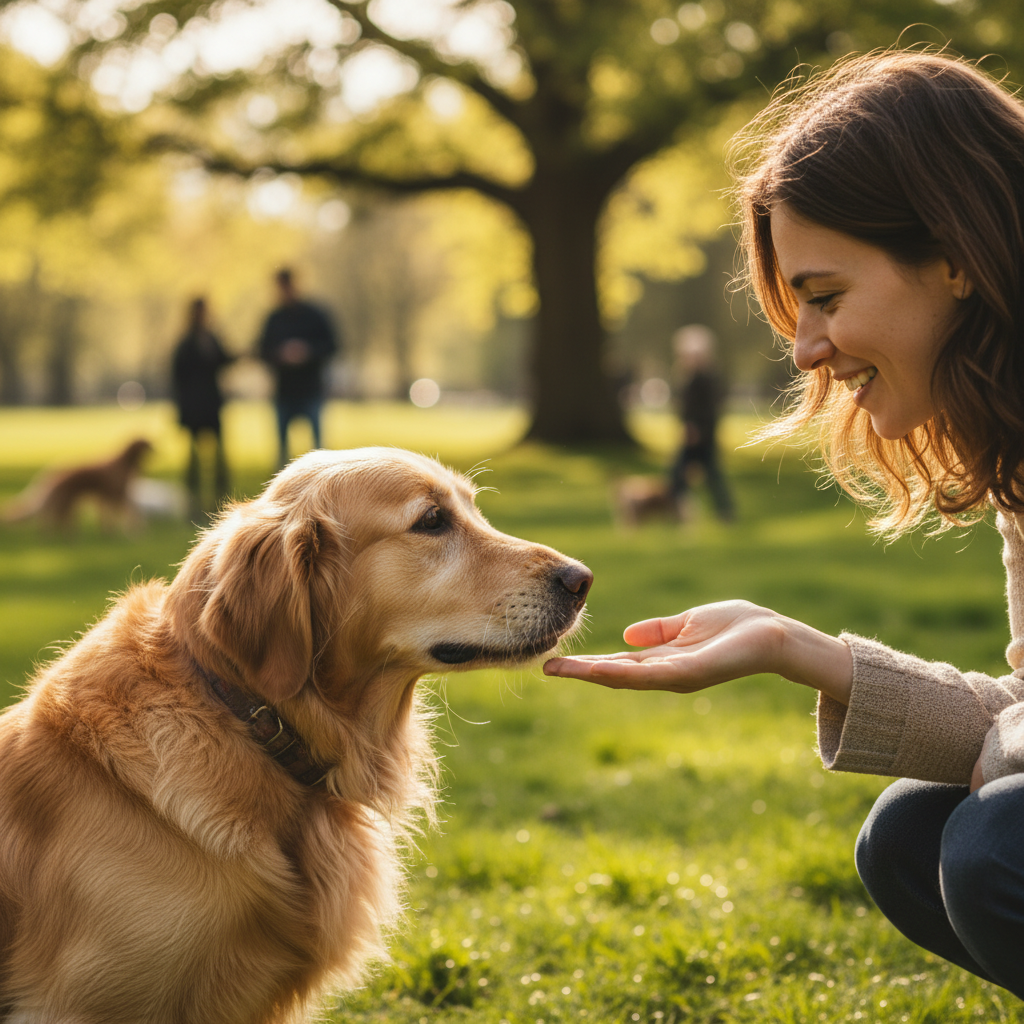
- Present Your Hand: Sit in front of your dog in your quiet space. Hold your hand out flat, with your palm open, about an inch or two from the side of your dog’s nose. Don’t shove it in their face; just present it as an interesting new object.
- Wait for Curiosity: Your dog will likely be curious and move their head to sniff your hand. The very instant their nose makes contact with your palm, mark the behavior. Click your clicker or say your marker word (‘Yes!’) with enthusiasm.
- Reward Immediately: As soon as you mark the touch, pull your target hand away and give your dog a treat with your other hand. This sequence—touch, mark, treat—is very important. The mark pinpoints the successful action, and the treat reinforces it.
- Repeat, Repeat, Repeat: Do this several times. Present your hand, wait for the nose boop, mark, and reward. At first, you’re just capturing their natural curiosity. Most dogs pick this up incredibly fast!
- Move Your Hand: Once your dog is reliably touching your hand when it’s right by their nose, start presenting it in slightly different positions—a little higher, a little lower, a little more to the left or right. This teaches them to actively move toward the target.
- Add the Verbal Cue: When your dog is eagerly bopping your hand as soon as you present it, you can add the word. Right as you present your hand, say ‘Touch!’ in a clear, happy voice. They will perform the action they’ve already learned, and you’ll mark and reward as usual. They will quickly associate the word ‘Touch’ with the action of bopping your hand with their nose.
Keep in Mind: Every dog learns at a different pace. If your dog is hesitant, you can smear a tiny bit of peanut butter or cream cheese on your palm for the first couple of tries to encourage them. Fade this lure out as quickly as possible so they learn to touch your clean hand.
Troubleshooting & Taking It to the Next Level
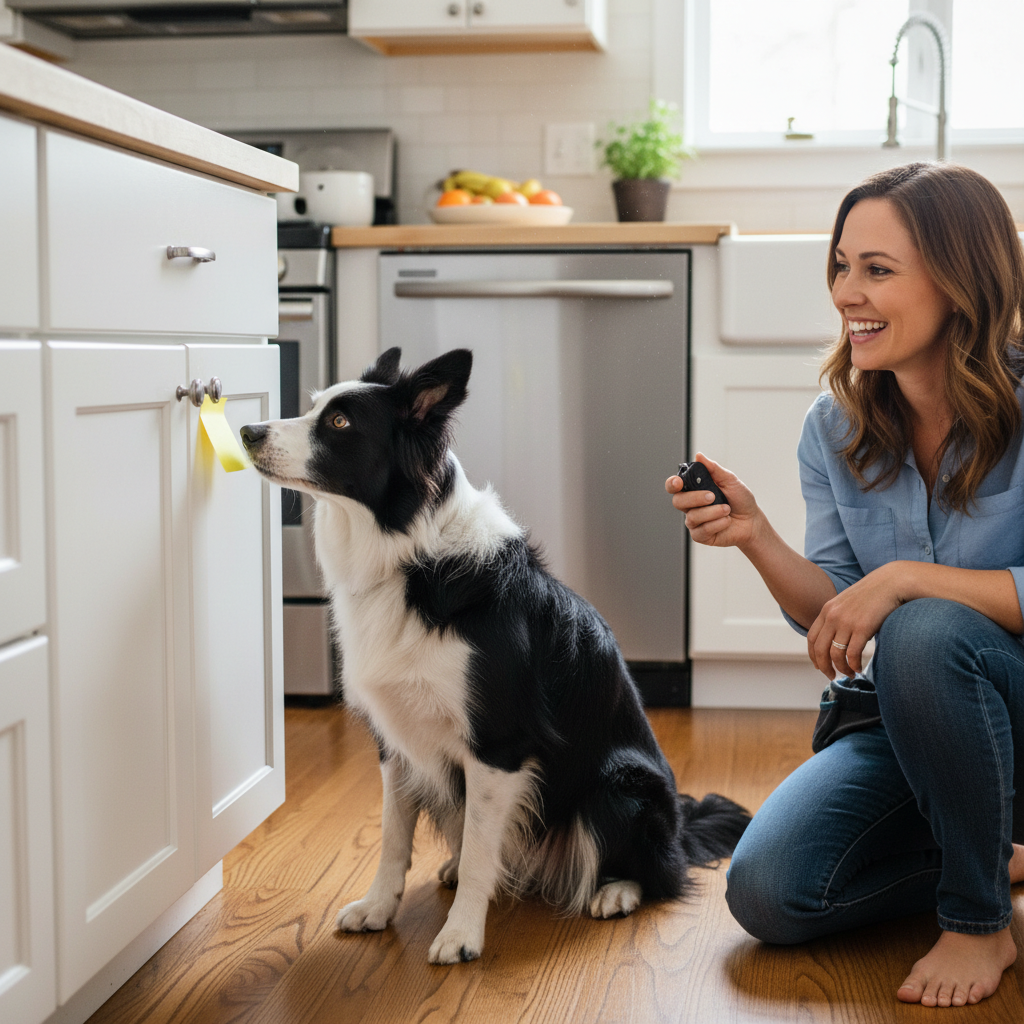
Even with the simplest tricks, you might hit a small bump in the road. Don’t worry, it’s all part of the process! Here’s how to handle common issues and then level up your dog’s new skill.
Common Sticking Points:
- My dog is trying to lick or mouth my hand. This is very common! If your dog licks or nibbles, simply close your hand into a fist or pull it away calmly without a word. Wait a second, then present your open palm again. Only mark and reward for a nose-only touch. They’ll quickly learn that only the nose boop earns the reward.
- My dog isn’t interested in my hand. Make it more exciting! Wiggle your fingers, move your hand away slowly to encourage a little chase, or try a different time of day when they’re more energetic. Also, make sure your treats are high-value enough to be motivating.
- My dog seems scared of my hand. This is where ‘touch’ is so powerful for fearful dogs. Start with your hand very low and to the side, not reaching over their head. Let them make the choice to approach. Reward any small movement toward your hand at first, even just a head turn. Work up to a full touch very gradually. This command can rebuild a positive association with hands.
Leveling Up the ‘Touch’ Game:
Once your dog has mastered touching your hand, you can generalize the skill to build even more confidence and usefulness.
- Target Different Objects: Teach your dog to touch a sticky note, a plastic lid, or a designated target stick. This is amazing for things like teaching them to close a door or turn on a tap-light!
- Increase Duration: Ask for a ‘touch and hold.’ Start by waiting just one second after they touch your hand before you mark and reward. Gradually increase the time they have to hold their nose to the target.
- Use it in New Environments: Practice in the backyard, on walks (away from traffic), or at a friend’s house. This helps them learn to focus on you even with distractions.
- Practical Applications: Use ‘touch’ to guide your dog onto the vet scale, into the bathtub, or past something scary on a walk. It gives them a familiar, positive task to focus on instead of their anxiety.
Conclusion
The ‘touch’ command is so much more than just a cute trick. It’s a conversation starter, a bridge of communication between you and your dog. By teaching this simple skill, you’re giving your dog a powerful tool to interact with the world confidently and on their own terms. You’re showing them that their choices matter and that engaging with you and their environment is a fun, rewarding experience.
From helping a timid rescue dog learn that hands can be a source of good things, to giving a high-energy dog a productive way to use their brain, ‘touch’ is a gift of confidence you can give your best friend. So grab some treats, find a comfy spot, and start playing. You’ll be amazed at how such a small action can make such a big difference in your dog’s world.