Fire Safety Prep: Training Your Dog to Wear an Oxygen Mask
When the smoke alarm blares, our first thought is to get our loved ones to safety. For most of us, that includes our dogs. We practice escape routes and designate meeting spots, but there’s a critical step in fire safety that many pet owners overlook: preparing our dogs for the aftermath. Smoke inhalation is a major threat to pets rescued from fires, and while first responders are often equipped with pet-sized oxygen masks, a panicked, confused dog may resist this life-saving help. That’s where you come in. By taking the time to train your dog to calmly accept an oxygen mask, you can drastically increase their chances of survival in a worst-case scenario. It might sound like a strange skill to teach, but this simple preparation can make all the difference when seconds count. Let’s walk through how to turn this unfamiliar object into a symbol of safety for your best friend.
Why This Training Is a Game-Changer for Pet Safety
It’s hard to imagine a more stressful situation than a house fire. For a dog, the loud noises, strange smells, and frantic energy are utterly terrifying. When a firefighter, a stranger in bulky gear, approaches them, their fear is already sky-high. Now, imagine that stranger trying to press a plastic cone over their face. A dog’s natural instinct might be to pull away, bite, or struggle, wasting precious time and making it impossible for first responders to administer life-saving oxygen.
Smoke inhalation can quickly lead to carbon monoxide poisoning, thermal injury to airways, and a lack of oxygen to vital organs. Quick treatment is crucial. A dog who has been desensitized to an oxygen mask is more likely to be a cooperative patient. They won’t see the mask as a threat but as something familiar. This training accomplishes several key things:
- Reduces Stress and Fear: Familiarity breeds comfort. A dog who has positive associations with the mask won’t panic when it’s presented during a real emergency.
- Saves Critical Time: First responders can administer oxygen immediately without having to restrain a struggling animal, getting vital help to their system faster.
- Prevents Injury: A calm dog is less likely to injure themselves or the rescue personnel trying to help them.
- Empowers You as a Pet Owner: Knowing you’ve done everything possible to prepare your pet for an emergency provides immense peace of mind.
By investing a small amount of time in training, you are giving your dog a powerful tool for survival and giving first responders the ability to do their job effectively.
Gathering Your Gear: Tools for Success
The good news is that you don’t need a lot of complicated equipment for this training. The key is to create a positive, rewarding experience. Before you begin, gather these simple items:
Essential Supplies:
- A Pet Oxygen Mask: You can purchase these online from various veterinary supply stores. They often come in sets with multiple sizes. Alternatively, many animal welfare organizations run campaigns to donate these masks to local fire departments. Consider purchasing one for training and donating a set to your local station!
- High-Value Treats: This is not the time for everyday kibble. You need extra-special, super-tasty treats that your dog absolutely loves. Think small pieces of chicken, cheese, peanut butter (xylitol-free!), or their favorite soft training treats. The goal is to make the mask synonymous with something amazing.
- A Clicker (Optional): If your dog is already clicker-trained, a clicker can be a fantastic tool for precisely marking the moments they interact correctly with the mask. If not, a consistent verbal marker like a happy “Yes!” works just as well.
Remember, the entire process should feel like a fun game. Keep your energy light and positive, your sessions short (just 5-10 minutes at a time), and always end on a successful, happy note.
Step-by-Step Guide to Mask Training
Patience is your best friend here. Every dog learns at a different pace. The goal is to build a foundation of trust and positive association with the mask. Never force the mask on your dog. Let them choose to interact with it. Here is a step-by-step process to follow:
Step 1: The Introduction
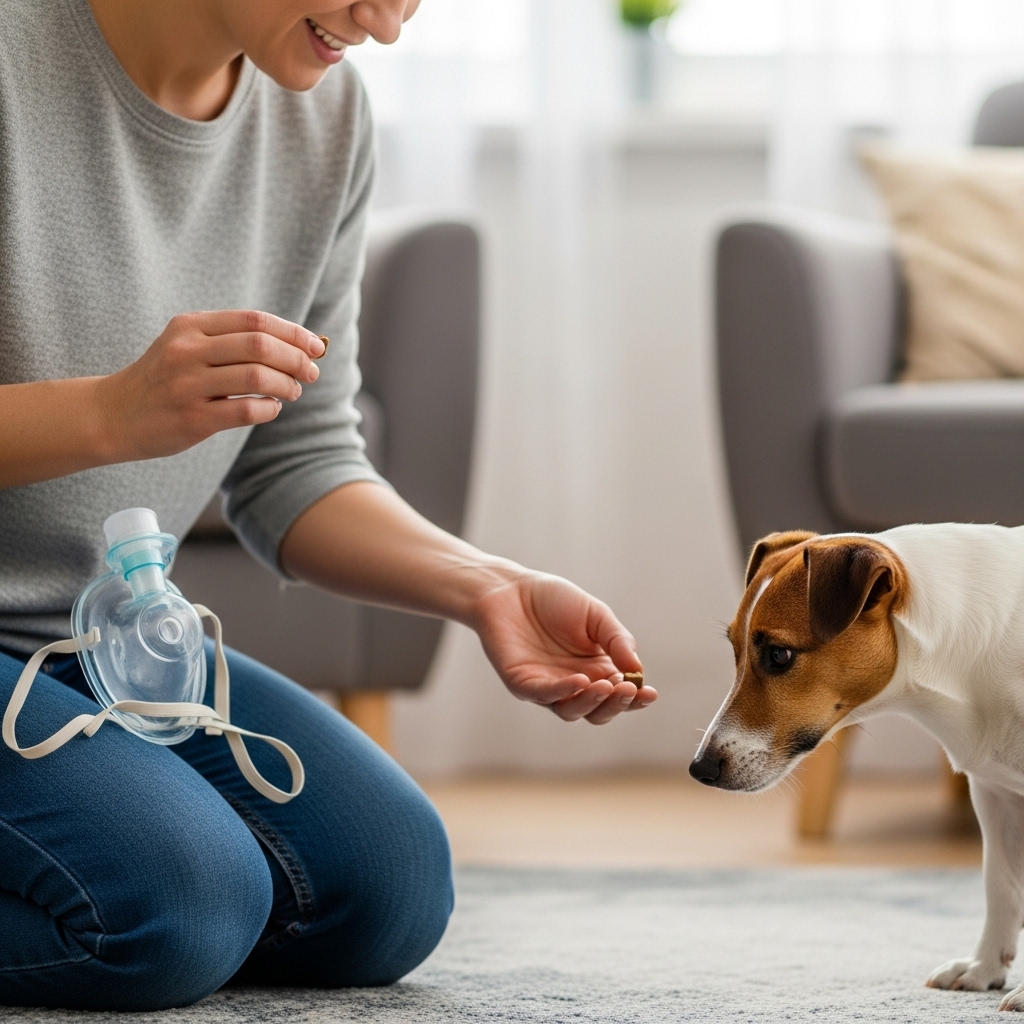
Simply place the mask on the floor. Let your dog investigate it at their own pace. When they sniff or touch it, say “Yes!” or click, and give them a high-value treat. Do this for a few minutes. Don’t ask for anything more. Just reward their curiosity. The mask is just a weird, new treat dispenser for now.
Step 2: Luring the Nose In
Hold the mask in one hand and a treat in the other. Hold the treat on the far side of the mask’s opening, so your dog has to put their nose just inside the cone to get the treat. As soon as their nose enters, mark the behavior and let them have the reward. Repeat this several times until they are eagerly putting their nose in.
Step 3: Building Duration
Once your dog is comfortable putting their nose in the mask, start to briefly delay the treat. Let them hold their nose in the mask for just one second before you mark and reward. Gradually increase this duration—one second, then two, then three. If your dog pulls away, you’ve moved too fast. Go back to the previous step for a few more repetitions before trying again.
Step 4: Adding the Strap
Most pet oxygen masks have an elastic strap to hold them in place. The next step is to get your dog comfortable with the strap. Without the mask, just show them the strap. Touch it gently to their head and reward them. Drape it loosely over their neck and reward. Then, hold the mask in place (as they’ve practiced) and gently lay the strap over their head without tightening it. Mark and reward. Slowly work up to securing the strap, keeping it loose at first and only for a second before releasing and rewarding.
Step 5: Practice and Generalize
Once your dog is comfortable wearing the mask for 15-30 seconds, start practicing in different rooms of the house. Have another family member practice with them. The more you can generalize the skill, the more reliable it will be in a high-stress situation. Keep sessions positive and fun, and refresh the training every few weeks to keep it sharp.
Troubleshooting Common Stumbling Blocks
Even with the best plan, you might hit a snag. Don’t worry, it’s completely normal! Here are some common issues and how to navigate them:
- My dog is scared of the mask and won’t go near it.
Go back to basics. Place the mask on the floor and put high-value treats around it, getting closer and closer until you can place a treat right on top of it. Don’t even try to pick it up yet. Let your dog’s positive association with treats override their fear of the new object over several sessions.
- My dog keeps pawing at the mask when I put it on.
This usually means you’ve progressed too quickly with duration or the strap. Go back to just holding the mask to their snout for a split second and rewarding. Make the experience so fast and positive they don’t have time to paw at it. You can also give them a ‘competing’ behavior, like asking them to target your other hand with their paw while the mask is on.
- My dog is treat-motivated but still seems anxious.
Pay close attention to their body language. Are their ears back? Are they lip-licking or yawning? These are signs of stress. Keep your sessions extremely short—even just 30 seconds to a minute. End with a fun ‘jackpot’ of treats and lots of praise. It’s better to have 10 super short, happy sessions than one long, stressful one.
Expert Tip: Your energy is contagious. If you are anxious or frustrated, your dog will be too. Stay calm, be patient, and celebrate every tiny step forward. This is a journey of trust between you and your dog.
Conclusion
Congratulations! By reading this, you’re already taking a massive step toward protecting your beloved pet. Training your dog to wear an oxygen mask is more than just a clever trick; it’s a vital component of a comprehensive fire safety plan. It transforms a frightening piece of equipment into a beacon of help. Remember to keep practice sessions short, positive, and full of rewards. And while you’re in safety mode, take a moment to ensure you have pet alert window clings on your doors and windows, and that your dog’s crate or carrier is easily accessible. A few minutes of preparation today can be the most important gift you ever give your furry family member: the gift of a fighting chance.