Pool Safety: Teaching Your Dog To Find The Exit Every Time
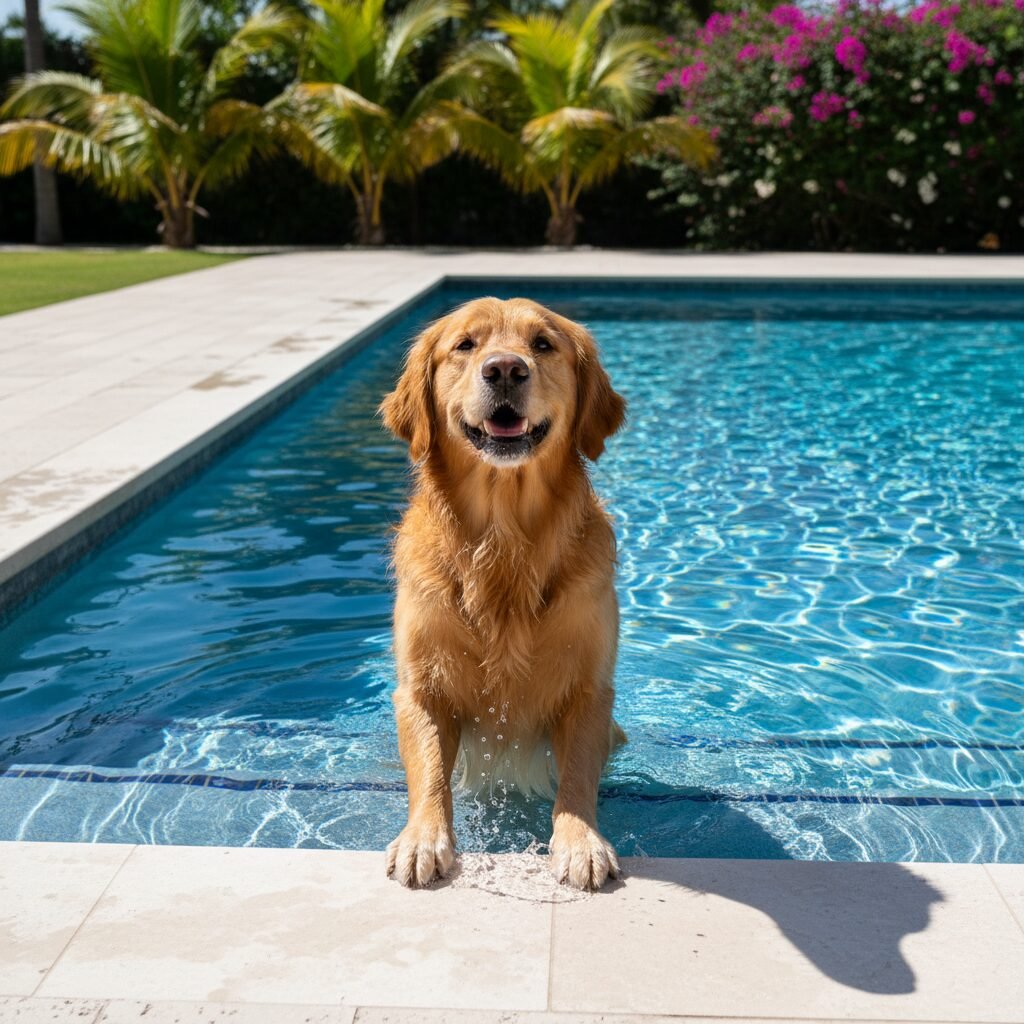
The sight of a dog joyfully leaping into a swimming pool is the picture of summer fun. They paddle, they splash, and they chase toys with endless enthusiasm. But what happens when they get tired? While we humans know to head for the steps, dogs often don’t. They may panic and swim to the nearest edge, fruitlessly trying to claw their way out. This can lead to exhaustion and, tragically, drowning, even for strong swimmers.
That’s why one of the most important skills you can teach your water-loving companion is how to reliably find the exit. It’s not just a neat trick; it’s a critical safety measure. The good news is that with a little patience and positive reinforcement, you can give your dog the confidence and knowledge to get out of the pool safely every single time. Let’s dive into how you can turn your pup into a pool-safe pro!
Setting the Stage for Success: Gear and Prep
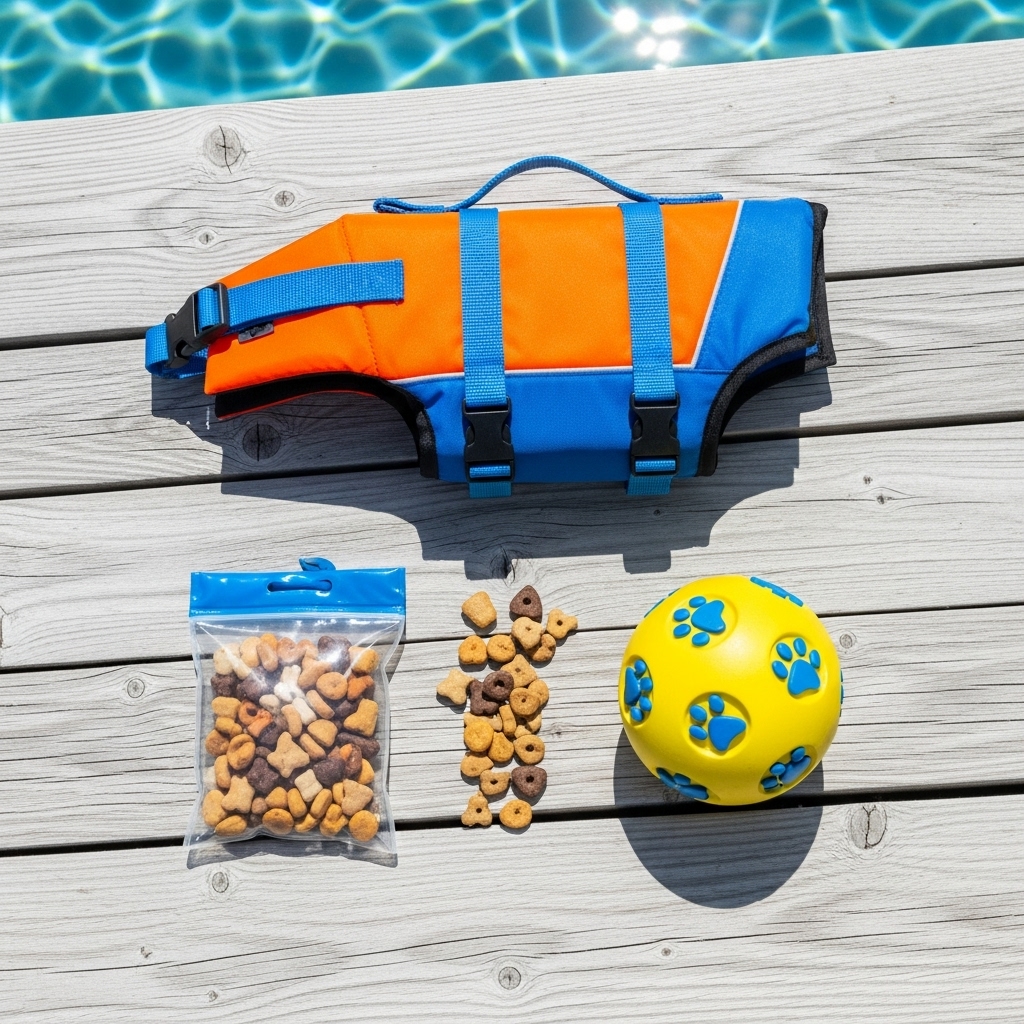
Before you even dip a paw in the water, a little preparation goes a long way. Setting up the right environment ensures the training is fun, positive, and effective. You don’t need a lot, but having these items on hand will make the process much smoother for both of you.
What You’ll Need:
- A well-fitting dog life vest: This is non-negotiable, especially for beginners, senior dogs, or breeds not naturally built for swimming (like Bulldogs or Pugs). A life vest provides buoyancy, which helps prevent fatigue and builds confidence in nervous dogs. Look for one with a sturdy handle on the back, which is invaluable for guiding your dog in the water.
- High-value, waterproof treats: Think small pieces of cooked chicken, hot dogs, or special training treats that won’t disintegrate in the water. The reward needs to be exciting enough to keep your dog focused and motivated.
- A favorite floating toy: A buoyant ball or toy can be a great lure and helps associate the pool with playtime and fun.
- A patient and positive attitude: This is the most important tool of all! Your dog feeds off your energy. Stay calm, be encouraging, and keep the sessions short and upbeat to avoid overwhelming your furry friend.
The Step-by-Step Guide to Finding the Exit

This training process is all about building positive associations and muscle memory. We’ll start simple and gradually increase the difficulty. Remember to use a clear, consistent verbal cue like “Steps!”, “Exit!”, or “Out!” every time you guide them to the exit.
- Step 1: Introduce the Steps: Before you even get in the pool, make the steps the best place to be. Sit on the steps and lure your dog to you with treats. Let them get their paws wet and praise them enthusiastically. The goal is to show them this specific spot is safe and rewarding.
- Step 2: Guided In-and-Out: With your dog in their life vest, carry them into the water or walk in with them on a leash. Stay right next to the steps. Immediately turn them towards the steps, say your cue (“Steps!”), and guide their paws onto the first step. Lavish them with praise and a jackpot of treats the moment they are on the steps. Repeat this 5-6 times.
- Step 3: Create a Little Distance: Now, start just a few feet away from the steps. With your dog facing the steps, gently release them and say your cue. Use your hand to guide them or toss a treat onto the top step. Celebrate wildly when they get there!
- Step 4: Increase the Distance and Vary the Angle: Gradually increase the distance, moving from a few feet away to the middle of the pool. Once they can reliably find the exit from straight on, start placing them in the water from different sides of the pool. This is the most critical part of the training. They must learn to scan the pool and locate the steps no matter where they fell in. Always guide them if they seem lost.
- Step 5: Practice Without the Life Vest (For Confident Swimmers Only): Once your dog is a pro at finding the steps with their vest on, you can try a few sessions without it, but only if they are a strong, confident swimmer. Supervise them closely and keep the sessions short.
Expert Tip: Make the exit visually obvious! Place a large, unique landmark like a colorful potted plant, a flag, or a specific patio chair right by the pool steps. This gives your dog a clear visual target to swim towards.
Practice, Proofing, and Potential Problems
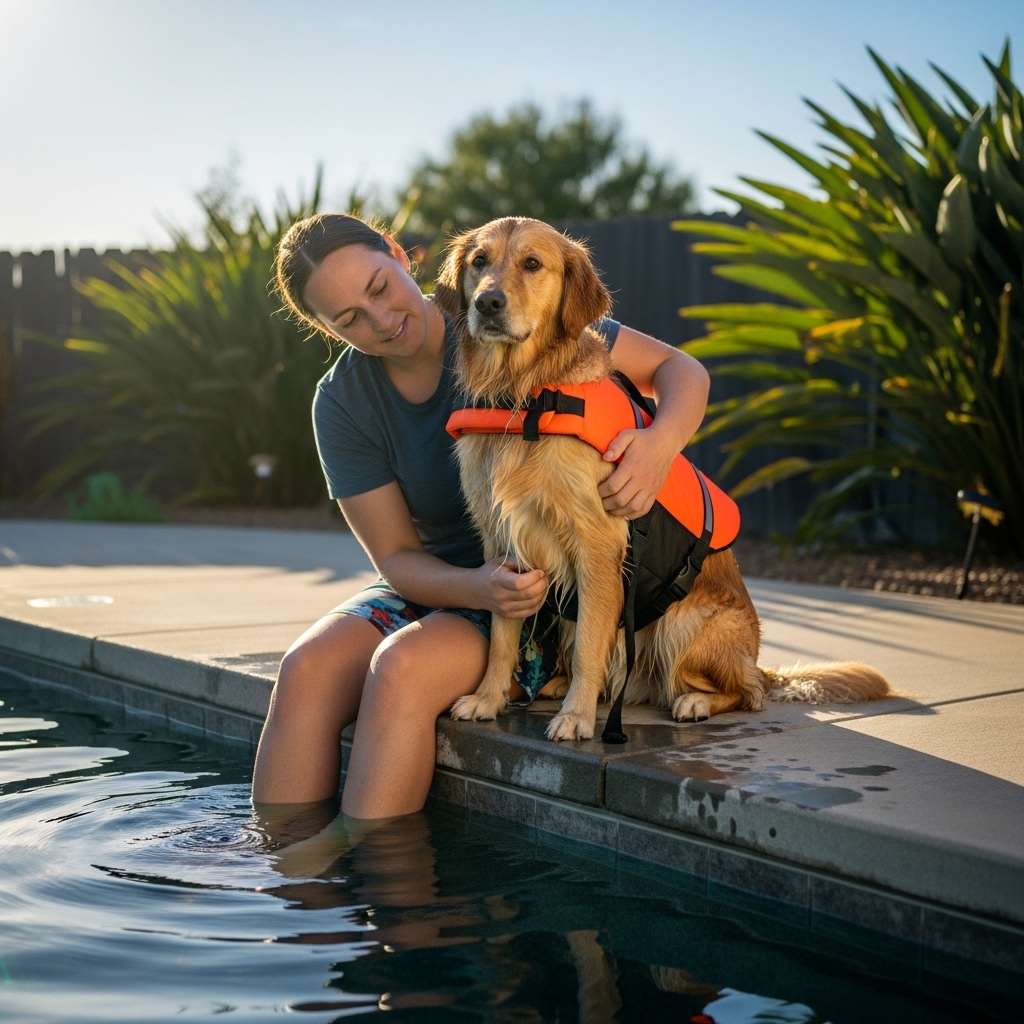
Consistency is everything. You wouldn’t expect your dog to remember “sit” after one lesson, and the same goes for pool safety. Make this training a regular part of your routine.
Making it Stick
Aim for short, 5-10 minute training sessions a few times a week. You can also incorporate it into playtime. After a few rounds of fetch, practice guiding your dog to the steps as the final part of the game. The rule should be: every single swim session ends with your dog successfully finding and using the steps to get out.
Troubleshooting Common Hurdles
- My dog is scared of the water: Never force a fearful dog into the pool. Go back to square one. Spend time just relaxing near the pool, then on the top step, rewarding calm behavior. Let them progress at their own pace, even if it takes weeks. The life vest can be a huge confidence booster here.
- My dog just swims to the nearest wall: This is a common and dangerous instinct. If this happens, calmly redirect them. Get in the water with them if you have to and physically guide them back to the steps. Go back to practicing from shorter distances and make the visual landmark by the steps even more obvious.
- My dog gets distracted easily: Keep sessions short and use your most high-value treats. Train at a time when the pool area is quiet, without other people or pets splashing around. Build focus first, then add distractions later.
A Complete Pool Safety Checklist for Dog Owners
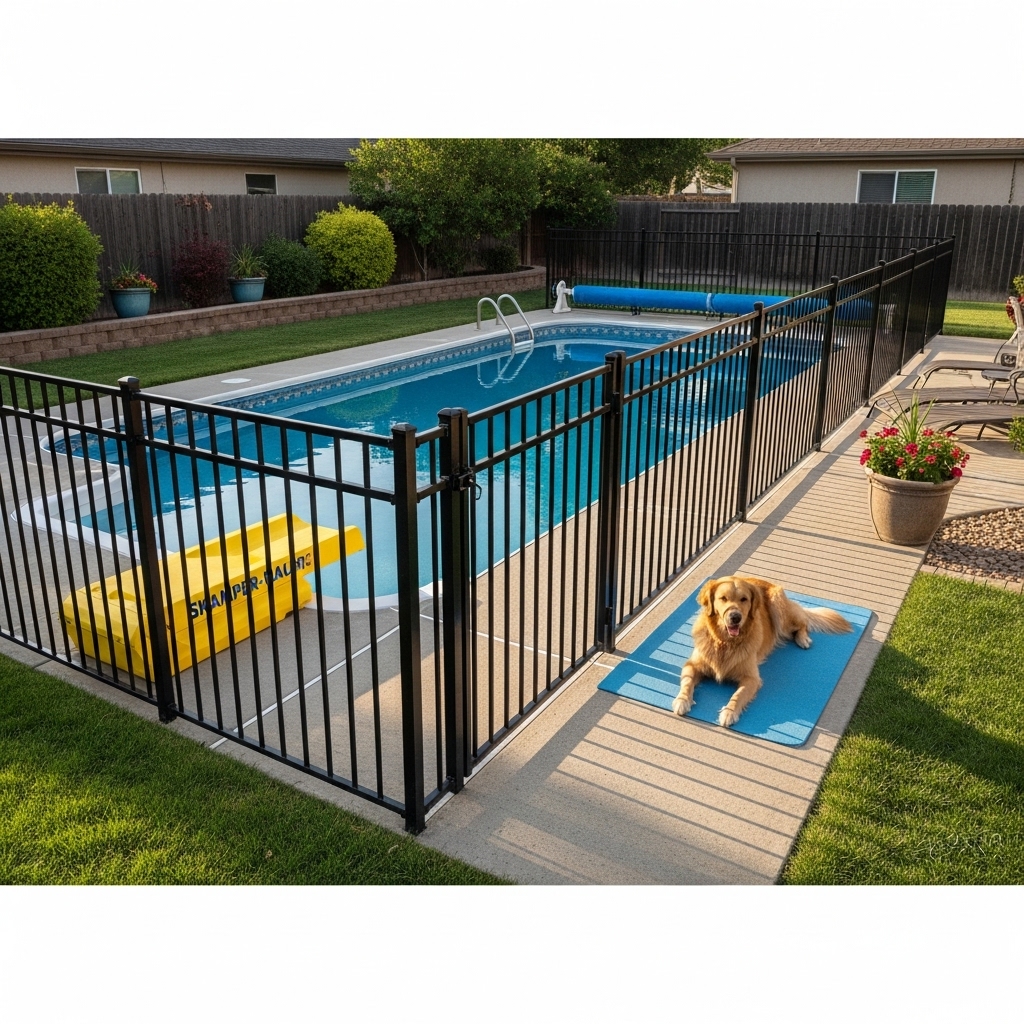
Teaching your dog to find the exit is a huge step, but it’s part of a larger safety picture. To truly create a dog-safe pool environment, follow these essential rules:
- Fencing is a Must: The most effective way to prevent accidents is to have a secure, four-sided fence around your pool with a self-latching gate. This prevents your dog from accessing the pool without your supervision.
- Never Swim Unsupervised: Never, ever leave your dog alone in the pool area, even for a second. Accidents can happen in an instant.
- Watch for Exhaustion: Dogs, especially enthusiastic ones, don’t always know their own limits. Keep swim sessions from getting too long, and watch for signs of fatigue like slower paddling or heavy panting.
- Provide Fresh Water: Keep a bowl of fresh, cool water nearby. This will discourage your dog from drinking chlorinated or salt pool water, which can upset their stomach.
- Learn Canine CPR: Knowing how to respond in an emergency can save a life. Look up courses from the American Red Cross or ask your veterinarian for resources.
- Install a Dog-Friendly Ramp: If your pool only has steep steps or a ladder, consider adding a pet-safe ramp like a Skamper-Ramp, which provides an easy-to-see exit for any animal that falls in.
Conclusion
A pool can be a source of incredible joy, exercise, and bonding for you and your dog. By investing a little time in training your pup to find the exit, you’re not just teaching a trick—you’re installing a life-saving skill that provides invaluable peace of mind. Remember to stay patient, keep it positive, and make safety the number one priority. Now you’re ready to make a splash and create wonderful, worry-free memories with your four-legged swimming buddy all summer long!