

The Ultimate Guide To Bringing Your Dog To Work Without Getting Fired
Let’s be honest, the hardest part of any workday is saying goodbye to those sad puppy eyes at the door. But what if you didn’t have to? With more companies embracing pet-friendly policies, the dream of having your dog snooze at your feet while you crush that spreadsheet is closer than ever. It sounds idyllic, right? A furry stress-ball, a built-in excuse for a walk, and endless good vibes.
But bringing a dog into a professional environment isn’t as simple as just clipping on a leash and heading out. It’s a privilege that requires careful planning, a well-behaved pup, and a deep respect for your colleagues. One wrong move—a barking fit during a conference call or an ‘accident’ by the water cooler—could get your canine companion’s office pass revoked for good. This guide is your roadmap to making it work, ensuring your dog becomes the beloved office mascot, not the reason for a stern email from HR.
Step 1: The Pre-Work Paw-sibility Check

Is Your Dog (and Your Office) Actually Ready?
Before you even think about packing a work bag for your pup, you need to do some serious homework. Not every dog is cut out for office life, and not every office is ready for a dog. A little honest assessment now can save a lot of headaches later.
For Your Dog: The Temperament Test
Ask yourself these critical questions about your dog’s personality:
- Social Butterfly or Wallflower? Is your dog generally friendly and calm around new people and other dogs, or do they get anxious, fearful, or overly excited? An office is a revolving door of new faces and sounds.
- Barking Habits: Does your dog bark at every little noise, or are they relatively quiet? Constant barking is the fastest way to annoy your coworkers.
- Potty Trained Professional: Is your dog 100% house-trained? There is zero wiggle room on this one. An office is not the place for potty training practice.
- Chew-Proof? If your dog is a notorious chewer, office cables and furniture could be an expensive (and dangerous) temptation.
- Separation Anxiety: Can your dog settle down on their own, or do they need your constant attention? You still have a job to do, after all.
For Your Office: The Policy & People Check
Now, turn your focus to the workplace:
- Check the Official Policy: Don’t just assume it’s okay. Talk to HR or your manager. Is there a formal ‘dogs at work’ policy? Are there size or breed restrictions? Do you need to provide vaccination records?
- Talk to Your Team: Give your immediate coworkers a heads-up. Ask if anyone has allergies, phobias, or concerns. Being considerate from the start goes a long way. A colleague who’s terrified of dogs won’t appreciate a surprise German Shepherd next to their desk.
- Scout the Environment: Is the office layout safe for a dog? Are there toxic plants, exposed wires, or easy escape routes? Where is the nearest grassy area for potty breaks?
Step 2: Packing the Ultimate ‘Go-to-Work’ Doggy Bag
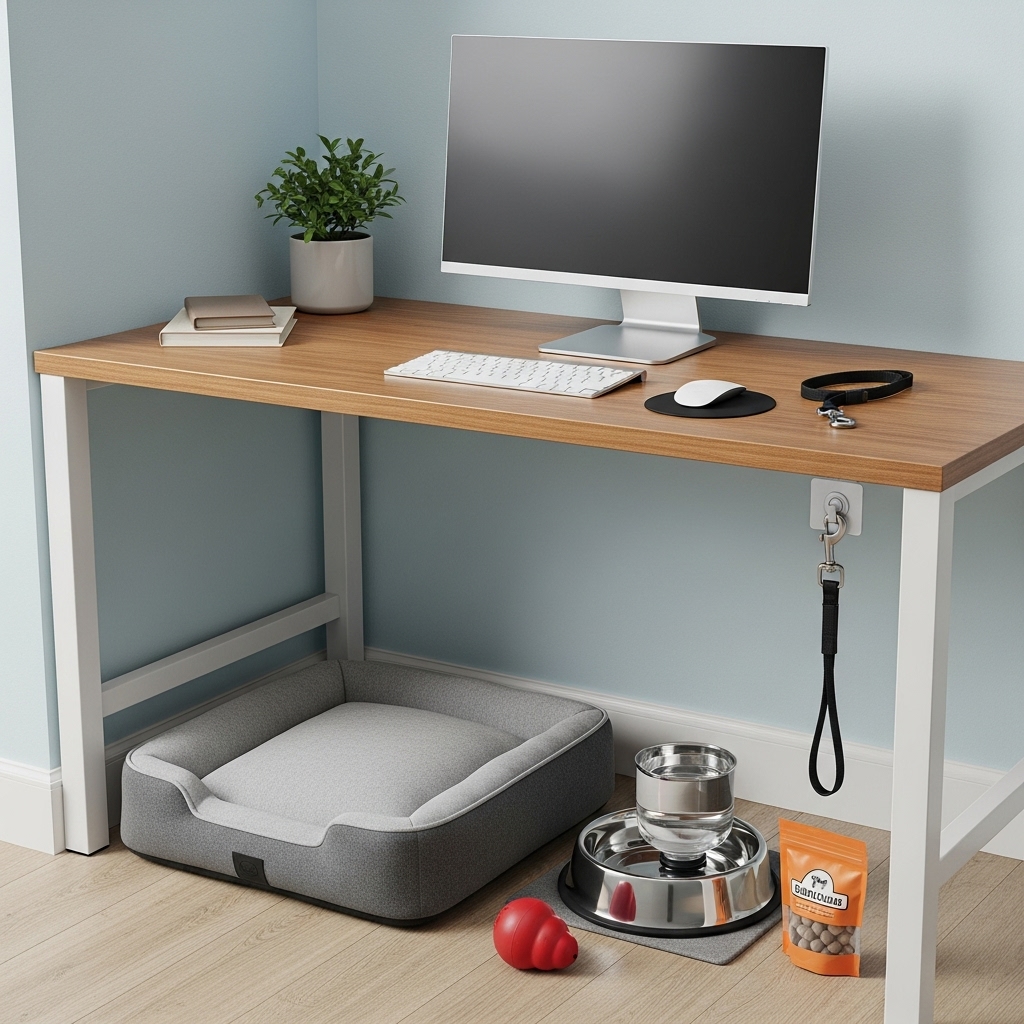
Setting Up Your Canine Cubicle for Success
Once you’ve gotten the green light, it’s time to prepare. Your goal is to make your dog’s transition into the office as seamless and comfortable as possible. This means creating a home-away-from-home right at your desk.
The Essential Office Dog Kit:
- A Comfy Bed: A familiar bed or blanket will create a designated ‘safe space’ where your dog knows to settle down and relax.
- Water Bowl: A non-spill water bowl is a must-have to prevent messy accidents.
- Quiet Toys: Pack engaging, but silent, toys like a Kong or other puzzle toys. Leave the squeaky toys at home, unless you want to become the least popular person in the office.
- Leash and Harness: Your dog should be on a leash whenever they are not in your immediate, contained workspace.
- Clean-Up Crew Supplies: Poop bags are non-negotiable. It’s also wise to bring pet-safe cleaning spray and paper towels, just in case.
- Treats: High-value treats are great for rewarding quiet, calm behavior.
Expert Tip: Before you even leave for work, take your dog on a long walk or for a vigorous play session. A tired dog is a good dog, and burning off that morning energy will help them settle down much more easily once you get to the office.
Step 3: Mastering Office Etiquette for Pups & People

The Unspoken Rules of the Canine Colleague
Your dog’s first day is here! This is where your preparation pays off. Your behavior and your dog’s behavior will set the tone for every future ‘bring your dog to work’ day. Think of yourself as your dog’s manager, responsible for their professional conduct.
Rules for Your Dog:
- The ‘Place’ Command is Your Best Friend: Train your dog to go to their bed on command. This is invaluable for when you need them to be settled during meetings or focused work.
- No Begging, No Whining: Your lunch is your lunch. Don’t let your dog make the rounds mooching off your coworkers.
- Scheduled Breaks Only: Don’t wait for your dog to tell you they need to go out. Take them for regular potty and stretch breaks, just like you’d do at home, to prevent accidents.
- Mind Your Meetings: If you have an important meeting, it might be best to have a colleague watch your dog or find a quiet space for them. A surprise bark during a client call is never a good look.
Rules for You (The Owner):
- You Are ALWAYS on Duty: You can’t tune out. You must remain aware of your dog’s location and behavior at all times. Your productivity might dip slightly on the first few days, and that’s okay.
- Respect Personal Space: Not everyone is a dog person. Instruct your dog not to approach other people’s desks unless invited. Keep them leashed when walking through common areas.
- Clean Up Immediately: This goes for fur, drool, and any accidents. Be hyper-vigilant about keeping your area clean.
Step 4: Troubleshooting Common Canine Workplace Woes

Handling Bumps in the Road Like a Pro
Even with the best preparation, challenges can arise. The key is to have a plan and respond calmly and quickly.
Common Problem Scenarios & Solutions:
- The Problem: Excessive Barking. Your dog barks at the delivery person, people walking by, or strange noises.
The Solution: Intercept and redirect. Before the barking starts, use a command like ‘quiet’ and reward them with a treat when they comply. If it’s a persistent issue, your dog may be too overstimulated for the office environment. - The Problem: A Nervous or Scared Coworker. Someone on your team is clearly uncomfortable with your dog.
The Solution: Be empathetic and proactive. Talk to them privately and ask what would make them feel more comfortable. This could mean keeping your dog on a shorter leash, creating a baby gate barrier around your desk, or agreeing to only bring your dog in on specific days. - The Problem: An Accident Happens. Despite your best efforts, your dog has a potty accident.
The Solution: Act fast. Clean it up immediately and thoroughly with the supplies you brought. Apologize to anyone nearby and inform the office manager or cleaning staff if necessary. Then, reassess your break schedule to be more frequent. - The Problem: Your Dog is Restless and Anxious. They won’t settle down, are whining, or pacing.
The Solution: They may need a break. Take them for a quick walk outside to reset. If the behavior continues, it might be a sign that the office is too stressful for them. This is where your exit strategy comes in.
Have an Exit Strategy: Always have a plan B. This could be a spouse who can pick them up, a nearby doggy daycare, or simply being prepared to take your dog home yourself if they are not having a good day. It’s better to cut the day short than to force a bad situation.
Conclusion
Bringing your dog to work can be one of the most rewarding perks of a modern job, transforming a regular day into one filled with quiet companionship and happy moments. But it’s a privilege built on responsibility. By thoroughly preparing, setting clear boundaries, and remaining a diligent and considerate owner throughout the day, you can make this a fantastic experience for everyone involved. Your pup gets to spend the day with their favorite person, your coworkers get a furry morale booster, and you get the best of both worlds. Now go on, make that dream a reality—the right way!