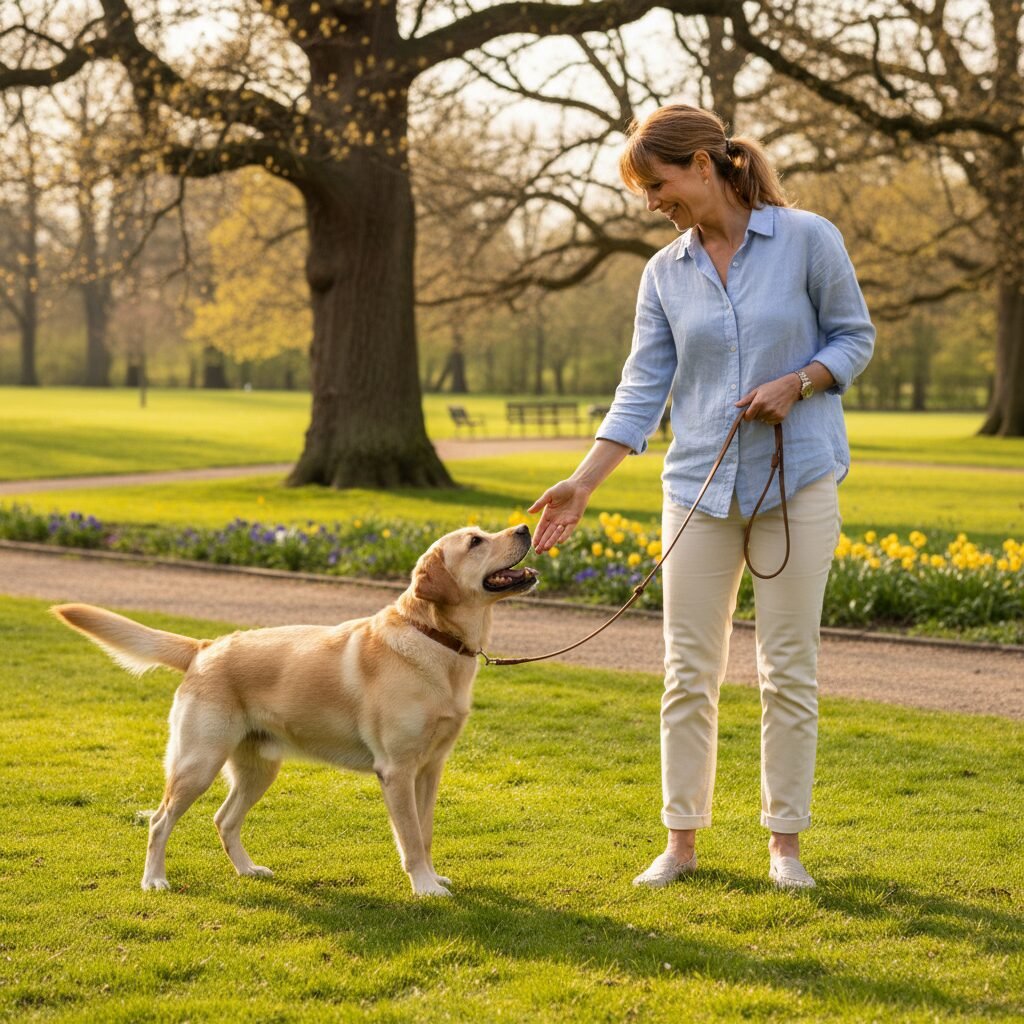
Controlled Greetings: Teach Your Dog the ‘Go Say Hi’ Command
Does the sound of the doorbell send you into a panic? Do you find yourself apologizing for your dog’s overly enthusiastic, four-paws-on-the-chest style of greeting? You’re not alone! Many dog owners struggle with excitable greeters. While their intentions are friendly, jumping, pulling, and barking can be overwhelming for guests and even dangerous for children or the elderly. But what if you could transform that chaotic energy into a calm, polite interaction? That’s where the ‘Go Say Hi’ command comes in. This simple but powerful cue teaches your dog that the only way to get that coveted pat from a new friend is by keeping all four paws on the floor and approaching gently. It’s a game-changer for building a well-mannered companion you can be proud of in any situation.
Why ‘Go Say Hi’ is More Than Just a Cute Trick
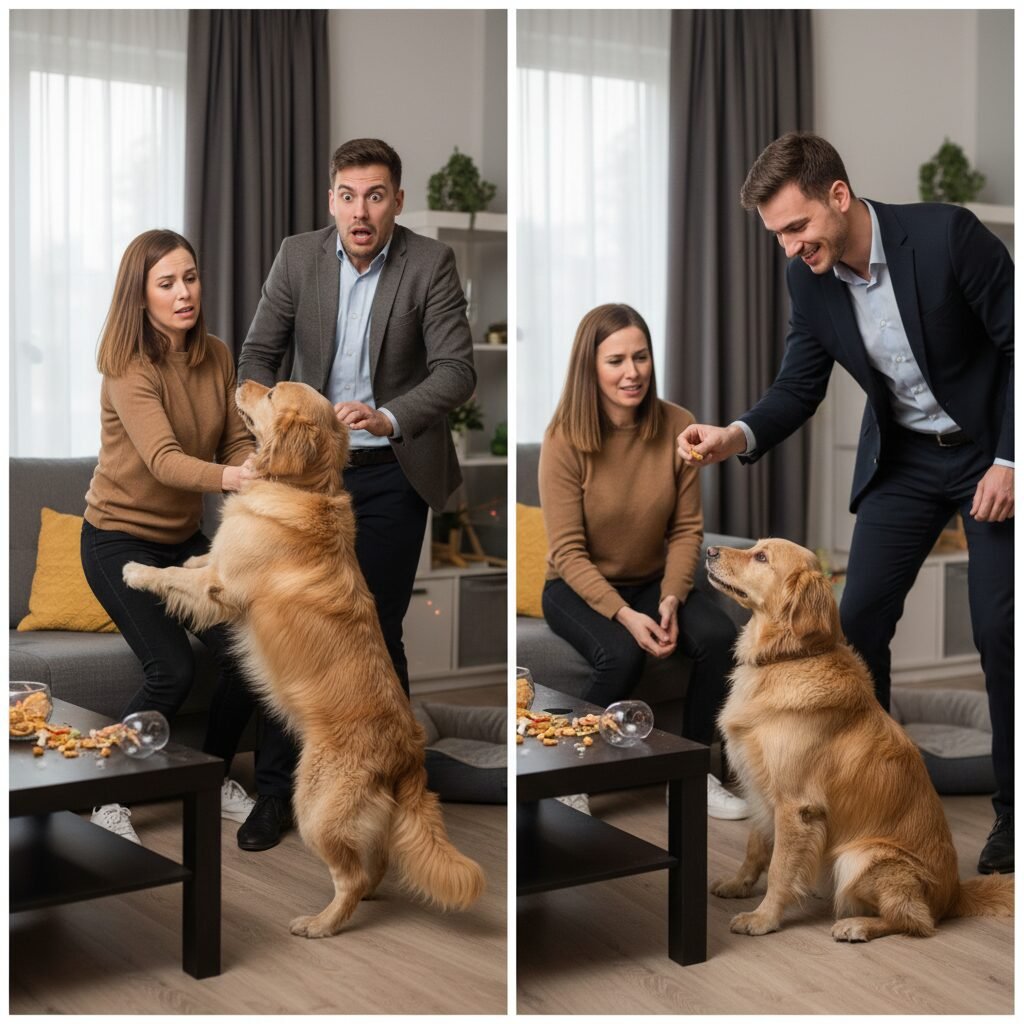
Before we dive into the ‘how,’ let’s talk about the ‘why.’ Teaching a controlled greeting isn’t about suppressing your dog’s friendly nature; it’s about channeling it appropriately. This command provides incredible benefits for you, your dog, and your guests.
- Safety First: A dog that jumps can easily knock over a small child or an unsteady adult. A controlled greeting prevents accidents and ensures everyone feels safe and comfortable.
- Reduces Stress (for Everyone!): Knowing you have a reliable command gives you confidence when visitors arrive or when you meet people on walks. Your dog also learns what’s expected of them, which reduces their anxiety and frantic energy. They learn that calmness, not chaos, gets them what they want.
- Builds Your Dog’s Confidence: This training provides clear communication. Your dog learns to look to you for permission and guidance, strengthening your bond and building their confidence in social situations.
- Protects Your Guests: Let’s be honest, not everyone is a ‘dog person,’ and even those who are don’t appreciate muddy paw prints on their clean clothes. Polite greetings make interactions pleasant for everyone involved.
Expert Tip: Think of ‘Go Say Hi’ as giving your dog a clear ‘job’ to do when meeting someone. Dogs thrive on structure, and this command replaces the confusing, over-the-top excitement with a simple, rewarding task.
Gearing Up for Success: What You’ll Need
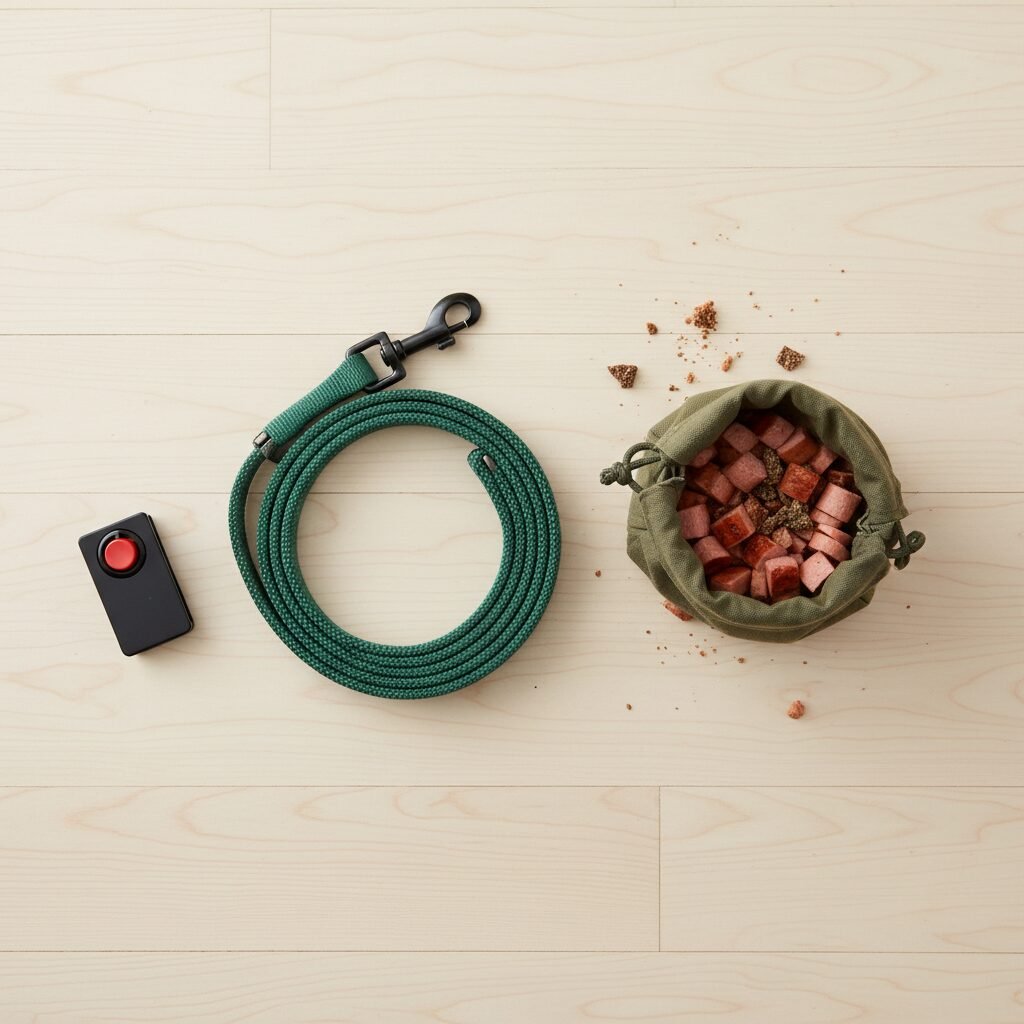
Great training starts with great preparation. You don’t need a lot of fancy equipment, but having the right tools on hand will make the process much smoother. Here’s your training toolkit:
- A Standard Leash: A simple 4-to-6-foot leash is perfect. Avoid retractable leashes for this training, as they don’t offer the control you need to manage your dog’s distance and position.
- High-Value Treats: We’re talking top-tier goodies here! Think small pieces of chicken, cheese, or special training treats that your dog absolutely loves and doesn’t get all the time. The reward needs to be more exciting than the greeting itself, especially at first.
- A Willing Helper: Recruit a friend, family member, or neighbor to help you practice. It’s crucial to have someone your dog can greet. Start with someone your dog knows and likes but isn’t ridiculously excited to see.
- A Calm Environment: Begin your training sessions in a quiet place with minimal distractions, like your living room or backyard. You want your dog to be able to focus entirely on you and the task at hand.
The Step-by-Step Guide to Teaching ‘Go Say Hi’
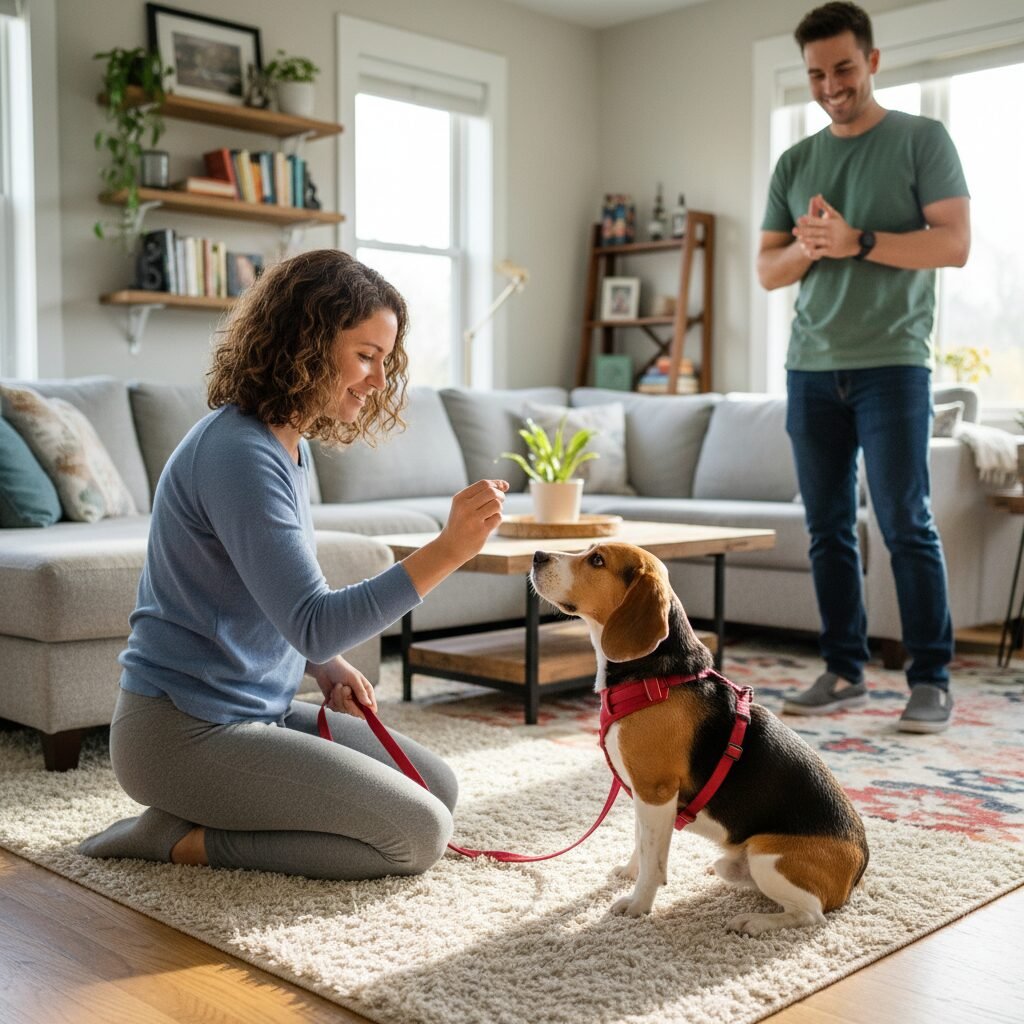
Patience and positivity are your best friends here. Keep sessions short (5-10 minutes) to keep your dog engaged and successful. Let’s break it down.
Step 1: The Foundation – Four on the Floor
Before you even introduce a helper, reward your dog for simply keeping all four paws on the ground when they are excited. Have your treats ready. Jingle your keys or knock on a door to create a little excitement. The moment your dog looks at you with all four paws on the floor, say ‘Yes!’ and give them a treat.
Step 2: Introduce Your Helper at a Distance
Have your dog on a leash in a sit or stand-stay. Ask your helper to stand still about 15-20 feet away. The goal here is for your dog to see the person but remain calm. Reward your dog with treats for looking at the person and then looking back at you without pulling or barking.
Step 3: The Approach
If your dog is calm, take one step toward your helper. If the leash stays loose, reward your dog. If they pull, simply stop and wait. Don’t move forward again until the leash is slack. This teaches them that pulling gets them nowhere. Repeat this process, getting closer one step at a time.
Step 4: Say the Magic Words
When you are just a few feet away from your helper and your dog is still calm, say your cue in a cheerful voice: ‘Go Say Hi!’ and walk with them the final few feet. Allow your dog to sniff your helper’s hand for about three seconds.
Step 5: The Controlled Greeting
As your dog is sniffing, your helper should calmly offer a gentle pat on the chest or side (avoiding the head, which can be intimidating). After about three seconds of calm greeting, cheerfully say ‘Okay, let’s go!’ and use a treat to lure your dog’s attention back to you and away from the person. Reward them generously when they turn away.
Practice this sequence over and over. The repetition is what builds the reliable behavior. Your dog will learn that ‘Go Say Hi’ means a brief, calm interaction, followed by a great reward from you.
Troubleshooting: When Greetings Go Wrong
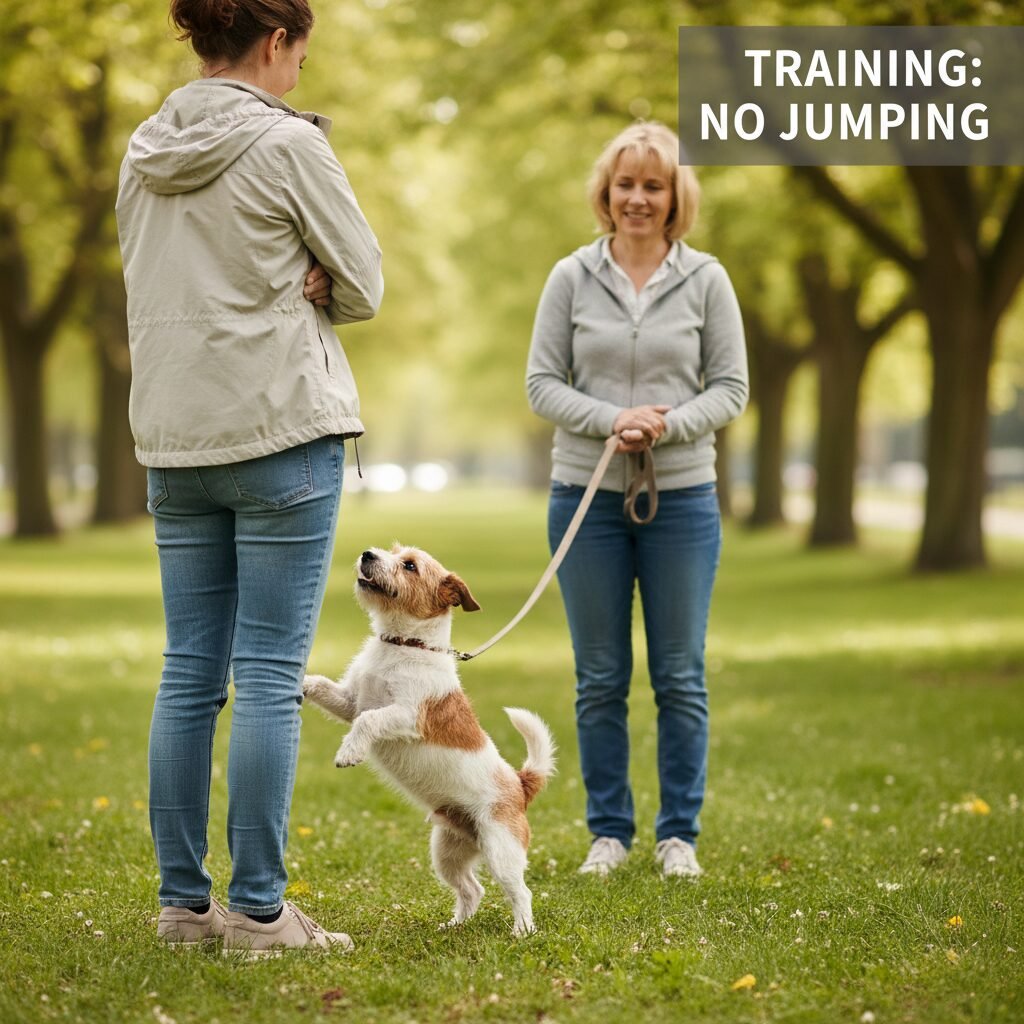
Training is never a straight line; there will be bumps along the way. Here’s how to handle common challenges:
- The Problem: My dog starts jumping as soon as they get close.
The Solution: You’ve moved too quickly. Increase the distance from your helper and work more on rewarding calm behavior from further away. If your dog jumps during the greeting, your helper should immediately and silently stand up straight, fold their arms, and look away. This removes all reinforcement for jumping. Once your dog has four paws on the floor again, you can try the greeting once more. - The Problem: My dog is barking and lunging with excitement.
The Solution: This is a sign your dog is ‘over threshold,’ meaning they are too excited to learn. End the session on a positive note with an easy command they know, like ‘sit,’ and try again later when they are calmer. Next time, start with your helper much farther away. - The Problem: My dog isn’t interested in the treats.
The Solution: Your treats aren’t ‘high-value’ enough to compete with the excitement of a new person. Level up your rewards! You can also try practicing before a mealtime when your dog is hungrier and more food-motivated.
Conclusion
Teaching your dog to ‘Go Say Hi’ is an investment in a peaceful future. It transforms stressful situations into positive training opportunities and deepens the trust between you and your canine companion. Remember to be patient, stay consistent, and celebrate the small victories along the way. Before you know it, you’ll have a dog who is not only the life of the party but also the most polite guest in the room. Happy training!