Never Lose It Again: Teach Your Dog To Hunt For The TV Remote
We’ve all been there. You’re ready to settle in for a movie night, popcorn in hand, only to find the one essential tool for your cinematic adventure has vanished. The TV remote. You check under the cushions, behind the pillows, and even in the fridge (hey, it happens!). What if, instead of a frantic search, you could simply ask your furry best friend to find it for you?
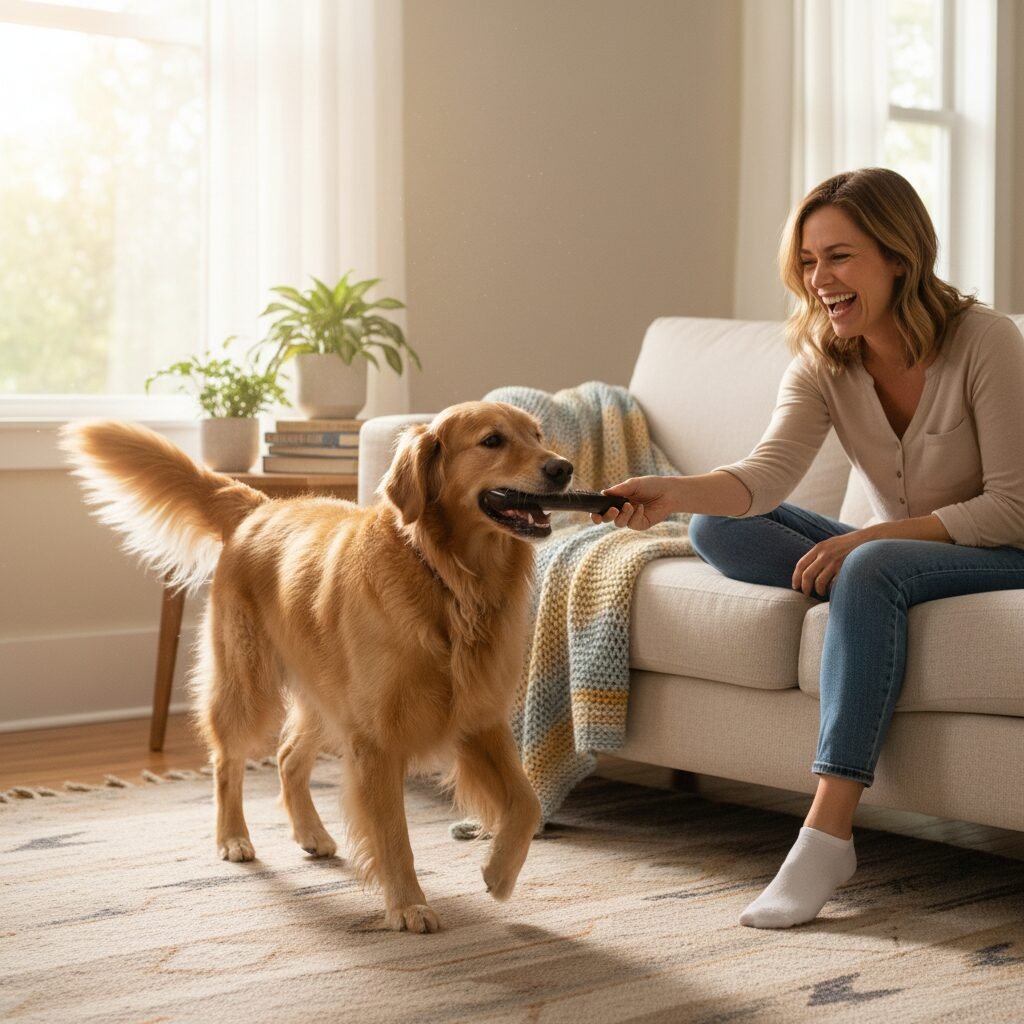
It might sound like a trick for a Hollywood movie dog, but teaching your dog to find the TV remote is not only possible, but it’s also a fantastic way to provide mental stimulation and strengthen your bond. This isn’t about giving your dog a chore; it’s about playing a collaborative, problem-solving game that taps into their natural instincts. Get ready to say goodbye to lost remotes and hello to your clever canine’s new favorite party trick!
Gearing Up for Success: What You’ll Need
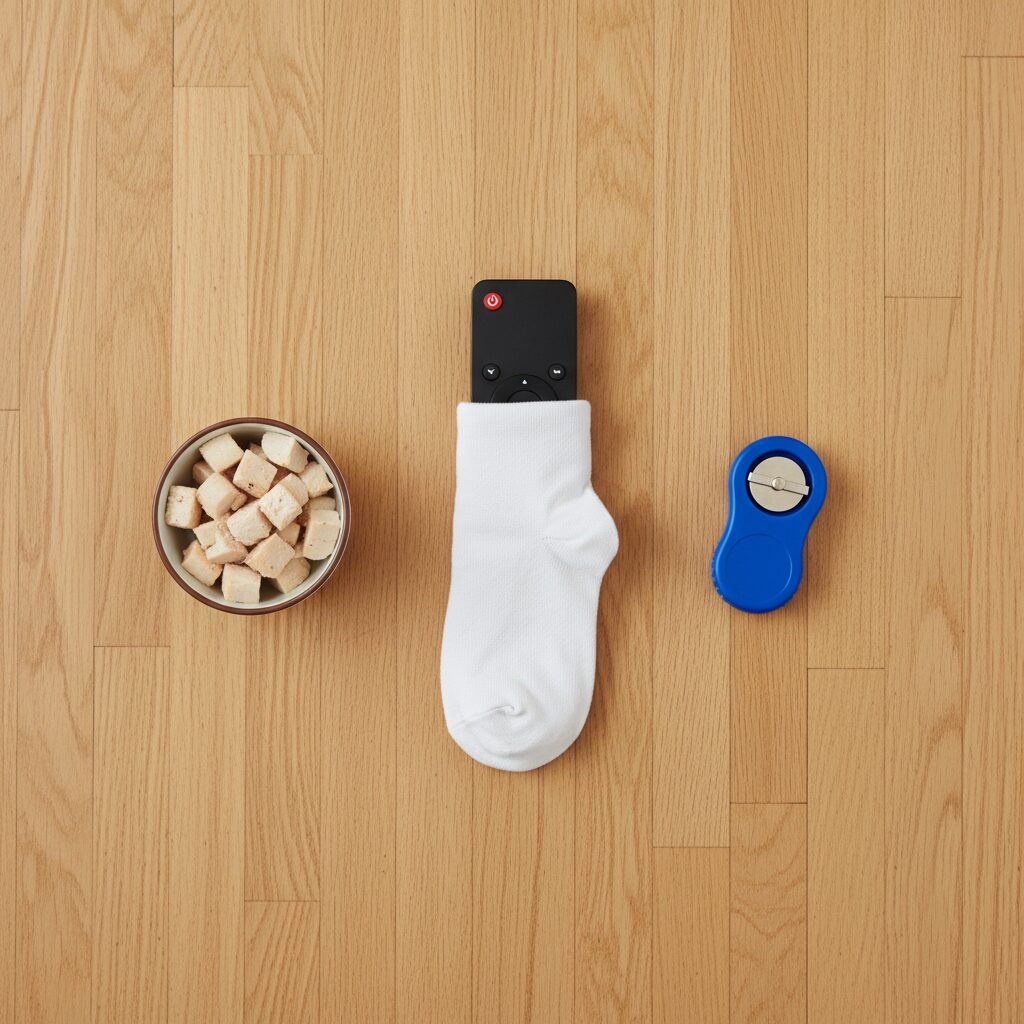
Before you turn your pup into a remote-finding prodigy, you’ll want to gather a few simple supplies. Setting up for success makes the training process smoother and more enjoyable for both of you. Remember, the key here is positive reinforcement, so make it a party!
- High-Value Treats: We’re not talking about their everyday kibble. Think small, smelly, and delicious pieces of chicken, cheese, or special training treats. The reward needs to be exciting enough to make your dog eager to play the game.
- The TV Remote: You’ll need the object of the hunt! To prevent it from getting slobbery or damaged, you can initially wrap it in a sock or a small towel. Some people even buy an old, non-functional remote just for training purposes.
- A Clicker (Optional): A clicker is a fantastic tool for marking the exact moment your dog does something right. If you’re not familiar with clicker training, you can use a verbal marker like a sharp “Yes!” instead. The goal is to instantly tell your dog, “That’s what I wanted!”
- Patience and a Positive Attitude: This is the most important tool in your kit! Every dog learns at a different pace. Keep sessions short (5-10 minutes) and always end on a positive note. Your enthusiasm is contagious!
The Step-by-Step Training Blueprint: From Sniff to Fetch
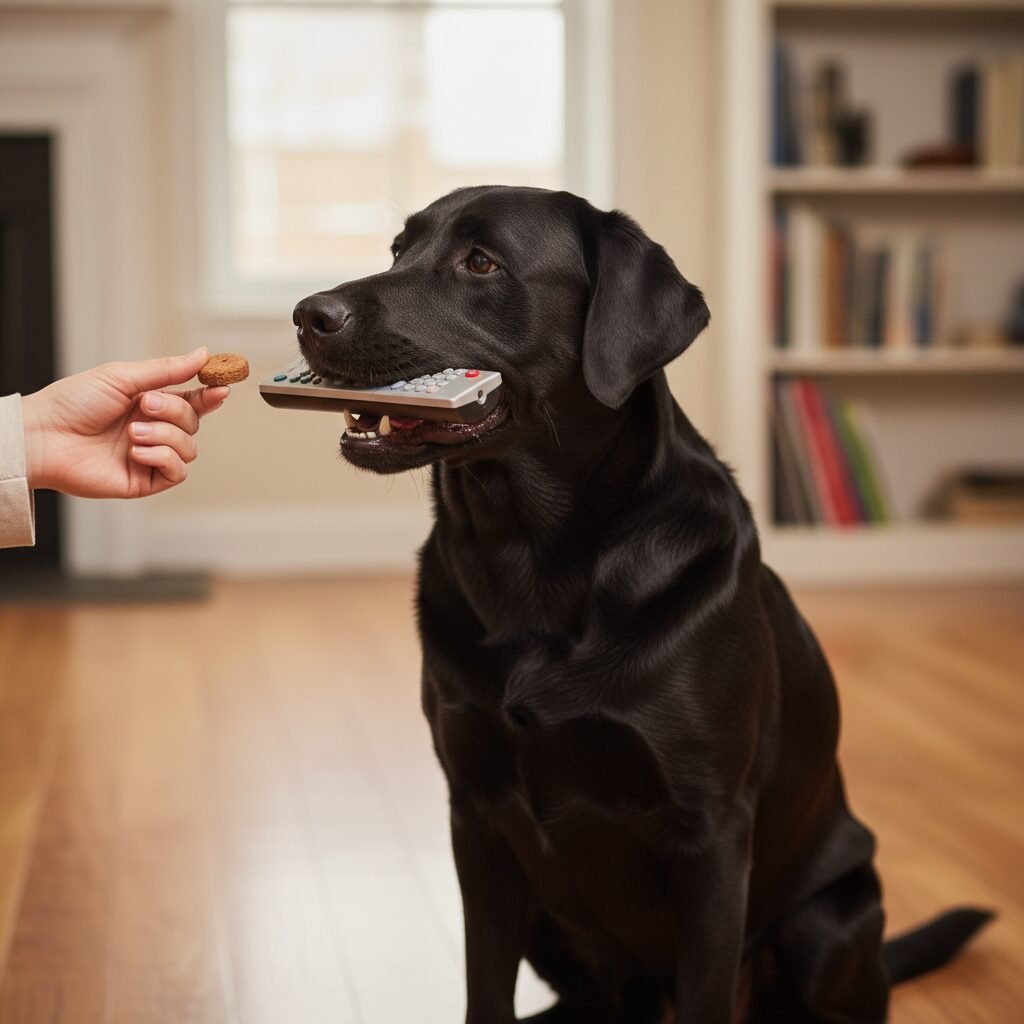
This is where the magic happens! We’ll break down the training into small, easy-to-digest steps. Master one step before moving on to the next. Let’s get started.
Step 1: Introduce the Object
The first goal is to make your dog associate the remote with amazing things (treats!).
- Sit on the floor with your dog and hold the remote in your hand.
- Whenever your dog shows any interest in the remote—looking at it, sniffing it, or nudging it—immediately click (or say “Yes!”) and give them a treat.
- Don’t ask for anything yet. Just reward curiosity. Repeat this a few times until your dog is eagerly interacting with the remote.
Step 2: Teach a Gentle ‘Take It’ and ‘Hold’
Now we want your dog to interact with the remote using their mouth, but gently.
- Hold the remote out. When your dog mouths it, click/say “Yes!” and reward them as they release it.
- Gradually start waiting for them to hold it for a split second before you click and treat. Slowly extend the duration of the hold, one second at a time. We’re building a soft mouth, not a chew toy habit.
- Introduce a cue like “Take it” or “Hold.”
Expert Tip: If your dog is a big chewer, use a less-appealing object like a wooden dowel or a sturdy rubber toy first to teach the ‘hold’ command before transitioning to the valuable remote.
Step 3: Add the ‘Find It’ Cue
It’s time to start the hunt! We’ll begin with a very simple version of hide-and-seek.
- Place the remote on the floor in plain sight, just a foot or two away from your dog.
- Say your new cue, “Find the remote!” or simply “Find it!” in an excited tone and point to the remote.
- The moment your dog picks it up (or even just nudges it), praise them enthusiastically, click/say “Yes!”, and give them a jackpot of treats.
Step 4: Increase the Difficulty
Once your dog reliably picks up the remote on cue, you can start making the game a little more challenging.
- Start by placing the remote partially under a pillow or blanket while your dog is watching. Give the “Find it!” cue.
- Once they succeed, try hiding it completely under the pillow.
- Gradually move to other locations in the room: next to a table leg, on a low footstool, or behind a curtain. Always start easy and build on success. If your dog gets stuck, help them out so they don’t get frustrated.
Troubleshooting Common Hiccups
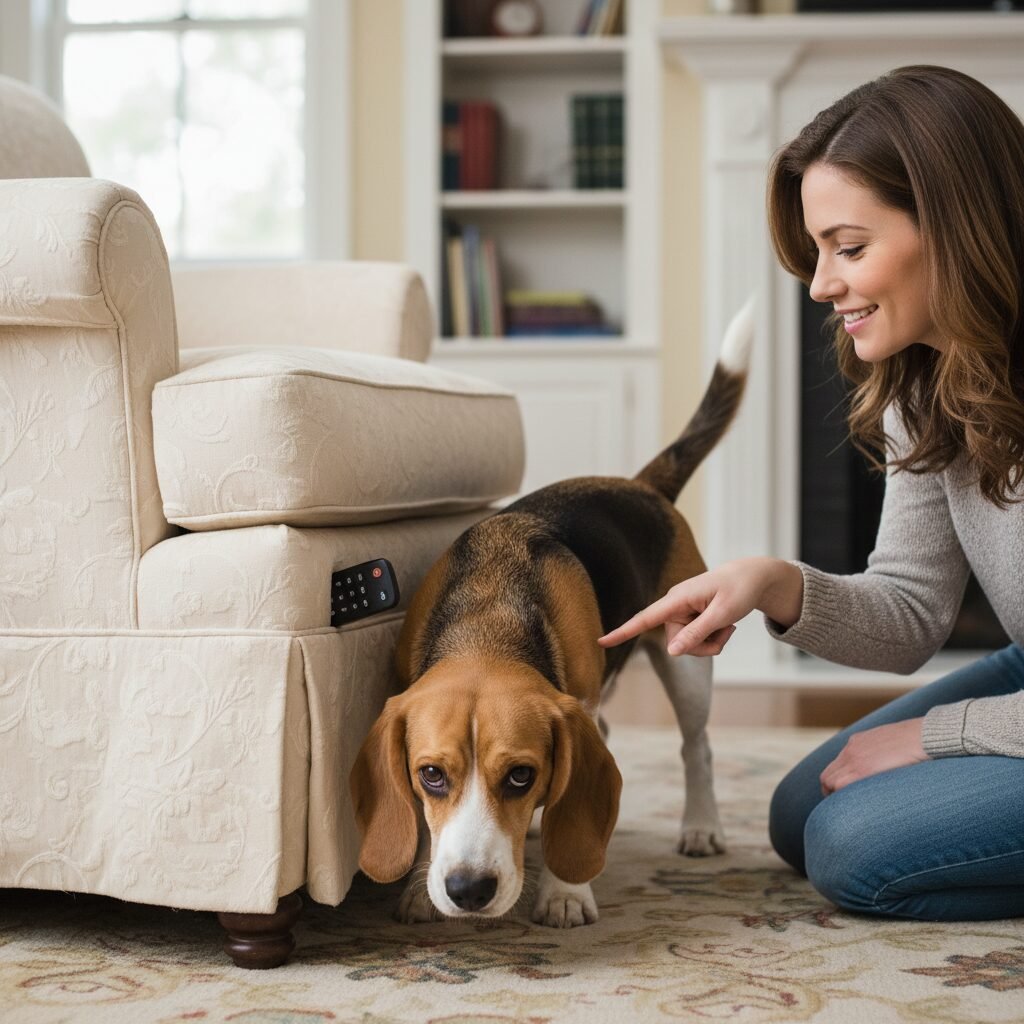
Training is never a straight line, and it’s perfectly normal to hit a few bumps in the road. Don’t worry! Here are some common issues and how to solve them.
- My dog chews the remote! This is a common one. If this happens, go back to practicing the ‘hold’ step with shorter durations. Reward only for gentle mouth pressure. Wrapping the remote in a thick sock can also deter chewing. Never punish the dog; simply redirect and reward the correct behavior.
- My dog loses interest quickly. Your training sessions might be too long, or your treats might not be exciting enough. Keep sessions under 5 minutes, and try using a higher-value reward. Always end the game while your dog is still having fun to keep them wanting more.
- My dog can’t find the remote when I hide it. You might have increased the difficulty too quickly. Go back a step to where they were last successful. Help them by pointing or tapping near the hiding spot. The goal is to build their confidence, not test them to the point of failure.
- My dog finds the remote but runs off with it! This is a fun game of keep-away for your dog! It means you need to make coming back to you the best part of the game. When they find it, don’t rush to grab it. Instead, praise them excitedly and show them the amazing treat you have. Trade the remote for the treat.
Beyond the Remote: Making ‘Find It’ a Lifelong Game
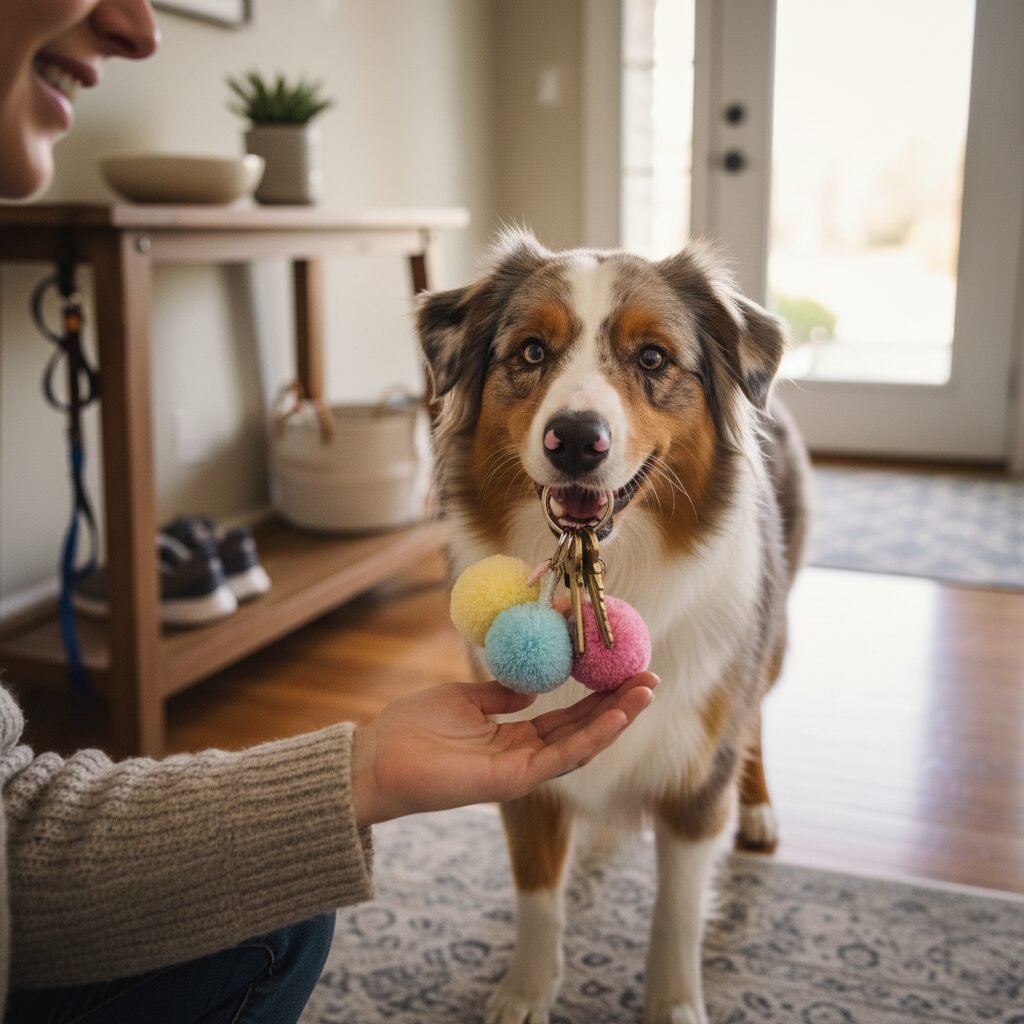
Congratulations, you’ve taught your dog an incredibly cool and useful trick! But don’t stop there. The “Find It” cue is a powerful tool for all sorts of fun and games that will keep your dog’s mind sharp and engaged.
Once your dog has mastered finding the remote, you can generalize the skill to other objects. How about teaching them to find:
- Your keys? (Attach them to a large, soft fob so they are easy and safe to carry).
- Your slippers? A classic for a reason!
- A specific toy? Teach them to differentiate between “find Lamby” and “find Ball.” This is an excellent brain teaser.
Playing these scent-based games is more than just fun; it’s a form of canine enrichment that allows your dog to use their most powerful sense—their nose. It can help build confidence in timid dogs and burn mental energy in high-energy dogs. You haven’t just taught your dog to find the remote; you’ve opened up a whole new world of interactive play.
Conclusion
Teaching your dog to find the TV remote is a journey that’s about so much more than the destination. It’s a fun-filled project that deepens your communication, builds your dog’s confidence, and provides a fantastic outlet for their mental energy. Every time your pup triumphantly trots over with the remote, it’s a victory for your teamwork and a testament to the incredible things you can achieve together. So grab those treats, keep it positive, and get ready to be amazed by your four-legged superstar. Happy training!