Dog vs. Roomba: How to Desensitize Your Pet to Robot Vacuums Fast
You bought a robot vacuum to make your life easier, not to start a daily war in your living room. Yet, for many dog owners, the moment that little disc of cleaning power whirs to life, their calm, cuddly companion turns into a barking, lunging, or terrified creature. If you’re tired of the ‘Dog vs. Roomba’ showdown, you’ve come to the right place.
It’s completely normal for dogs to be wary of these devices. They’re loud, they move unpredictably, and they invade your dog’s personal space. To them, it’s not a helpful gadget; it’s a weird, noisy monster. The good news is that with a little patience and a lot of positive reinforcement, you can help your dog accept, and even ignore, their robotic housemate. Let’s get started on creating a peace treaty!
Why Your Dog Sees the Roomba as a Monster
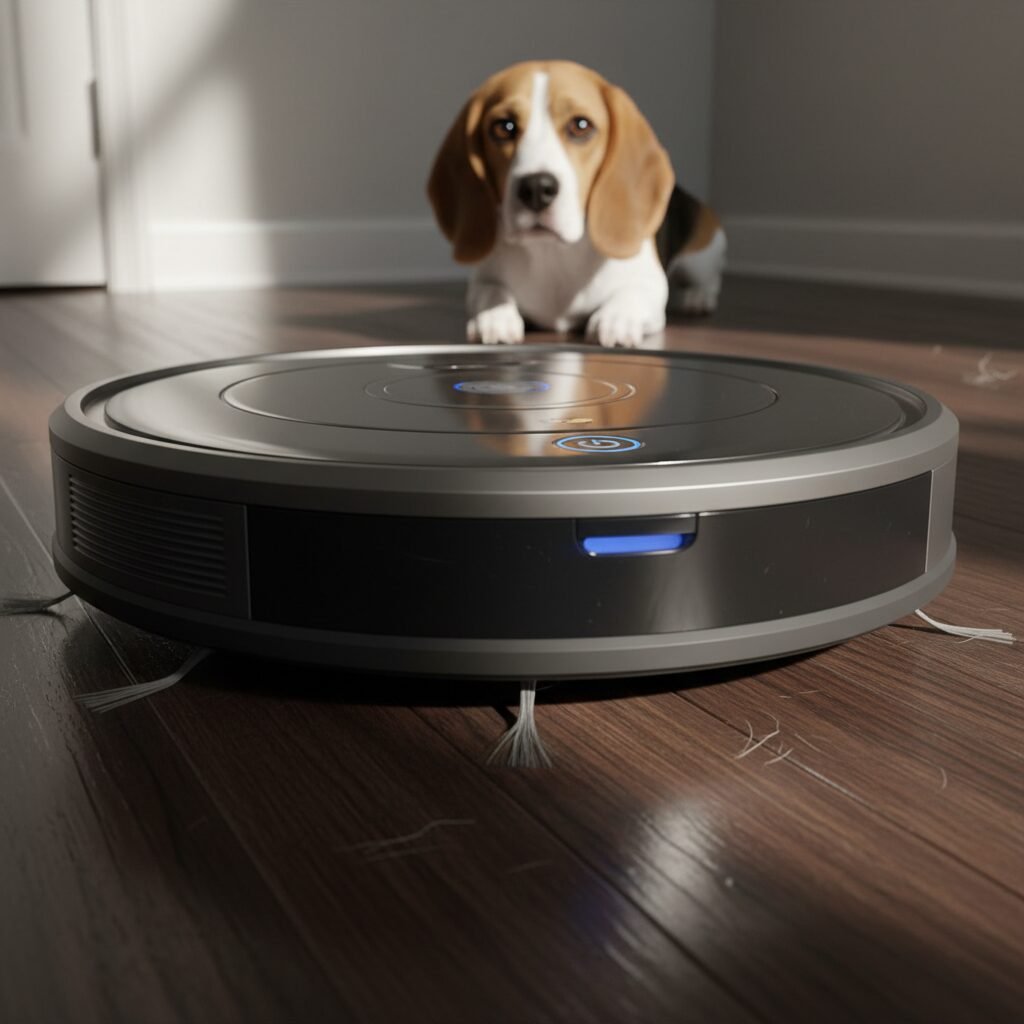
Before we jump into the training, it helps to see the world from your dog’s perspective. Understanding why they’re reacting this way is the first step to solving the problem. For most dogs, the fear or aggression comes down to a few key factors:
- The Noise: Vacuums are loud, and dogs have incredibly sensitive hearing. The high-pitched whirring and humming can be irritating or downright scary.
- Unpredictable Movement: The Roomba doesn’t move like a person or another animal. It bumps into things, changes direction suddenly, and seems to have a mind of its own. This unpredictability can trigger a dog’s prey drive or make them feel threatened.
- Invasion of Space: Dogs value their territory. This strange object rolls right through their favorite napping spots and play areas without any regard for their personal bubble.
- It’s a Novelty: It’s something new and strange in their environment. Many dogs have a natural suspicion of unfamiliar objects, especially ones that move and make noise on their own.
By recognizing these triggers, we can create a training plan that addresses each one, slowly showing your dog that the vacuum isn’t a threat, but just another boring part of the house.
Setting the Stage: Your Desensitization Toolkit
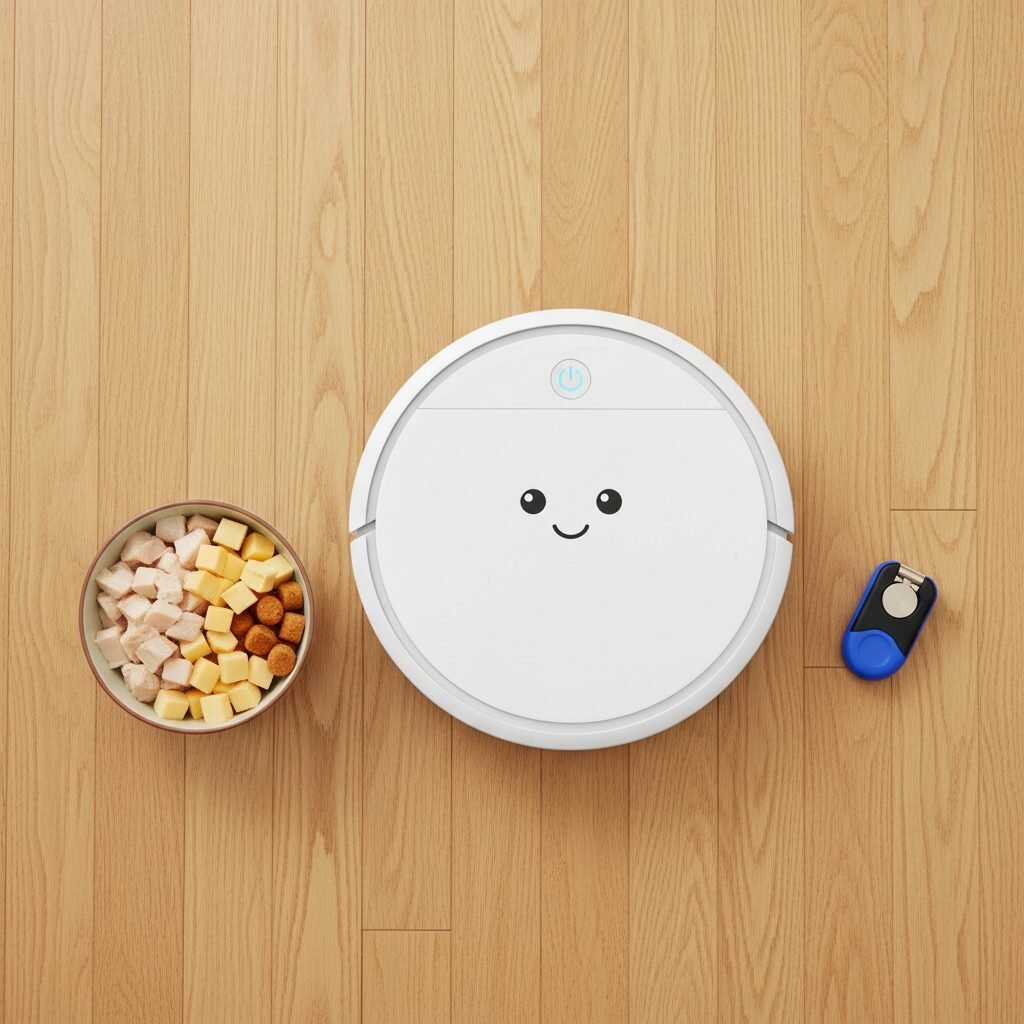
Success in training often comes down to preparation. Before you begin the desensitization process, gather a few key items. Having everything ready will make your sessions smoother and more effective.
What You’ll Need:
- High-Value Treats: We’re not talking about their everyday kibble. You need the good stuff! Think small pieces of cooked chicken, cheese, hot dogs, or special soft training treats that your dog goes crazy for. The goal is to make the Roomba associated with something incredibly delicious.
- The Robot Vacuum: Have the vacuum and its charging base ready. Make sure it’s charged, but don’t turn it on just yet.
- A Quiet, Controlled Space: Start the training in a familiar room where your dog feels comfortable, like the living room. Make sure other distractions are minimized.
- Patience: This is the most important tool! Every dog learns at a different pace. Some may accept the vacuum in a day, while others might take a few weeks. Never rush the process.
Expert Tip: Keep your training sessions short and sweet, especially at the beginning. Aim for 5-10 minutes once or twice a day. Ending on a positive note is more important than pushing your dog too far.
The Step-by-Step Guide to a Dog-Roomba Friendship
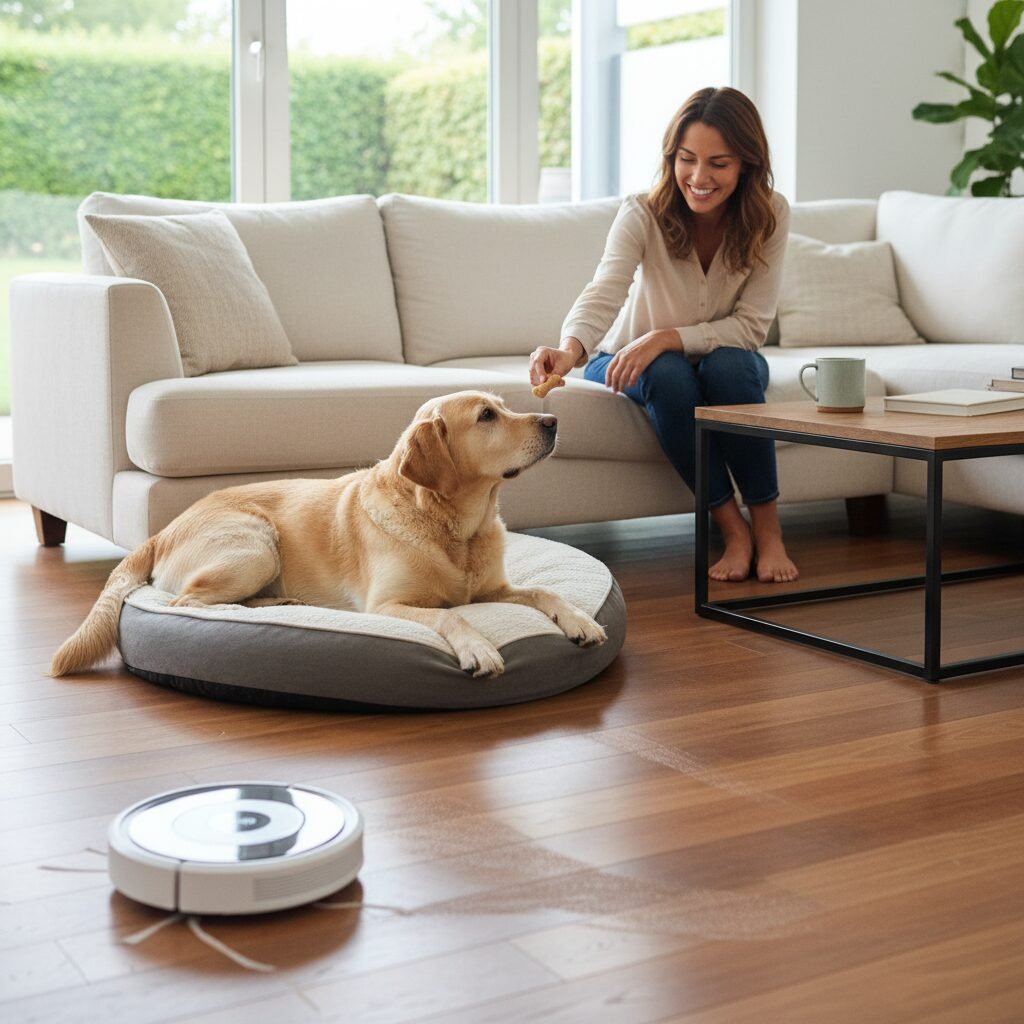
This is where the magic happens. We’ll introduce the vacuum in stages, building a positive association at every step. Remember to watch your dog’s body language. If they seem stressed (tucked tail, flattened ears, excessive panting), take a step back and work at that level for a bit longer.
Step 1: The Lifeless Object
Place the turned-off, stationary robot vacuum in the middle of the room. Don’t make a big deal out of it. Let your dog approach and investigate it at their own pace. When they sniff it or get close without showing fear, praise them calmly and give them a high-value treat. Do this for a few minutes. The goal is simple: Vacuum (off) = Yummy Treat.
Step 2: The Treat Dispenser
Once your dog is comfortable with the stationary vacuum, start placing treats directly on and around it. Let them eat the treats off the machine. This reinforces the idea that this object is a source of wonderful things.
Step 3: Introducing Movement (Manually)
While the vacuum is still off, gently push it around the floor with your hand. As it moves, toss treats near it for your dog to find. This teaches them that the object’s movement predicts the arrival of a snack. Keep the movement slow and non-threatening.
Step 4: Introducing Sound (Stationary)
This can be a big leap for some dogs. Take the vacuum to its charging base. With your dog at a comfortable distance, turn it on for just one second and then immediately turn it off. The moment it turns off, give your dog a jackpot of treats. Repeat this, gradually increasing the ‘on’ time to two seconds, then three. We are teaching them that the scary noise is a predictor of an amazing reward.
Step 5: Combining Sound and Movement
Now, it’s time to put it all together. Have your dog on a leash or in another room initially, so they feel safe. Run the Roomba for just 15-20 seconds. While it’s running, toss high-value treats. Stop the vacuum and stop the treats. The lesson: The noisy, moving monster makes it rain chicken! As your dog gets more comfortable, you can gradually decrease the distance between them and the running vacuum over several sessions.
Step 6: Supervised Freedom
When your dog can remain calm while the vacuum runs at a distance, you can try a fully supervised cleaning session. Ensure your dog has an ‘escape route’—a comfy bed, a sofa they can hop onto, or an open door to another room. Let the vacuum do its thing, and periodically reward your dog for calmly watching or ignoring it. Never leave your dog unattended with the robot vacuum until you are 100% confident they are comfortable.
What If My Dog Is Still Freaking Out? Troubleshooting Tips
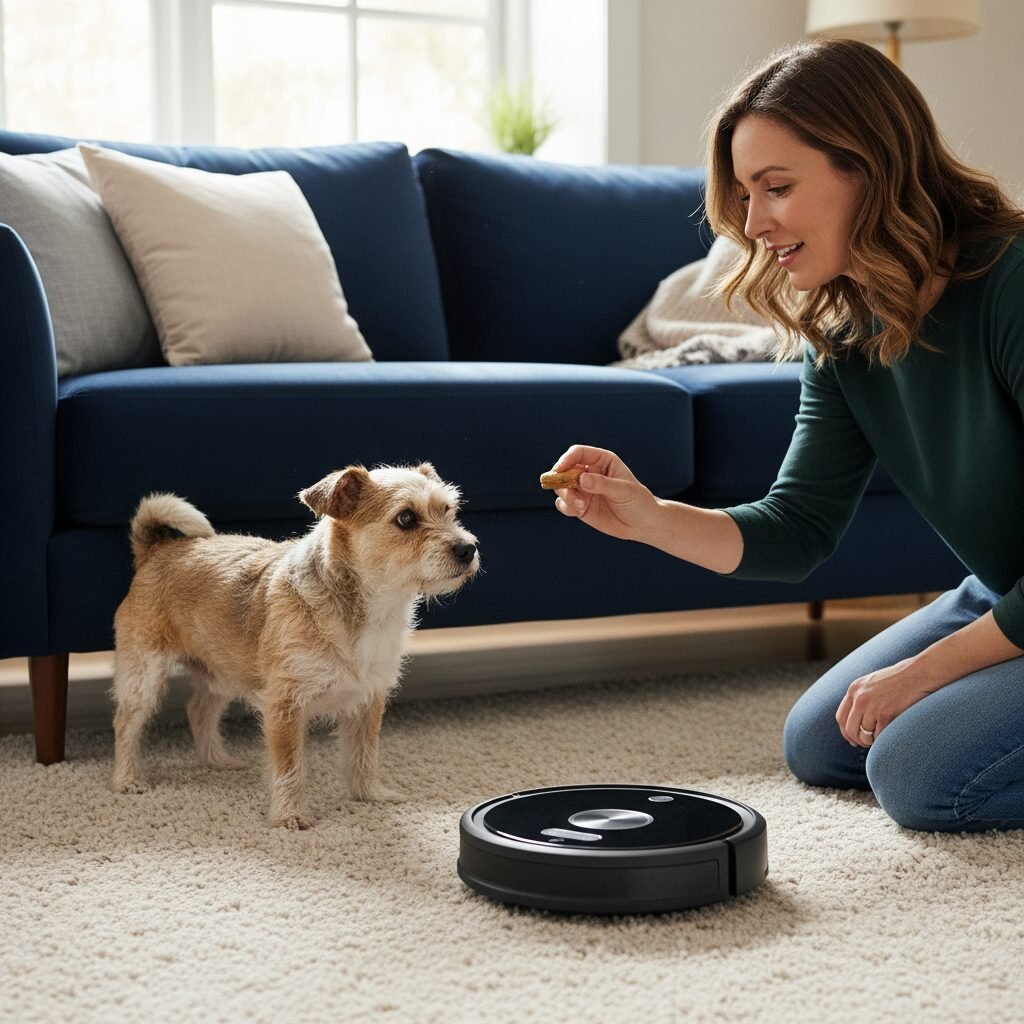
Sometimes, even with the best plan, you hit a roadblock. Don’t worry! Here are some common issues and how to handle them.
- My dog barks and lunges at it: This is a very common reaction. It usually means you’ve moved through the steps too quickly. Go back to the previous step where your dog was successful and stay there for a few more training sessions before trying to move forward again. Increase the distance between your dog and the vacuum.
- My dog is too scared to even get near it: For highly fearful dogs, you may need to break the steps down even further. Start with the vacuum in a different room where your dog can just hear it faintly. Reward them for calm behavior. Patience is everything.
- My dog tries to ‘herd’ or ‘attack’ the vacuum: This can be a sign of prey drive or herding instincts. It’s crucial to manage this behavior to prevent damage to your vacuum or injury to your pet. Keep the dog on a leash during the final stages of training and heavily reward any instance of disengagement (looking away from the vacuum and at you instead).
If your dog’s fear or aggression is severe and you’re not making progress, it’s always a good idea to consult a certified professional dog trainer or veterinary behaviorist. They can provide a customized plan for your specific situation.
Conclusion
Turning your dog’s arch-nemesis, the Roomba, into just another piece of furniture is entirely possible. The key ingredients are patience, consistency, and a whole lot of positive reinforcement. By following these steps and going at your dog’s pace, you can desensitize them to the robot vacuum and restore peace to your home.
Remember to celebrate the small victories along the way! Soon enough, the sound of the vacuum will be nothing more than background noise, and you’ll be able to enjoy your clean floors and your happy, stress-free dog at the same time.