From Panic To Peace: How To Wash A Dog Who Hates Water
For many dog owners, the phrase ‘bath time’ triggers an immediate reaction: a frantic scramble of claws on tile, a desperate attempt to hide under the bed, or a wrestling match that leaves the human more soaked than the canine. If your dog hates water, washing them is not just a chore; it is a source of significant stress for both of you. However, hygiene is a non-negotiable aspect of pet ownership, essential for skin health and parasite control.
The transition from panic to peace does not happen overnight. It requires a shift in perspective from ‘getting the job done’ to ‘training and desensitization.’ As a canine specialist, I have worked with countless dogs who viewed the bathtub as a torture chamber. Through patience, positive reinforcement, and the right environmental setup, even the most fearful dogs can learn to tolerate, and sometimes even enjoy, being washed.
This comprehensive guide will walk you through the psychology of water fear, the necessary preparation to ensure safety, and a step-by-step protocol to wash your water-phobic dog without trauma. By slowing down and listening to your dog’s body language, you can turn a battle of wills into a trust-building exercise.
Understanding the Fear: Why Dogs Hate Baths
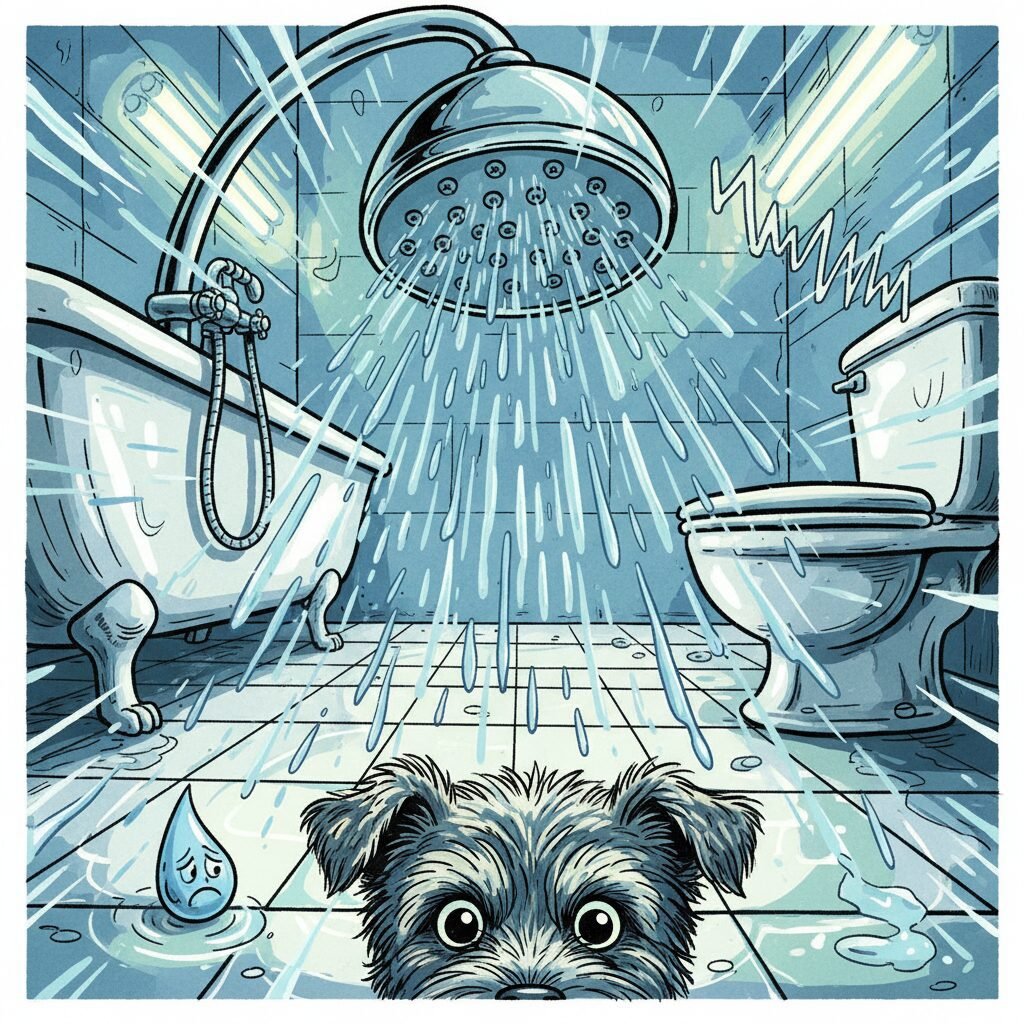
Before we can fix the behavior, we must understand the root cause. Rarely is a dog being ‘stubborn’ about bath time. In almost every case, the resistance stems from fear or physical discomfort. To a dog, a bathroom is a sensory nightmare. The acoustics are loud and echoing, the surfaces are slippery and unstable, and the sensation of being restrained while wet is vulnerable and unnatural.
Common Triggers for Bath Anxiety:
- Loss of Traction: Slippery porcelain tubs make dogs feel like they are falling, triggering a panic response.
- Sensory Overload: The sound of running water, the smell of chemical shampoos, and the temperature of the water can be overwhelming.
- Past Trauma: A previous negative experience, such as water getting in the ears or being scalded by hot water, can create a lasting negative association.
- Restraint: Being held down or forced into a confined space triggers the ‘fight or flight’ instinct.
Recognizing these triggers allows us to mitigate them. Our goal is to remove the physical discomforts so we can focus on counter-conditioning the emotional response.
Preparation: Setting the Stage for Success
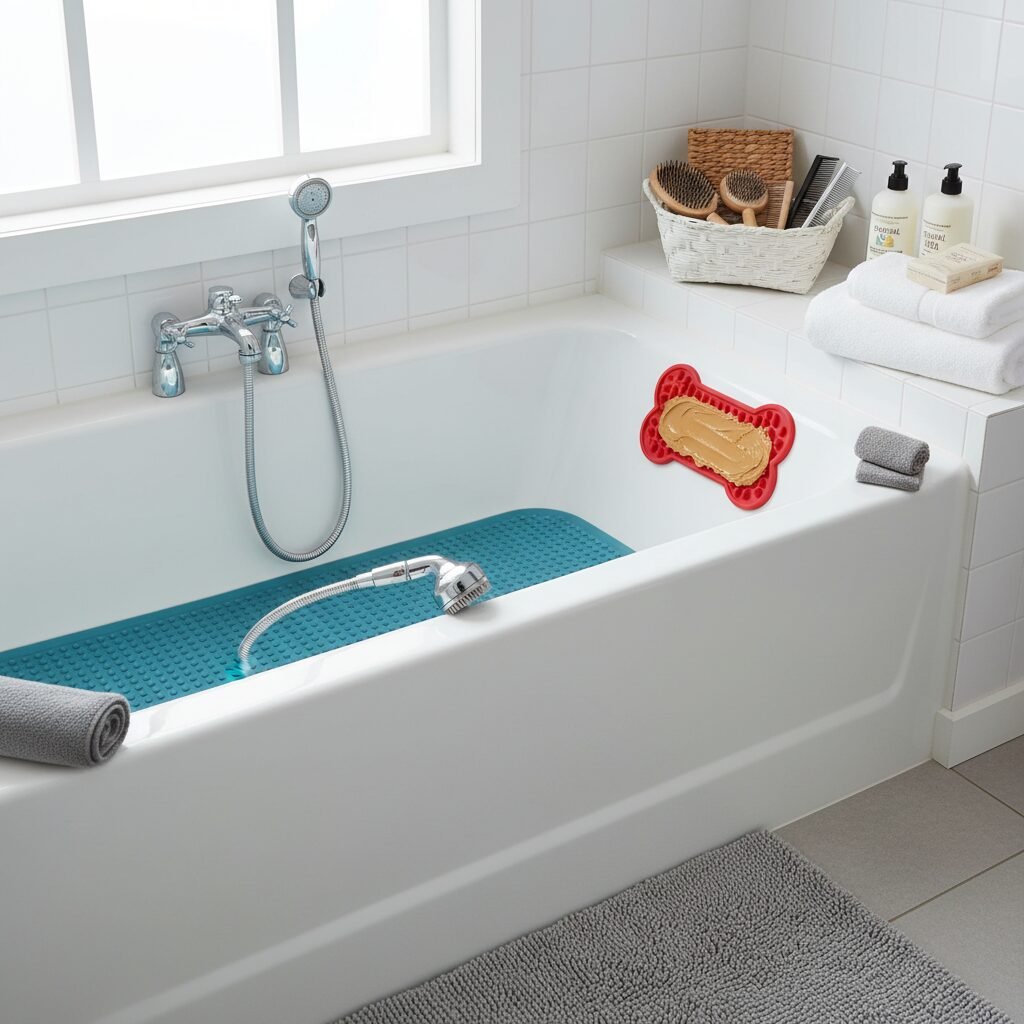
Preparation is 90% of the battle when washing a fearful dog. If you are scrambling for shampoo while your dog is already in the tub, you have already lost. You must create an environment that feels safe and secure before the dog even enters the room.
Essential Tools for a Stress-Free Bath
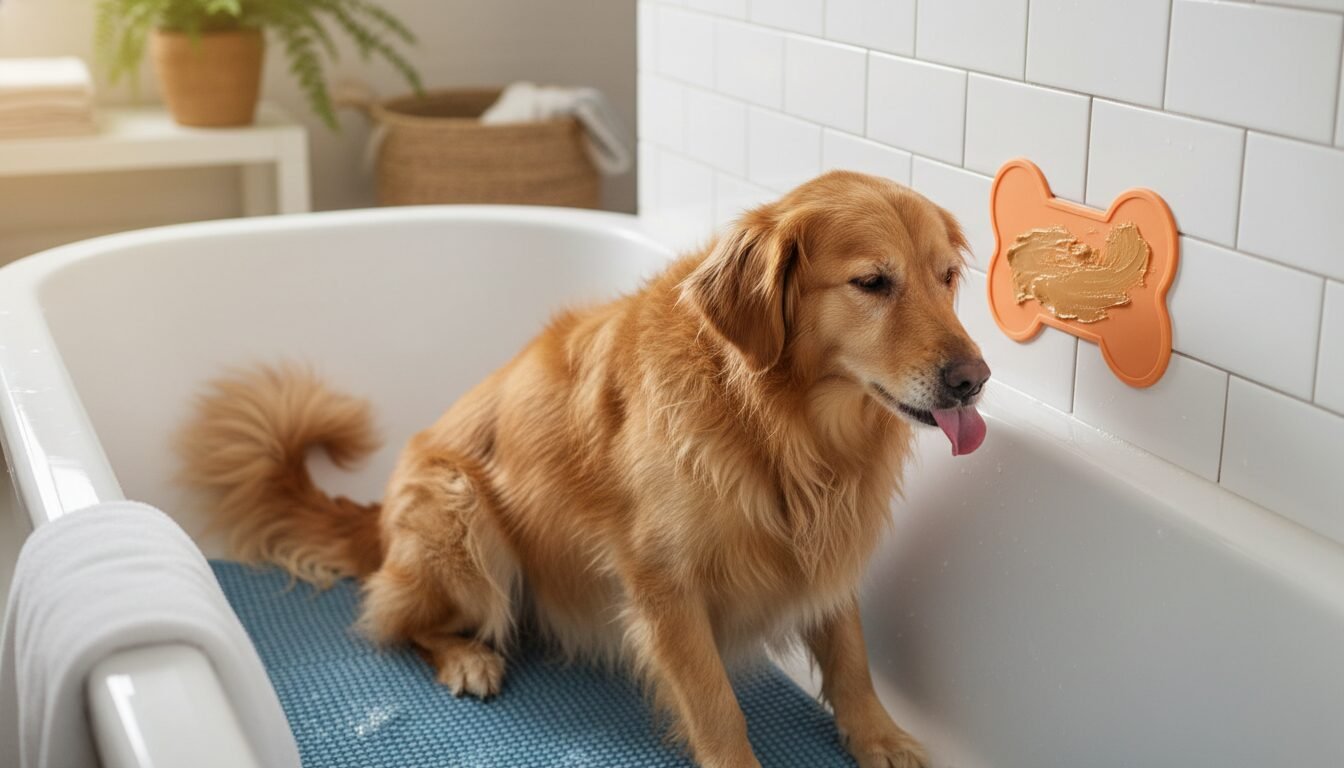
- Non-Slip Mats: This is the most critical tool. Place a rubber bath mat inside the tub and a rug outside the tub. If your dog feels stable, their anxiety will decrease significantly.
- Lick Mats: Smear a silicone lick mat with peanut butter or wet food and suction it to the tub wall. Licking releases endorphins that calm the dog and distract them from the washing process.
- Handheld Sprayer: A bucket or a loud faucet is terrifying. A handheld sprayer allows you to control the water pressure and direction, keeping the water close to the dog’s body to minimize noise.
- Appropriate Water Temperature: Dogs are more sensitive to heat than humans. The water should be lukewarm—think of the temperature you would use for a baby.
Have your towels, shampoo, and treats ready and within arm’s reach. The less you move around frantically, the calmer your dog will remain.
The Desensitization Phase: Dry Training
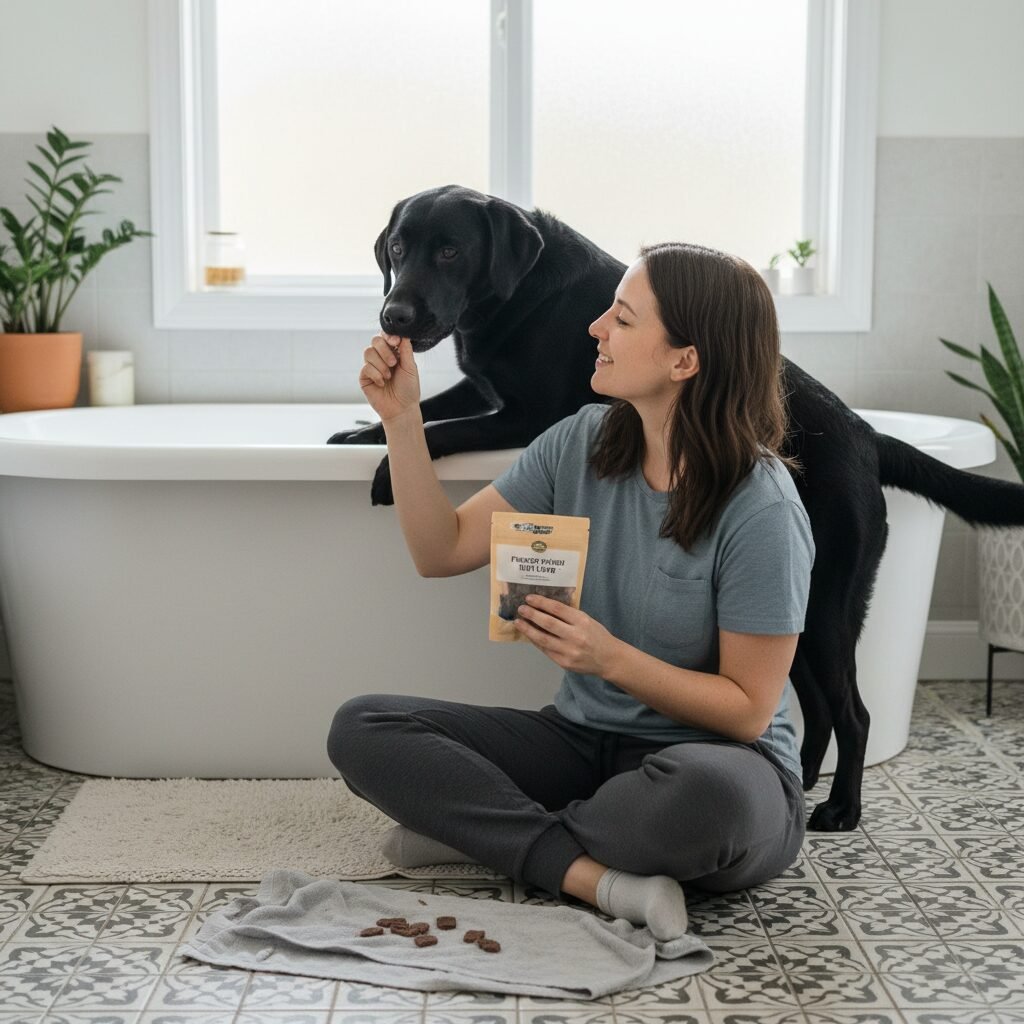
If your dog is terrified, do not start with water. Start with the room. This process is called desensitization and counter-conditioning. You want to change the dog’s emotional response to the bathroom from fear to anticipation of rewards.
Step-by-Step Dry Training:
- Step 1: The Bathroom Door: Feed your dog high-value treats (chicken, cheese) just for standing near the bathroom door. Do not force them inside.
- Step 2: Entering the Room: Gradually lure the dog into the bathroom. Reward heavily for stepping on the non-slip rugs.
- Step 3: The Dry Tub: Encourage the dog to hop into the dry tub (with the non-slip mat in place). If they are too small, lift them in gently. Immediately give a ‘jackpot’ of treats. Let them jump out immediately if they want to.
- Step 4: Sound Desensitization: While the dog is eating a treat outside the tub, turn the water on low for a second, then turn it off. Treat the dog. You are teaching them that the sound of water predicts snacks, not doom.
Repeat these steps over several days or weeks. Do not proceed to a full bath until your dog can stand in the dry tub without shaking or panting.
The Washing Process: A Gentle Approach
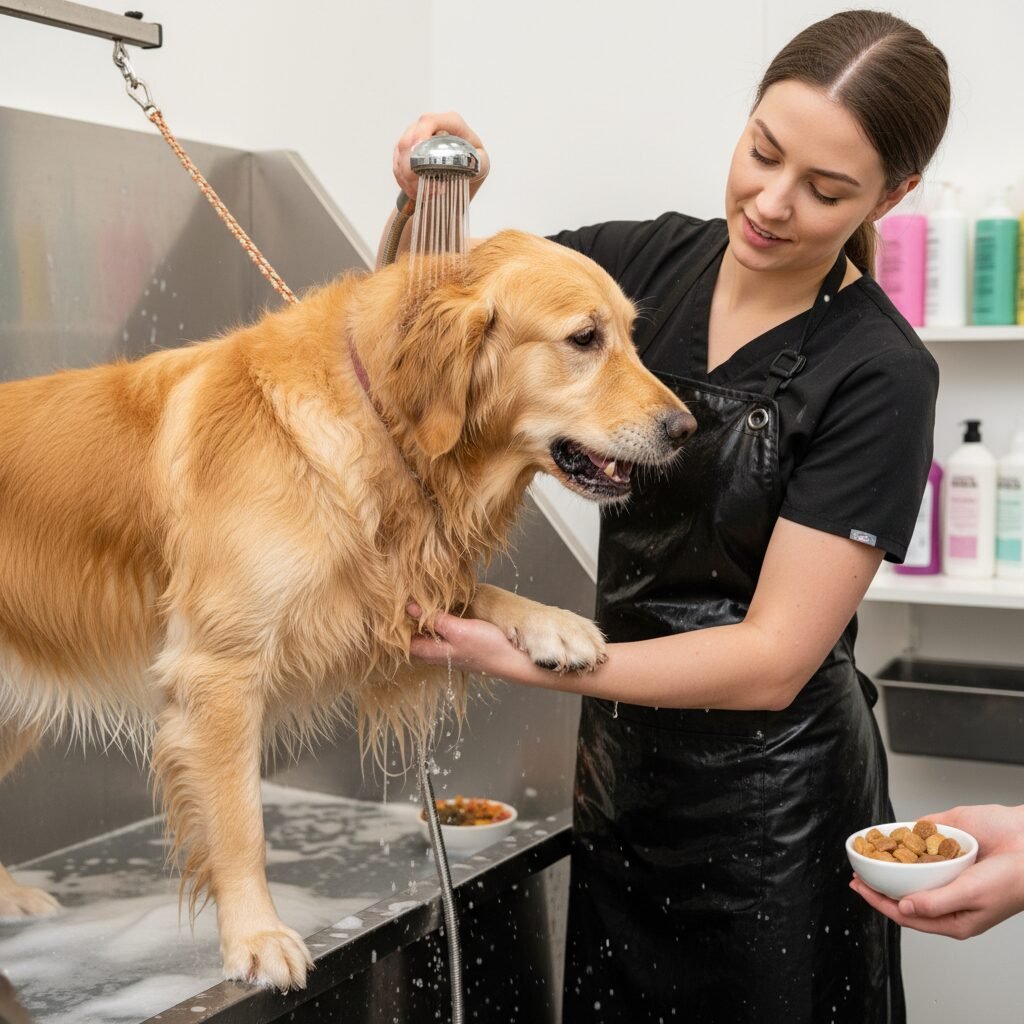
Once your dog is comfortable in the tub, it is time for the wash. The golden rule here is slow and steady. If your dog begins to panic, stop, lower the criteria, and let them calm down.
The Execution
Start by engaging the dog with the lick mat. Turn the water on away from the dog to check the temperature. Ensure the pressure is low.
- Start at the Paws: Never spray water directly on the head or back initially. Start at the back paws. Wet the feet and legs slowly. If the dog stays calm, praise verbally and move up the legs.
- Keep the Nozzle Close: Press the sprayer head against the fur (if gentle) or very close to the skin. This reduces the sound of spraying water and feels more like a massage.
- Avoid the Face: Use a damp washcloth to wipe the face. Pouring water over a dog’s head is a major trigger for panic and risks getting water in the ears, which can cause infections.
- Shampoo and Rinse: Apply diluted shampoo (it spreads easier) and massage gently. Rinse thoroughly using the same bottom-up or back-to-front method. Residue can cause itching, which will make the next bath harder.
Throughout the process, keep your voice low and reassuring. If the dog tries to escape, gently block them but do not pin them down aggressively. Reset them on the mat and wait for a moment of calm before proceeding.
Drying and Aftercare: Ending on a High Note
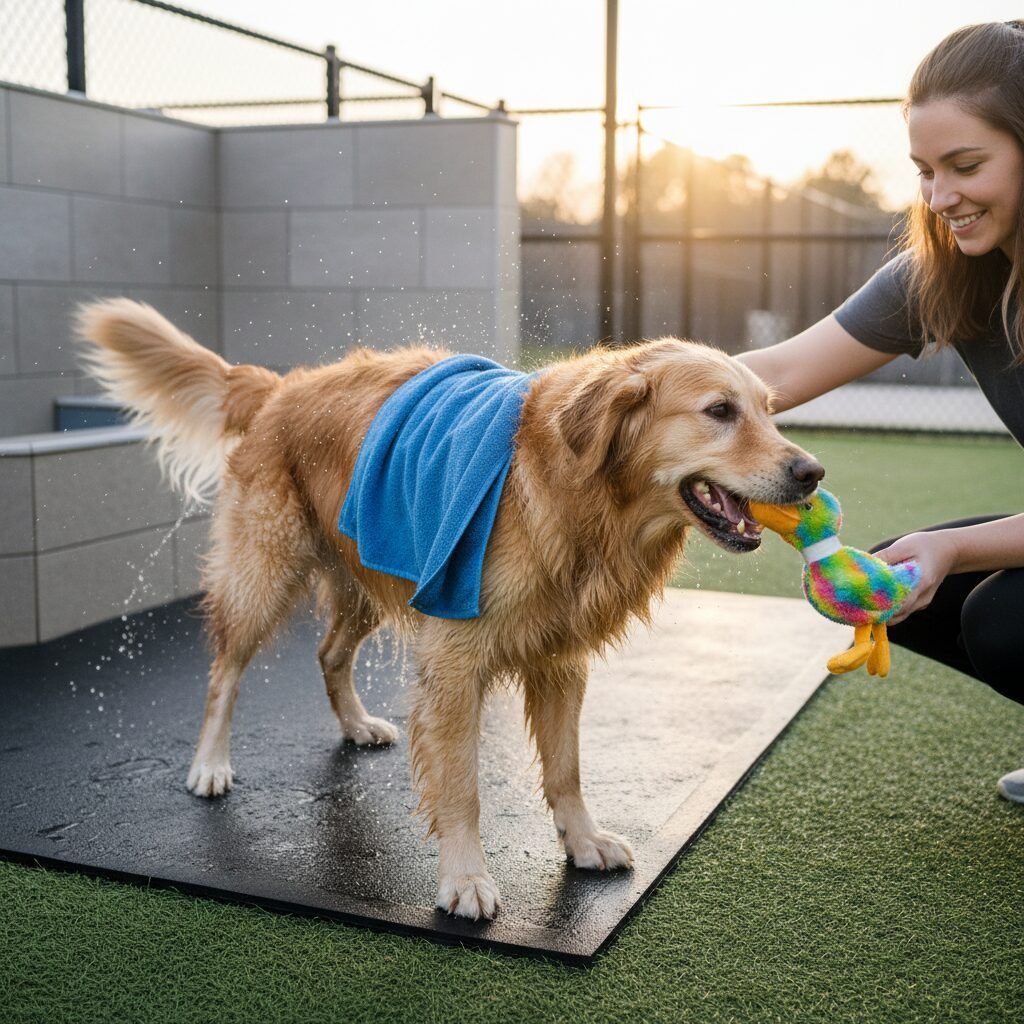
The bath isn’t over when the water turns off. The drying process can be just as stressful, especially if you use a loud hair dryer. Your goal is to make the post-bath experience incredibly rewarding.
Towel Drying: Use highly absorbent microfiber towels. Instead of vigorously rubbing, which can tangle fur and irritate skin, use a squeezing motion to soak up water. Cover the dog with the towel and apply gentle pressure.
The ‘Zoomies’: Most dogs experience a burst of energy after a bath, known as the ‘zoomies.’ This is a release of stress. Ensure the area is safe (non-slip) and let them run it off. It is a natural way for them to shake off the anxiety.
High-Value Reward: Immediately after the bath is done, give your dog a long-lasting chew or their favorite toy. This final step solidifies the memory that ‘bath time equals great rewards.’
Patience Is The Key To Cleanliness
Transforming a fearful dog into a calm bather is a journey that requires empathy, preparation, and immense patience. By addressing the sensory challenges of the bathroom and utilizing positive reinforcement, you can move from panic to peace. Remember, a slightly dirty dog that trusts you is better than a sparkling clean dog that fears you. Take your time, listen to your dog, and celebrate the small victories along the way.