3 Ingredients To Banish Doggy Breath Forever (Spray Recipe)
We all love our furry friends, but let’s be honest—sometimes their breath can be a real knockout punch. You lean in for a sweet puppy kiss and get a whiff of something that sends you reeling. While it’s easy to laugh off, persistent bad breath, or halitosis, can sometimes be more than just a smelly inconvenience. It can be your dog’s way of telling you something’s up with their health.
But don’t worry! For everyday, run-of-the-mill stinky breath, you don’t always need to reach for expensive products packed with chemicals. We’ve got a fantastic, vet-approved, and incredibly easy DIY recipe that uses just three natural ingredients you might already have in your kitchen. This simple spray can help freshen things up, making cuddle time much more pleasant for everyone involved!
What’s Really Causing That Stinky Breath?
Before we jump into the recipe, it’s helpful to understand what’s causing that foul odor in the first place. Bad breath in dogs is most often a sign of poor oral hygiene, but it can occasionally point to deeper health concerns.
The Usual Suspects: Plaque and Tartar
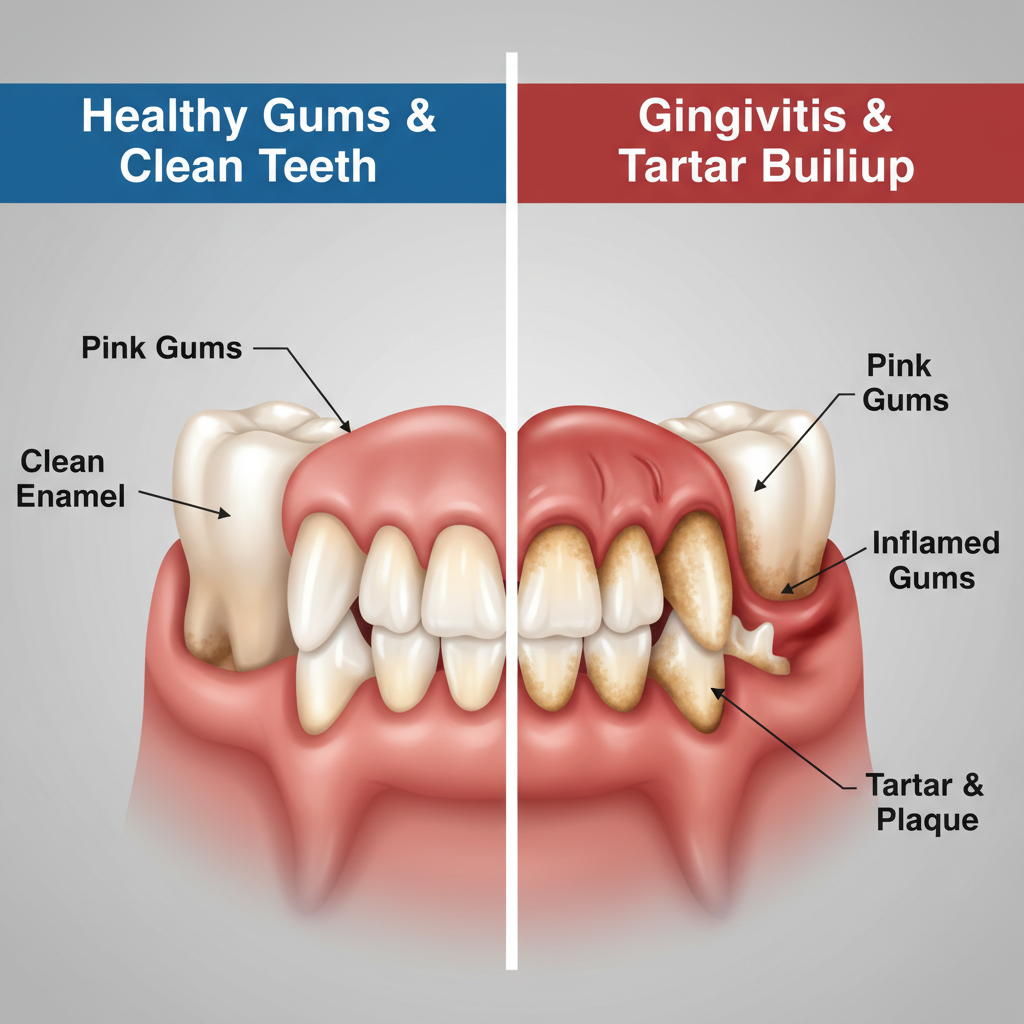
The number one cause of bad breath in dogs is the buildup of plaque and tartar. Just like in humans, bacteria in the mouth form a sticky film called plaque on the teeth. If not removed, this plaque hardens into tartar, which irritates the gums and leads to inflammation known as gingivitis. This buildup of bacteria is what produces those nasty, sulfurous smells. Left unchecked, it can progress to periodontal disease, a serious condition that can cause pain, tooth loss, and even damage to your dog’s heart, liver, and kidneys.
Other Common Causes:
- Food Debris: Sometimes, the cause is as simple as a piece of food stuck between your dog’s teeth, which starts to rot and smell.
- Diet: Certain dog foods, especially those with fishy ingredients or funky flavorings, can contribute to temporary bad breath.
When It’s Something More Serious
While less common, sometimes a distinct smell can be a red flag for a systemic health issue:
- Unusually Sweet or Fruity Breath: This can be a sign of diabetes.
- Breath that Smells like Urine or Ammonia: This could indicate a serious kidney problem.
- Exceptionally Foul Breath with Vomiting or Lack of Appetite: This might point to a liver issue.
Expert Tip: Always give your dog’s mouth a quick look. If you see red, swollen gums, broken teeth, or notice your dog is having trouble chewing, it’s time to call the vet. This spray is for freshening, not for treating disease.
Your All-Natural, 3-Ingredient Breath-Busting Recipe
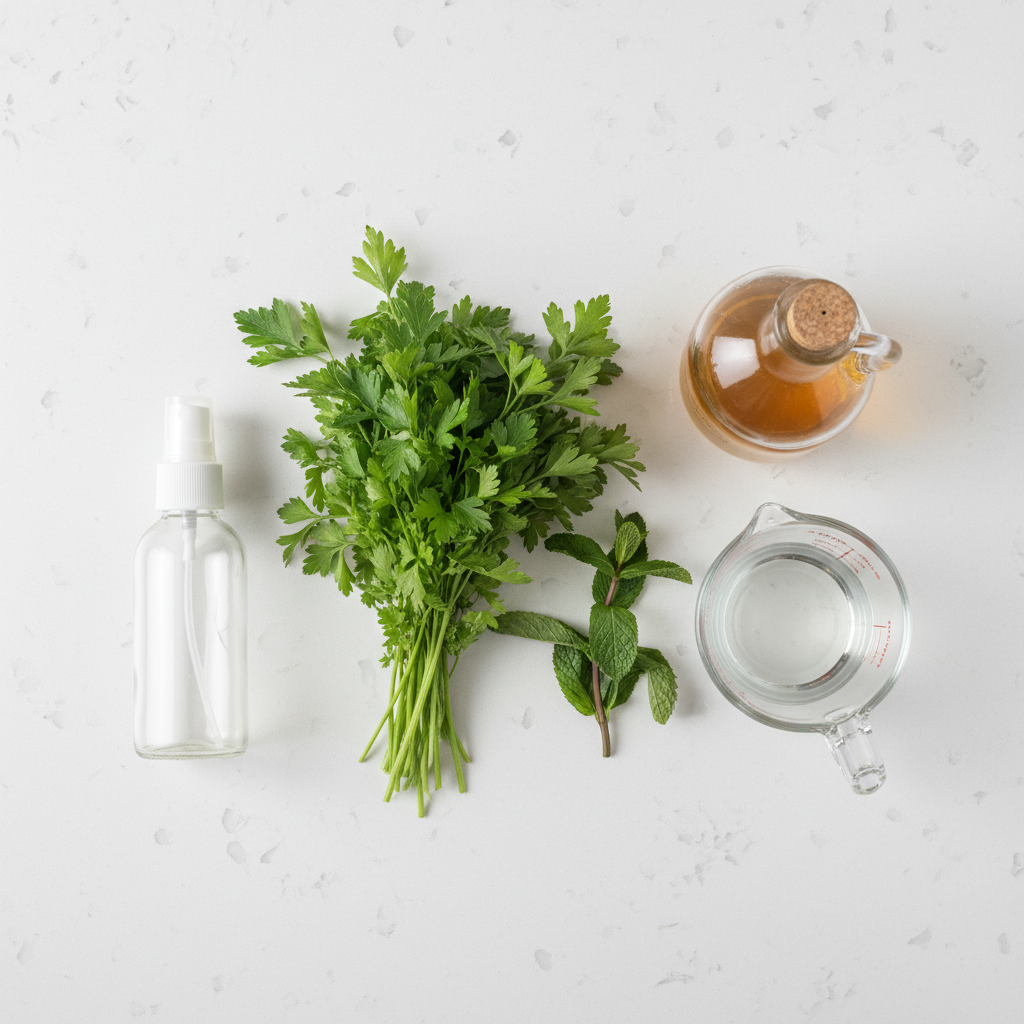
Ready to whip up some freshness? This recipe is incredibly simple and uses the power of nature to combat bad breath at its source. Each ingredient plays a special role in deodorizing and cleaning your pup’s mouth.
The Magic Ingredients:
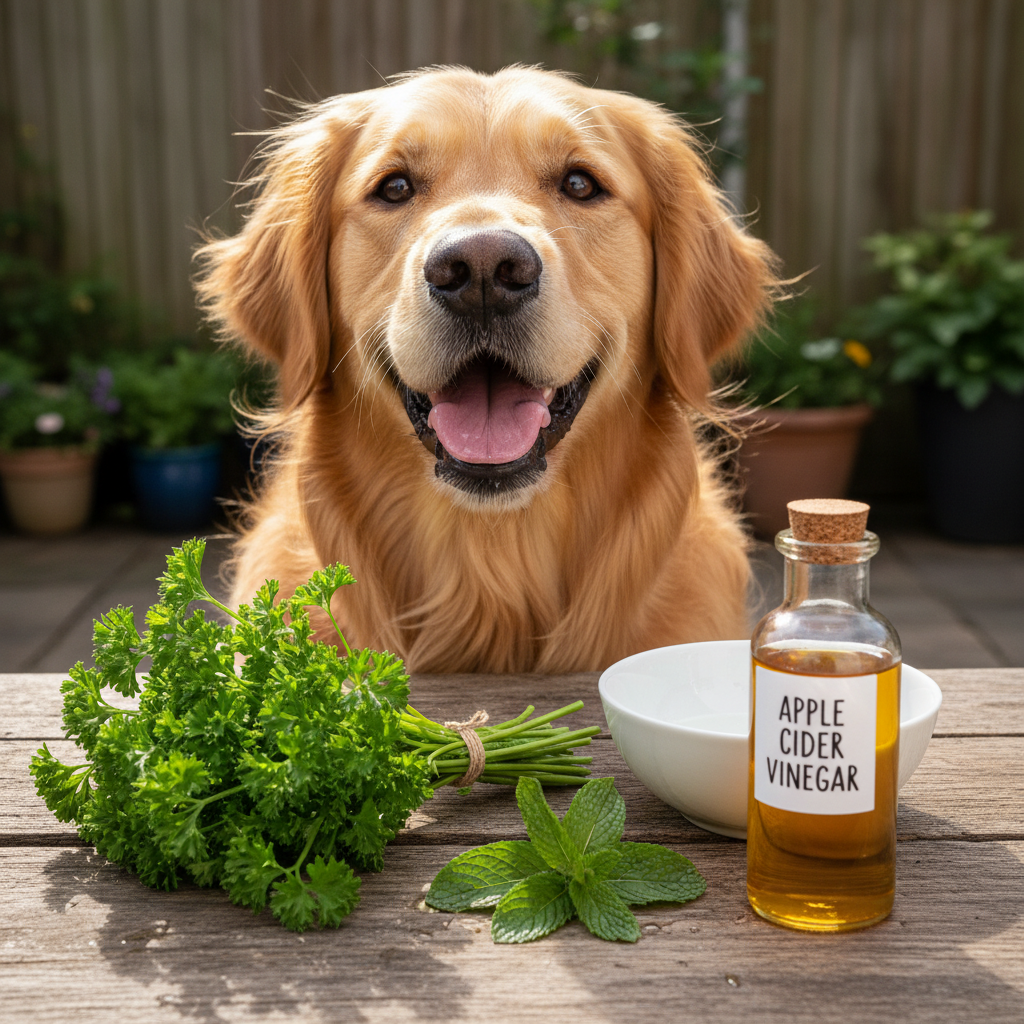
- Parsley: This humble herb is rich in chlorophyll, a powerful natural deodorizer that helps neutralize odors from the inside out.
- Mint: Known for its fresh, clean scent, mint helps mask bad smells instantly, leaving your dog’s breath smelling much more pleasant. Be sure to use spearmint or peppermint, and avoid English Pennyroyal, which is toxic to dogs.
- Apple Cider Vinegar (ACV): A splash of raw, unfiltered ACV adds antibacterial and anti-fungal properties to the mix, helping to fight the very bacteria that cause plaque and bad breath.
The Recipe
Here’s what you’ll need and how to make it:
Ingredients:
- 1 cup of water
- 1/2 cup of fresh parsley, loosely packed
- 1/2 cup of fresh mint leaves, loosely packed
- 1 teaspoon of raw, unfiltered Apple Cider Vinegar
Instructions:
- Steep the Herbs: Bring the cup of water to a boil. Roughly chop the parsley and mint leaves to help release their oils. Place the chopped herbs in a heat-safe bowl or jar.
- Combine: Pour the hot water over the herbs and let the mixture steep for about 15-20 minutes, just like making tea. This will infuse the water with all the goodness from the parsley and mint.
- Cool and Strain: Let the infusion cool down completely to room temperature. Once cool, strain the liquid through a fine-mesh sieve or cheesecloth to remove all the plant material.
- Add the Final Touch: Stir in the teaspoon of apple cider vinegar.
- Bottle It: Pour your finished breath spray into a clean, empty spray bottle. A small 2-4 ounce bottle works perfectly.
How to Use Your DIY Doggy Breath Spray Safely
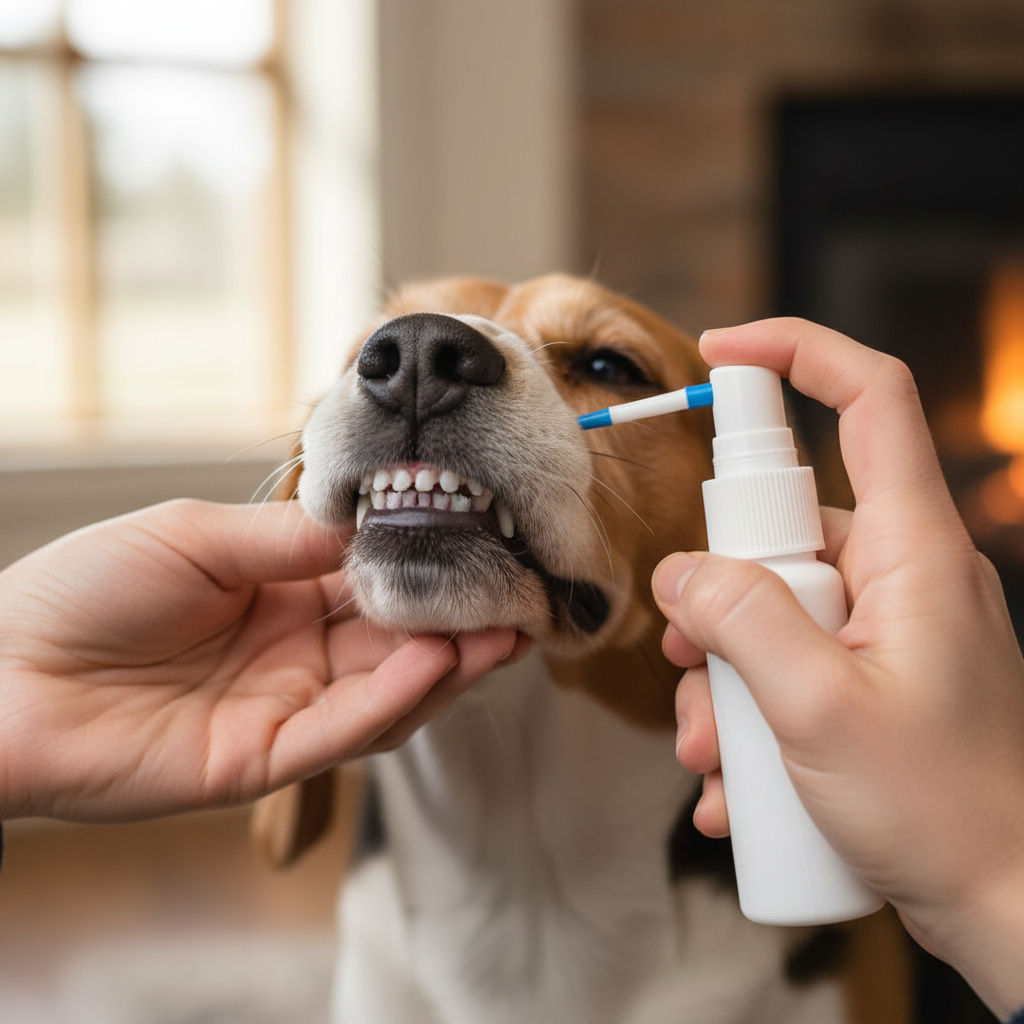
Introducing anything new to your dog should be a positive experience. The goal is for them to see the breath spray as a quick, easy treat, not something to be scared of. Follow these steps for a smooth introduction.
- Let Them Sniff: Before you ever spray it, let your dog sniff the bottle. Let them get used to its presence. Offer a treat and praise to create a positive association.
- A Little Taste: Spray a tiny amount on your finger and let them lick it off. Most dogs are curious and will be fine with the herby taste. Reward them again.
- The First Spritz: When you’re ready, gently and calmly lift your dog’s lip on one side to expose their teeth and gums. Quickly spritz once or twice. Then do the same on the other side.
- Keep it Positive: Immediately follow up with lots of praise, a good scratch behind the ears, or a small treat. You want them to think, “That weird spray thing means I get a cookie!”
Important Safety Notes:
- Never spray it directly down your dog’s throat, as they could inhale it. Aim for the side teeth and gums.
- Avoid the eyes and nose.
- Frequency: Use the spray once or twice a day, ideally after meals.
- Storage: Because it’s all-natural with no preservatives, you must store your DIY breath spray in the refrigerator. It will stay fresh for up to two weeks.
When to Skip the Spray and See the Vet
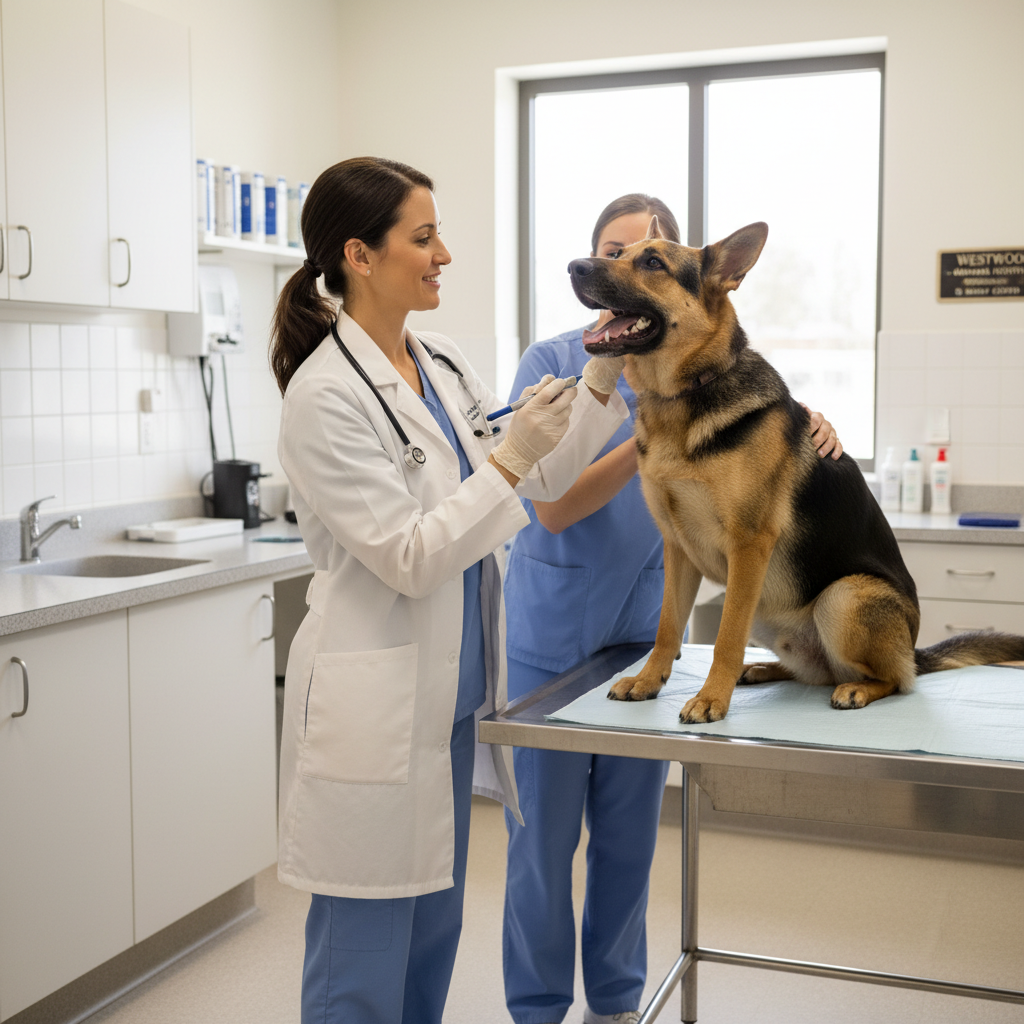
This homemade spray is a fantastic tool for managing everyday doggy breath, but it’s crucial to recognize when the problem is beyond a simple spritz. Bad breath can be a symptom of a serious underlying health condition that requires professional medical attention. Please don’t hesitate to call your veterinarian if you notice any of the following red flags:
- Pain or Sensitivity: Your dog yelps, flinches, or shies away when you touch their mouth or face.
- Changes in Eating Habits: They suddenly refuse to eat hard kibble, chew only on one side of their mouth, or drop food while eating.
- Excessive Drooling: More drool than usual, especially if it’s tinged with blood, is a major warning sign.
- Visible Issues in the Mouth: Take a look inside. Do you see cracked or broken teeth? Are the gums bright red, swollen, or actively bleeding? Do you see any lumps or unusual growths?
- Pawing at the Face: If your dog is constantly rubbing or pawing at their mouth, it’s a clear sign of discomfort.
- A Change in the Smell: As mentioned earlier, if the breath suddenly smells sweet, fruity, or like ammonia/urine, it warrants an immediate vet visit.
Think of this spray as a breath mint for your dog. It makes things smell better, but it doesn’t fix a cavity. Your vet is the only one who can diagnose and treat the root cause of serious dental or medical issues.
Conclusion
Tackling your dog’s bad breath can feel like a big challenge, but with this simple, three-ingredient spray, you have a powerful new tool in your arsenal. It’s a safe, natural, and affordable way to freshen up those puppy kisses and make snuggle time on the couch much more enjoyable.
Remember, this spray is one part of a complete dental health plan. Nothing replaces the mechanical action of daily tooth brushing and the importance of regular professional cleanings. By combining this fresh spray with good daily habits and regular vet check-ups, you’re not just fighting bad breath—you’re contributing to your dog’s overall health and well-being for years to come. Happy spritzing!